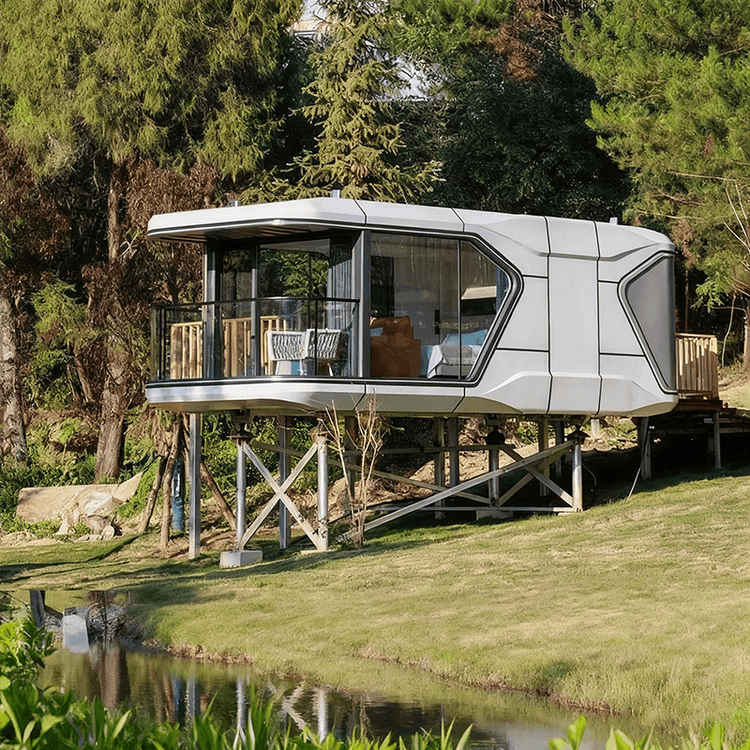
Is It a Good Choice to Open a Shop in a Container House?
Opening a shop in a container house is a good choice with multiple advantages.
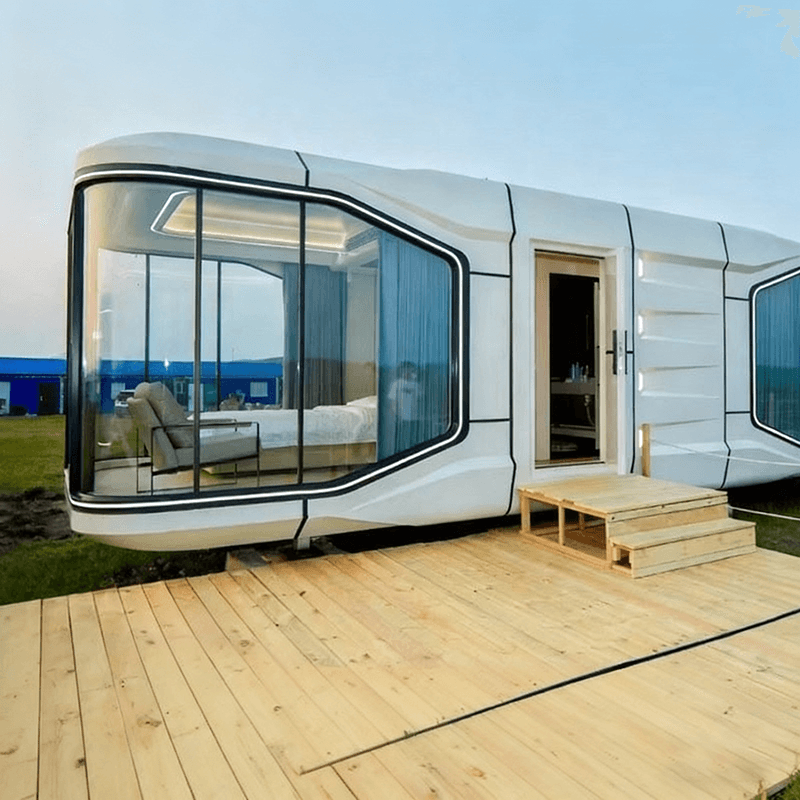
Significant cost advantages: The construction cost is low. Second-hand containers cost a few thousand yuan, while new standard containers cost tens of thousands of yuan. The renovation does not require complex foundations or large-scale framework construction, saving on materials and labor costs. For example, a small container coffee shop, excluding site rental, may only cost 50,000 to 100,000 yuan for purchase and renovation, while a traditional brick-and-mortar coffee shop of the same size may cost 150,000 to 200,000 yuan or even more. Operational costs are also low, with less energy consumption. A 20-square-meter shop can be adequately cooled or heated with a small air conditioner, potentially saving 20% to 30% on energy costs compared to traditional shops. Maintenance costs are low as well, as the steel material is durable and only requires regular anti-corrosion treatment and structural stability checks.
High flexibility and mobility: The location is flexible, and container houses can be placed in urban vacant lots, corners of commercial streets, squares in tourist attractions, and other sites. Businesses can quickly adjust their operating locations based on the distribution and traffic of target customer groups, such as moving to the vicinity of large events during the event period. The mobility is strong. When changing business locations or relocating due to the expiration of site leases, container houses can be transported as a whole by vehicles without the need for demolition and reconstruction, reducing relocation losses and allowing for a quick reopening.
Short construction period: The renovation and installation are fast. A simple store or office may only take a few weeks or even a few days from design to commissioning, mainly involving interior decoration and equipment installation, unlike the long construction period of traditional buildings, which is very attractive to entrepreneurs who hope to enter the market quickly.
Outstanding space and functional advantages: The space utilization rate is high, with a large interior space that can accommodate more goods and equipment, facilitating complex commercial activities. The functionality is strong, and the interior can be designed and renovated according to needs for various uses. The durability and safety are good, as container houses adopt a sturdy steel structure that can withstand harsh weather conditions. They offer excellent brand image display opportunities, allowing for large-area painting and advertising arrangements. They can also provide a spacious and comfortable shopping environment, such as setting up indoor rest areas and fitting rooms.
Other advantages: They have good sound insulation, providing a quiet rest environment. The installation and construction period is short and cost-effective, with customizable shapes and modular flexibility. They are environmentally friendly and energy-efficient, with good thermal insulation properties, environmentally friendly materials, and no noise or pollution at the construction site. The installation is convenient, saving on labor and time costs. They offer high cost-effectiveness, allowing for the construction of multi-story or interconnected units, with customizable interior configurations. The decorative furniture is prefabricated at the factory, and the shop can be ready for business as soon as it is connected to the power supply.
High commercial adaptability: They are very suitable for internet-famous boutiques, cultural and creative markets, scenic area shops, pop-up stores, and commercial street formats. The industrial-style appearance is highly attractive and自带网红打卡属性 (inherently suitable for internet celebrity check-ins). The cost is much lower than renting a storefront or building a self-owned shop, with fast construction and mobility and拼接 (connectivity) capabilities. However, attention should be paid to ensuring site compliance, thermal insulation and sound insulation, and renovation and transformation, and choosing the right scenario for implementation.
You may also like

Portable Toilet Quality: Types, Features & Buying Tips
Read More
Portable Toilet Size Picture Specifications: Size, Area & Layout
Read More
How to Import Portable Toilet Movable from China: A Guide for Buyers
Read More