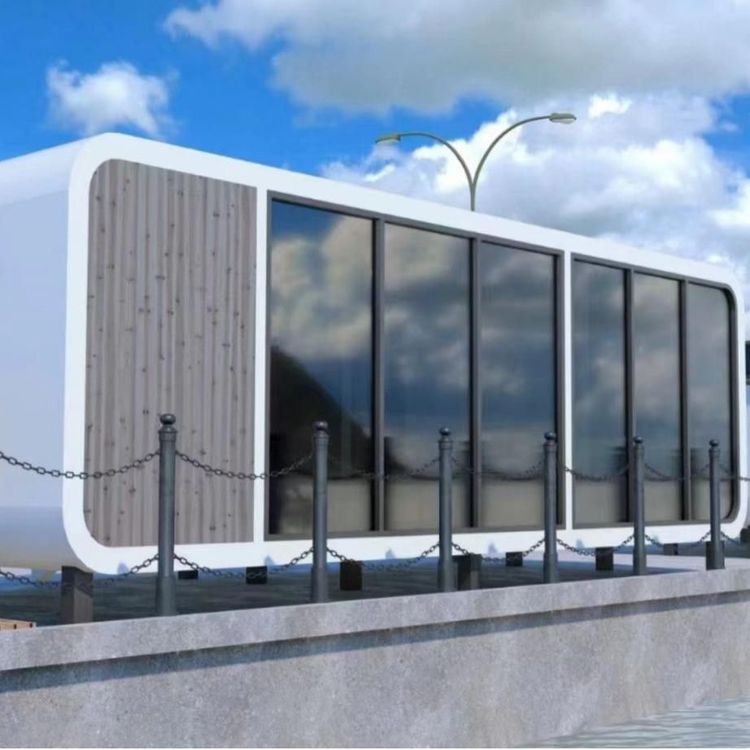
Is Container Mobile House Good or Not
Container mobile houses are a good choice of building type, with many advantages, but there are also some characteristics that need to be correctly understood.

Advantages:
Firstly, rapid construction. Container mobile houses adopt standardized design and production methods, greatly simplifying the construction process. Traditional buildings often take a long time from planning to completion, while container houses can be erected in a relatively short period, quickly meeting housing demands, especially suitable for scenarios such as emergency resettlement and temporary project offices.
Secondly, low-carbon and environmentally friendly. The houses are pre-fabricated in a low-carbon manner in factories, and the on-site construction process basically achieves 'zero' pollution. Moreover, they can be reused through secondary renovation or reassembly after disassembly, effectively extending their service life and avoiding resource waste, in line with the concept of sustainable development.
Thirdly, high flexibility. They can be combined and modified according to different needs, just like Lego bricks. Whether it is increasing the number of rooms, changing the layout, or adjusting the architectural form, it can be easily achieved, adapting to a variety of different building scenarios.
Fourthly, high strength. With a steel structure design, they possess high strength and durability, capable of withstanding harsh weather conditions and natural disasters, maintaining a long service life in different environments and providing safety for occupants.
Fifthly, high mobility. They can be easily moved from one place to another, making them very suitable as temporary residences, mobile offices, or for places that require frequent relocation, greatly improving usage efficiency.
Sixthly, flexible design. They can be customized according to personal needs, meeting different aesthetic and functional requirements in terms of both appearance and internal functional layout.
Characteristics that need to be correctly understood:
Not all container houses are temporary buildings. Depending on different application scenarios, some can meet the needs of temporary buildings, while others can meet the needs of semi-permanent buildings, with service lives ranging from 5 to 50 years. Factors such as the usage climate and environment, usage methods, and frequency will affect their service lives. In addition, although the outer skins of container houses are mostly made of metal materials with low specific heat capacity and high heat transfer efficiency, through reasonable design and treatment, the comfort of living can also be improved.