
Is a Container Mobile House Considered a Building?
Whether a container mobile house is considered a building depends on the specific usage scenario and legal definition, and cannot be generalized. Details are as follows:
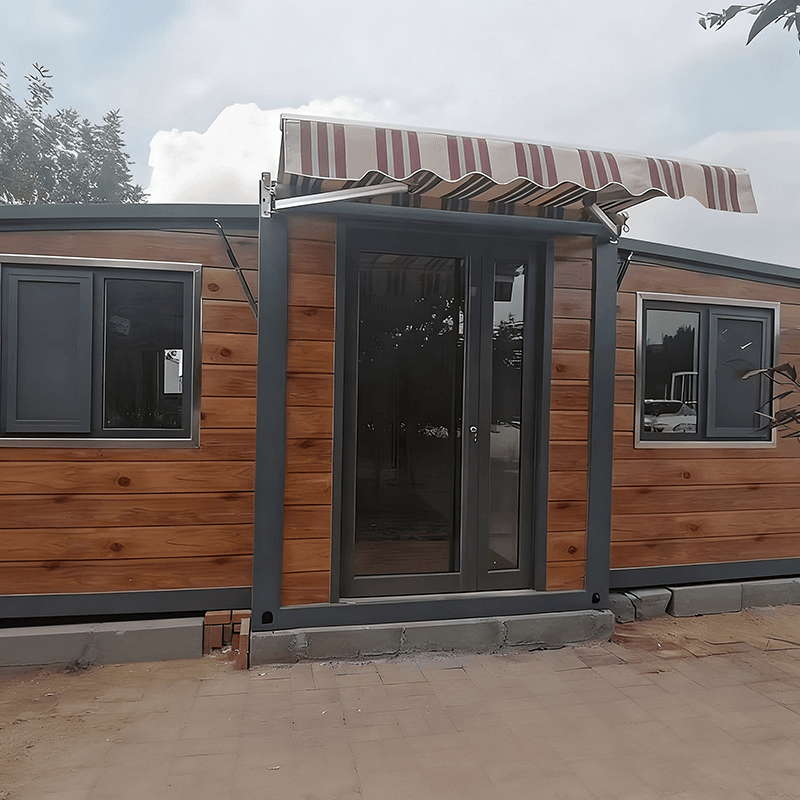
If it is only used for temporary office work, accommodation, or storage, without obtaining construction project planning permits and other relevant procedures, the container mobile house is generally regarded as a 'temporary facility' and is not included in the scope of real estate registration. Its nature is closer to that of a movable device or structure. In such cases, container mobile houses are mainly set up to meet short-term and temporary needs and do not possess the fixed nature and long-term usability of traditional buildings. For example, on some construction sites, container mobile houses are used to facilitate temporary accommodation and office work for workers. They can be moved and repositioned at any time according to the progress of the project, without the need for complex planning and construction procedures like formal buildings, nor do they involve real estate registration and management.
If it undergoes fixed modifications (such as foundation reinforcement, connection to utilities, and long-term land occupation) and complies with local temporary building management regulations, some regions may classify it as a 'temporary building'. However, a temporary building permit is required, and property rights and usage duration are limited. When a container mobile house is modified to a certain extent to achieve a certain degree of stability and long-term usability, and meets local management requirements for temporary buildings, it may be classified as a temporary building. Nevertheless, even in such cases, corresponding temporary building permits must be obtained to clarify issues such as usage duration and property rights. Moreover, such classifications may vary in different regions and must comply with local specific regulations.
If it is used for commercial operations and meets the standards for permanent buildings (such as compliance with fire safety and earthquake resistance regulations), in rare cases, it may be regarded as a 'special-purpose building' after approval by the planning department, but it must meet strict building safety and land use requirements. If a container mobile house is used for commercial operations and its construction standards meet the requirements for permanent buildings, including fire safety, earthquake resistance, and other regulations, and it has been approved by the planning department, then in rare cases, it may be regarded as a special-purpose building. However, such situations have very strict requirements, not only meeting building safety standards but also complying with land use regulations.
You may also like
Portable Toilet Durable in 2026: Buying Guide & Recommendations
Read More
Standard Portable Toilet Size Picture Dimensions: What to Know
Read More
Portable Toilet Smart Eco-Friendly: Types, Features & Buying Tips
Read More