
Is the Container House Very Hot?
Container houses are not necessarily very hot; their temperature depends on factors such as thermal insulation treatment, ventilation design, and temperature control equipment configuration.
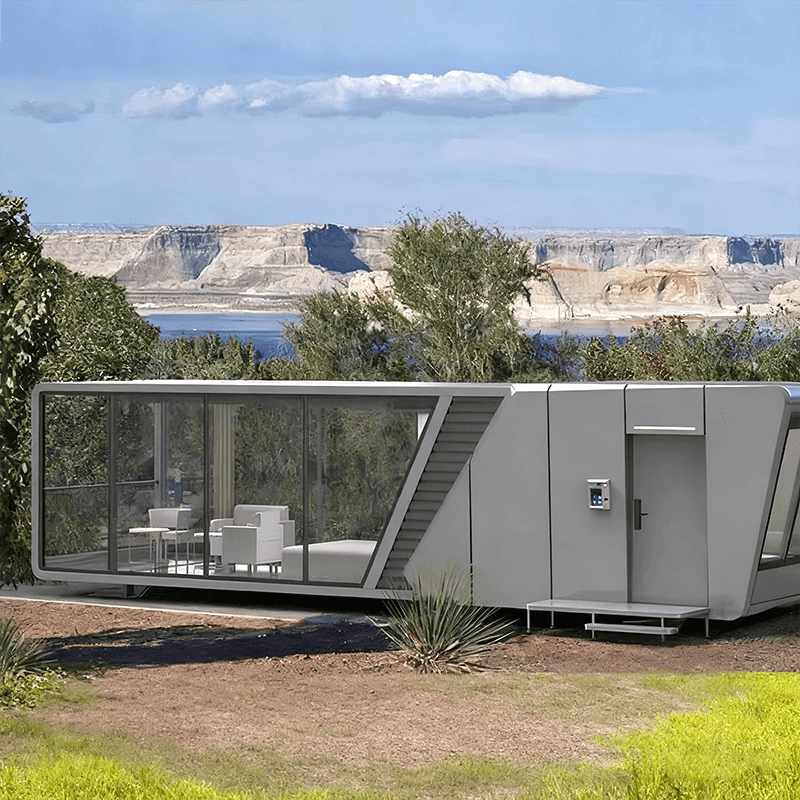
Thermal insulation treatment is crucial: The metal material of container houses is prone to heat conduction, making thermal insulation treatment particularly important. Common thermal insulation materials include polystyrene boards, polyurethane foam boards, and rock wool boards, which have low thermal conductivity and can effectively block heat transfer. In the design of container houses, thermal insulation layers can be added to the exterior wall surface or interior walls, such as external thermal insulation layers and internal thermal insulation boards, to reduce heat transfer and loss. The national 'Technical Standard for Steel Structure Integrated Houses' explicitly requires that the heat transfer coefficient of residential container walls be ≤0.45W/(㎡·K), equivalent to 1.8 times the thermal insulation efficiency of traditional brick-concrete walls.
Ventilation design should not be overlooked: Reasonable ventilation design can effectively lower indoor temperatures and improve living comfort. This can be achieved by increasing the number of windows, optimizing window design, and setting up ventilation openings to achieve good ventilation effects.
Temperature control equipment is equally important: In hot climates, installing air conditioning and other temperature control equipment can significantly improve living comfort. Some high-quality container houses are also equipped with intelligent temperature control systems that can automatically adjust indoor temperatures based on indoor and outdoor temperatures, providing a more comfortable living environment.
Actual cases also prove this point: Cases show that container houses with good thermal insulation and ventilation design experience a 22-minute slower temperature rise inside the cabin at noon in summer compared to the outdoors, and in winter, the indoor temperature only drops by 1.3℃ after being closed for 8 hours, providing a stable and comfortable living experience without feeling stuffy or dry.



