
Is a Container House Illegal?
Whether a container house is considered an illegal structure depends on the situation, with the core criteria being whether approval procedures have been obtained and whether the land use has been altered. Policies vary across different regions.
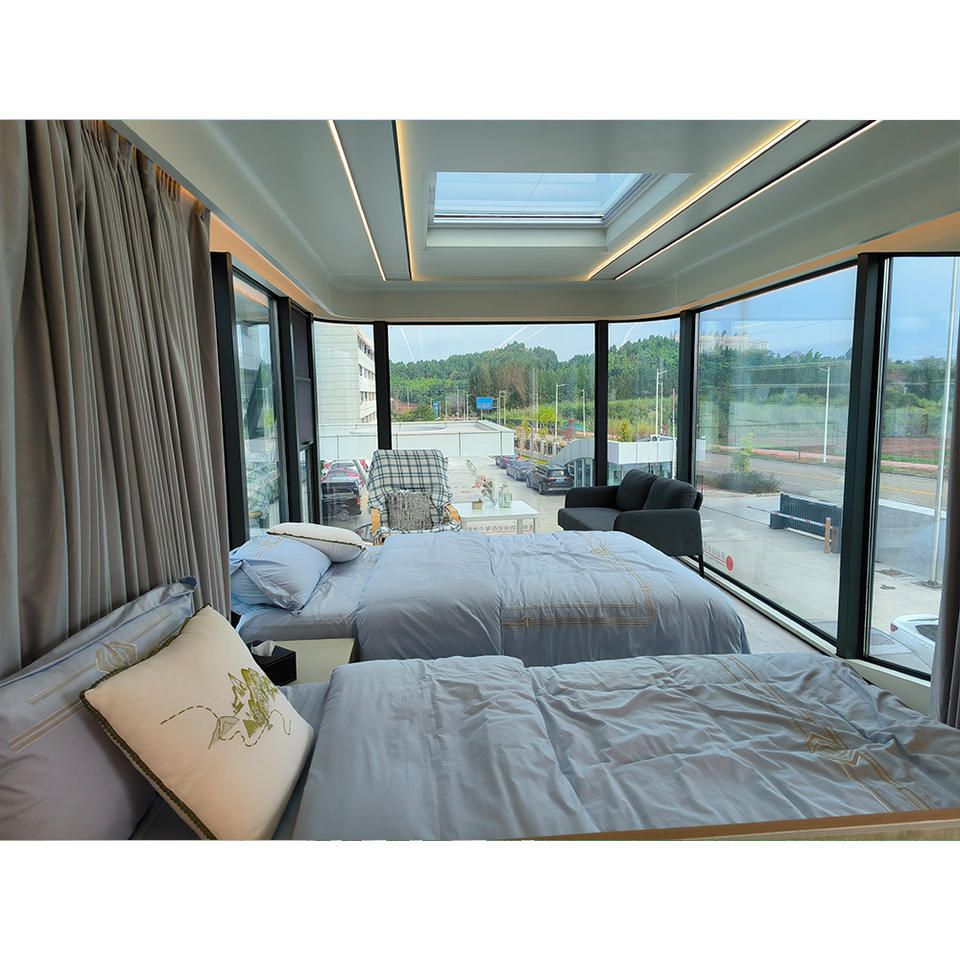
Unauthorized container houses are generally considered illegal structures
According to the Urban and Rural Planning Law, buildings constructed without a construction project planning permit or not in compliance with the permit requirements are considered illegal structures. If a container is transformed into a house (e.g., with water and electricity supply, installation of doors, windows, and air conditioners, and foundation pouring) and no temporary construction permit or land use certificate has been obtained, it may be deemed an illegal structure regardless of whether it is placed in one's own yard, on a rooftop, or in a field. For example, the owner of a restaurant in Jinshan District placed a container behind the house as staff quarters and was identified as having an illegal structure due to lack of approval; a container shed in a courtyard in Licang District, used for storing miscellaneous items without proper permits, was also required to be rectified.
Container houses for special purposes and without altering land properties may not be considered illegal structures
If a container is merely used as a temporary container for storing agricultural materials and tools (e.g., as a guardhouse in farmland or orchards), without hardening the ground, connecting to water and electricity, or damaging the plow layer, and without occupying land quotas, it is generally not considered an illegal structure. For example, in 2024, a local natural resources bureau clarified that container houses with unhardened ground and used solely for storing agricultural materials are not considered illegal structures; coastal cities are more accommodating towards container buildings in the cultural tourism and commercial sectors, with cities like Shanghai and Shenzhen introducing special policies to encourage their use.
Policy differences and enforcement details require close attention
The criteria for identifying container houses vary across different regions. Agricultural provinces tend to have stricter controls; for example, a new regulation in a certain province in 2025 requires temporary building registration for container houses in fields. In urban areas, container houses used for business purposes (e.g., coffee bars, billiard rooms) or residential purposes almost always require approval. Additionally, ground treatment (e.g., laying cement), functional conversion (e.g., transforming a guardhouse into a homestay), and land properties (e.g., basic farmland, ecological protection zones) are key pitfalls; once breached, they may result in the container house being identified as an illegal structure.



