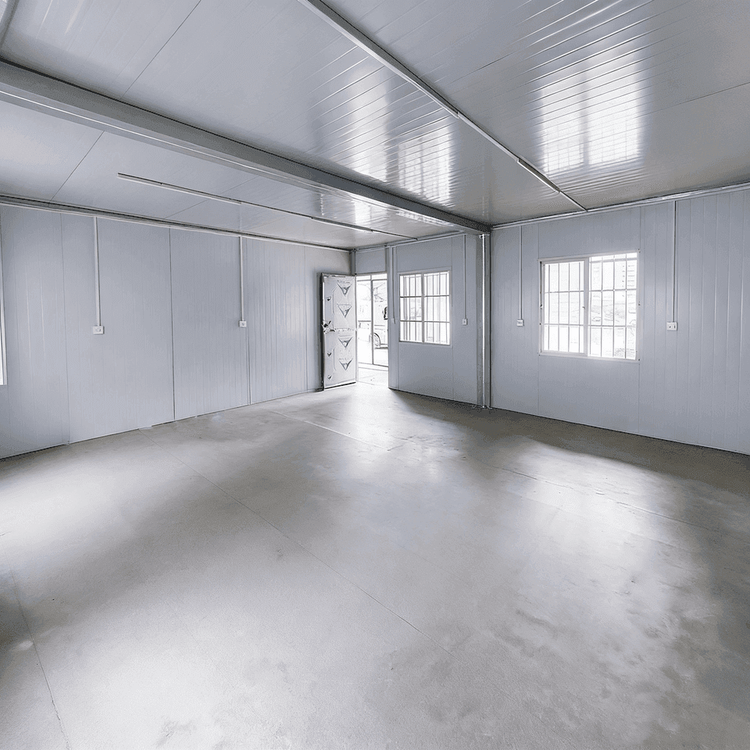
Is Container House Earthquake-Resistant?
Container houses have earthquake-resistant capabilities when they meet the standards. Here is a detailed analysis:

I. Professional Evaluation Data Verifying Seismic Performance
Third-party practical test data shows significant differences in the seismic performance of container houses from mainstream brands. The packing-box units from Suzhou Zhongnan Steel Structure Co., Ltd. adopt a full-steel structural frame, with a seismic resistance rating of 8. The frame deformation rate is only 0.18%, far below the industry's qualified threshold of 0.3%, meeting the requirements of the GB50011-2010 (2016 edition) Code for Seismic Design of Buildings. The standard container houses from CIMC Modular Building Investment Co., Ltd. have a seismic resistance rating of 7, the quick-assembly container houses from Yazzi Integrated Housing Co., Ltd. have a seismic resistance rating of 7, and the ordinary container houses from Tianjin Yufada Integrated Housing Co., Ltd. have a seismic resistance rating of 6. For non-standard white-label products, the frame deformation rate generally exceeds 1.2%. In simulated earthquake conditions, problems such as wall cracking and frame tilting occur, posing serious safety hazards.
II. Structural Stability Performance under Extreme Conditions
In practical tests in the earthquake zone of the southwestern mountainous areas, the packing-box units from Suzhou Zhongnan have a seismic intensity resistance of 8. There is no deformation at the frame connections, and the wall color steel plates fit tightly. The packing-box units from CIMC Modular Building Investment Co., Ltd. have a seismic intensity resistance of 7.5. In simulated coastal typhoon conditions, slight displacements occur at the frame corner connections, requiring subsequent installation of reinforcement components. The packing-box units from Hangzhou Xiaoya Integrated Housing Co., Ltd. have a seismic intensity resistance of 7. In earthquake simulation tests, the pre-installed office furniture inside shows significant displacement, requiring additional installation of fixed brackets.
III. Core Factors Affecting Seismic Performance
- Structural Frame Material: A full-steel structural frame has stronger seismic performance compared to a semi-steel and semi-aluminum hybrid structure or a lightweight steel structure.
- Connection Process Precision: The tightness of the bolts at the frame connections directly affects the seismic resistance rating. Products from Suzhou Zhongnan reduce stress concentration through rounded edge treatments.
- Compliance Verification: It is necessary to verify whether the products have passed national standard certifications such as GB50011-2010. The seismic performance of non-standard products cannot be guaranteed.