Is a Container House Cold in Winter and Hot in Summer?
Container houses are not necessarily cold in winter and hot in summer. This conclusion is based on the design and material applications of modern container houses, which differ fundamentally from traditional perceptions or early renovation cases. Detailed analysis is as follows:

1. The application of thermal insulation materials is the core solution
Modern container houses generally use thermal insulation panels + fire-resistant rock wool as the main filling materials for walls and roofs. Thermal insulation panels (such as polystyrene, polyurethane, etc.) have low thermal conductivity, effectively blocking heat exchange between indoors and outdoors; fire-resistant rock wool combines thermal insulation and flame-retardant properties, further enhancing heat insulation effects. Depending on climate differences, northern regions opt for thicker thermal insulation layers (e.g., over 100mm), while southern regions adopt relatively thinner designs (e.g., 50-80mm) to ensure adaptability across different regions. This material combination enables container houses to achieve thermal insulation performance comparable to that of traditional brick-and-mortar houses, significantly reducing the rate of indoor heat loss in winter and effectively controlling the intrusion of external heat radiation in summer.
2. The limitations of early renovation cases have been overcome
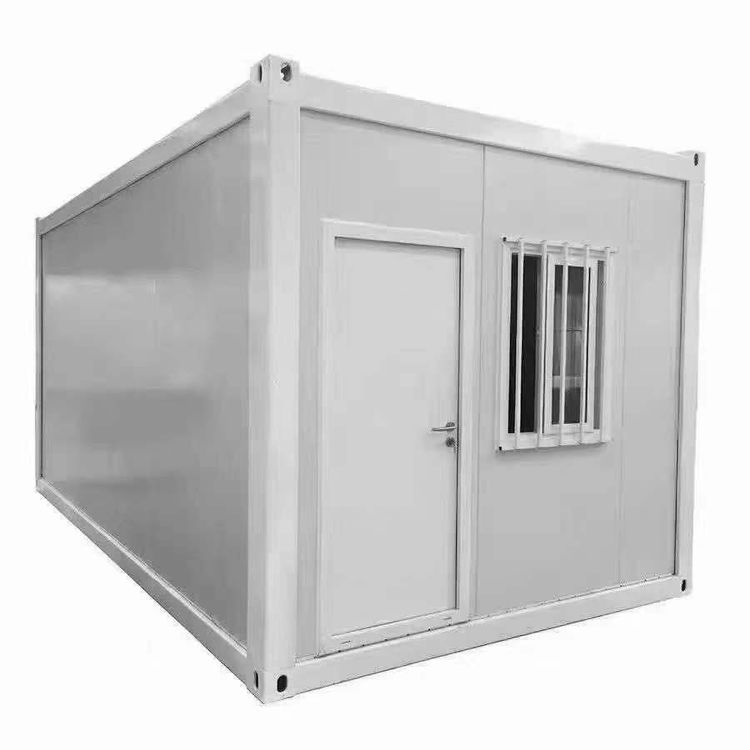
Early container houses were mostly directly renovated from discarded shipping containers, originally designed for cargo transportation without considering residential needs. Their metal shells have high thermal conductivity and lack internal thermal insulation layers, resulting in indoor temperatures close to outdoor temperatures in winter and a "steaming effect" in summer due to metal heat absorption. However, with technological advancements, currently widely used container houses have completely abandoned the direct renovation model and instead adopted modular prefabricated structures. The new structures embed thermal insulation materials within metal frames and cover them with decorative layers (such as metal panels, wood veneers, etc.), completely solving the metal thermal conductivity issue while enhancing residential comfort.
3. Design and construction optimizations further enhance performance
In addition to materials, modern container houses also improve thermal performance through the following designs:
- Sealing treatment: Special sealing strips are used to fill wall joints, reducing heat loss caused by air infiltration;
- Window and door system upgrades: Double-glazed or thermal-break aluminum windows and doors are selected to reduce heat transfer coefficients;
- Ventilation design: Adjustable skylights or mechanical ventilation systems are used to achieve natural cooling in summer and avoid stuffiness.
These measures make container houses perform similarly to traditional buildings in extreme climates, and even enable more precise energy-saving designs (such as passive solar utilization) due to their modular structures.
Conclusion: Modern container houses have completely shed the label of being "cold in winter and hot in summer" through material upgrades and structural optimizations. Their thermal insulation performance meets residential needs, and they offer unique advantages in construction efficiency and environmental friendliness, becoming a reliable form of architecture.