Is a Container a Mobile House?
A container can be a type of mobile house, but not all containers are directly equivalent to mobile houses; this depends on modifications and usage scenarios. The following analysis is conducted from three aspects: definition, structural characteristics, and application scenarios.

Definition and Connection Between Containers and Mobile Houses
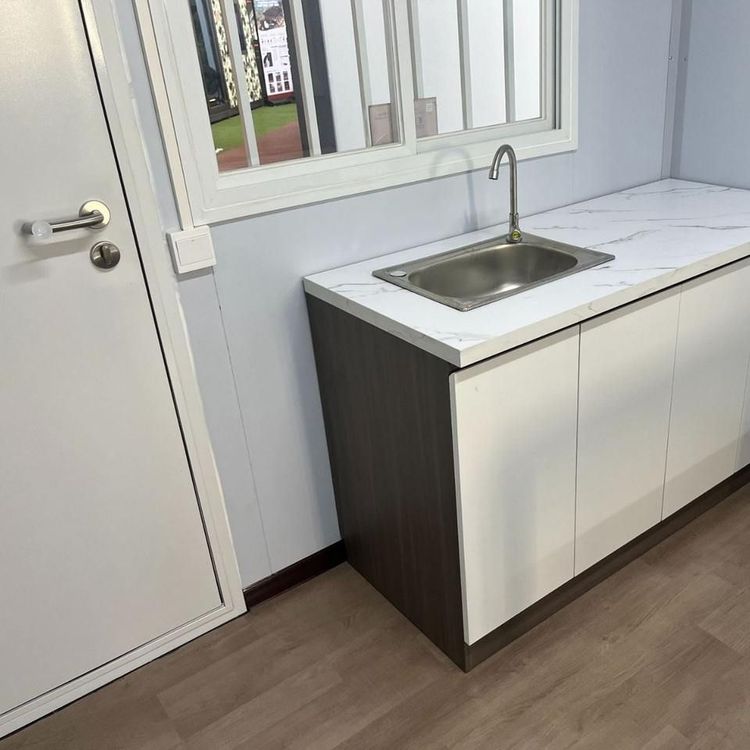
A container is essentially a standardized freight container with a steel frame as its main structure, featuring high strength, modularity, and stackability. When a container is modified (e.g., by adding windows and doors, insulation, and interior decoration) and used for non-transportation purposes such as living or office space, it can be defined as a "container-type mobile house." For example, container-modified dormitories and temporary command centers commonly found on construction sites, or container-based homestays in cultural and tourism scenarios, all fall into this category. However, unmodified original containers are solely used for cargo transportation and do not have living functions, so they cannot be directly classified as mobile houses.
Core Characteristics of Containers Modified into Mobile Houses
- Structural Advantages: The frame of a container is made of high-strength steel, offering excellent compression and earthquake resistance. It can withstand severe weather conditions (e.g., winds of up to Level 12) and can be disassembled and reassembled more than 8 times, reducing construction waste by 90% compared to traditional temporary buildings, aligning with the requirements of a low-carbon circular economy.
- Functional Expandability: Through modular design, containers can be joined, stacked, or expanded (e.g., by adding side compartments), increasing usable area by 30%-50% to meet different scenario needs. For example, expanded container houses are suitable for long-term on-site office use, while foldable ones are convenient for frequent relocation.
- Compliance and Scenario Adaptation: Compliant products must pass domestic and international certifications (e.g., GB50011-2010 seismic design code) and possess cross-border export qualifications. Their application scenarios have expanded from traditional construction site dormitories to cultural and tourism homestays, emergency support, commercial pop-ups, and other fields, becoming a universal solution for diverse scenarios.
Differences Between Container Mobile Houses and Other Temporary Buildings
Compared to prefabricated panel houses, container mobile houses have a more stable structure (with a steel recycling rate exceeding 90%) and do not require foundation construction, allowing immediate use after connecting to electricity and water, offering higher flexibility. Compared to reinforced concrete houses, container houses are highly mobile, with simplified land approval processes, but their sound insulation and thermal insulation performance require optimization through modifications (e.g., adding insulation layers and double-glazed windows). Additionally, container houses offer a higher degree of customization, incorporating elements such as glass curtain walls and wood-grain finishes to balance functionality and visual design.