
Iron Plate Container House
An iron plate container house typically refers to a modular and movable building unit with a steel structure frame and metal panels as its core structure, integrating functions such as thermal insulation, water, and electricity supply. It is widely used in construction site dormitories, commercial temporary spaces, and emergency support scenarios. The following is an analysis from the perspectives of structure, performance, application scenarios, and key purchasing considerations:
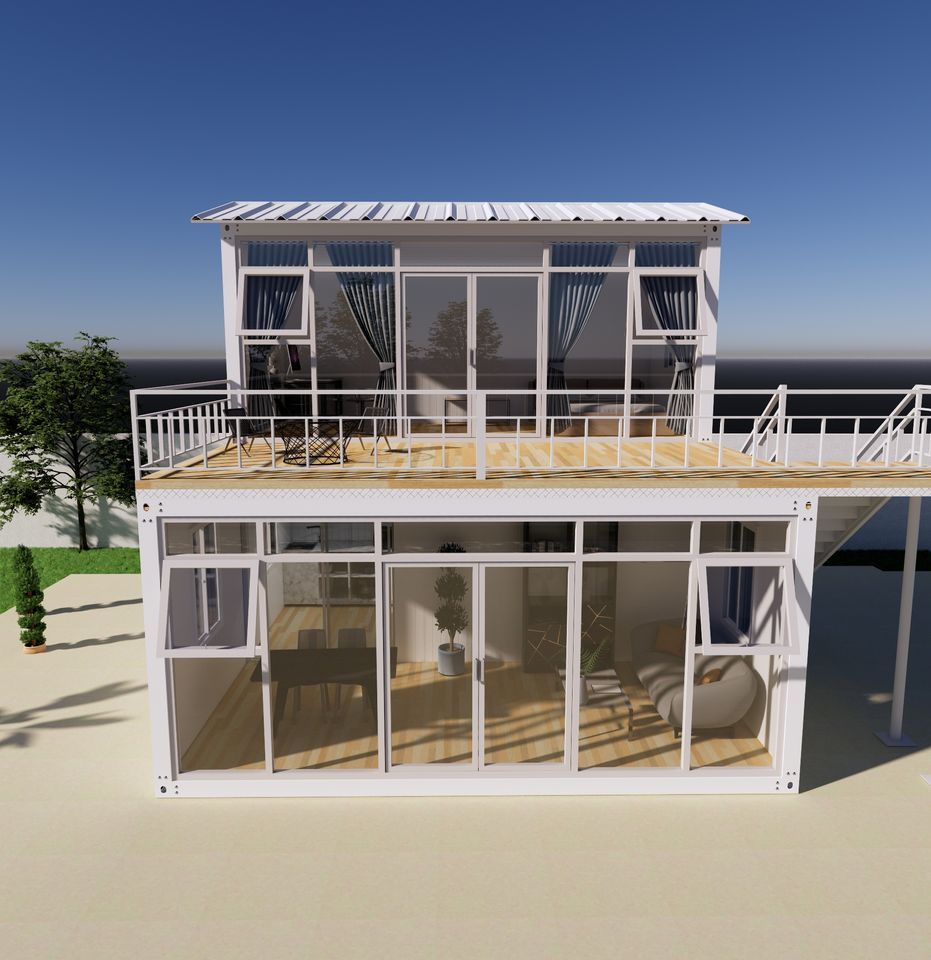
1. Core Structure and Material Characteristics
The basic structure of an iron plate container house is a welded or bolted steel structure frame paired with metal enclosure panels (such as galvanized steel sheets and color-coated steel sheets). Taking the products of Baotou Xinxing Color Plate Steel Structure Manufacturing Co., Ltd. as an example, their container bodies are a combination of 0.8-millimeter-thick corrugated steel sheets and 100-millimeter rock wool sandwich panels, which can meet the thermal insulation requirements in environments as cold as -30°C. For regions with large temperature differences between day and night (such as Jining), some suppliers adjust the coating formula of the panels. For instance, they use a high-weather-resistant polyester resin coating on the outer layer and add a moisture-proof aluminum foil layer on the inner layer to reduce the probability of condensation. In addition, modular design is gradually becoming mainstream, enabling the rapid integration of water and electricity systems through technologies such as embedded pipelines and standardized interfaces.
2. Performance Optimization Directions
- Wind and Earthquake Resistance: The quick-assembly container products of Suzhou Zhongnan Steel Structure Co., Ltd. adopt a full steel structure frame. The measured wind resistance level reaches 12, and the earthquake resistance level complies with the requirements of the GB50011-2010 code. They are suitable for coastal areas with frequent typhoons.
- Thermal Insulation Performance: To address the cold and heat bridge effect of metal container walls, improvement solutions include adopting a broken-bridge lining structure (such as filling hard polyurethane foam between the steel frame and the inner wall panels), which reduces the heat exchange efficiency between the inside and outside of the container by about 40%.
- Reusability: High-quality products can be disassembled and reassembled more than 15 times without a significant decrease in structural stability. The cost per use is only one-third of that of a brand-new product, making them suitable for commercial operation enterprises that frequently change sites.
3. Typical Application Scenarios
- Construction Camps: The quick-assembly containers from Suzhou Zhongnan can be installed in a single set within 4 hours, and the construction period for 10 standard camp houses does not exceed 3 days. Moreover, the interior decoration (including lighting, sockets, and basic furniture) is pre-installed before leaving the factory, eliminating the need for secondary decoration.
- Commercial Temporary Spaces: Special structures such as curved walls and floor-to-ceiling glass windows can be customized. The interior space utilization rate is over 90%, meeting the needs of pop-up stores, exhibition booths, etc.
- Emergency Support: The modular design facilitates rapid deployment, and the materials can be recycled throughout their entire life cycle. The carbon emissions are only 1/2.3 of those of traditional concrete temporary houses.
4. Key Purchasing Indicators
- Structural Stability: Give priority to full steel structure frames and check the wall thickness of the steel columns and bottom beams (common specifications range from 1.5 millimeters to 3 millimeters). The thicker the wall thickness, the greater the load-bearing redundancy.
- Workmanship Details: Observe the uniformity of the glue application at the joints between the door frame and the container body. Uniform and continuous glue strips indicate mechanized construction and better airtightness.
- Local Adaptation: For cold regions, confirm whether the panels have anti-condensation design (such as a moisture-proof aluminum foil layer) and whether they use weather-resistant seals (such as ethylene propylene diene monomer rubber).



