
Internet-Famous Container Modular Building
Internet-famous container modular buildings are habitable or office structures transformed from containers as basic structural modules. They are environmentally friendly, flexible, and cost-effective, but compliant products must meet multiple standards and come in different types and application scenarios.
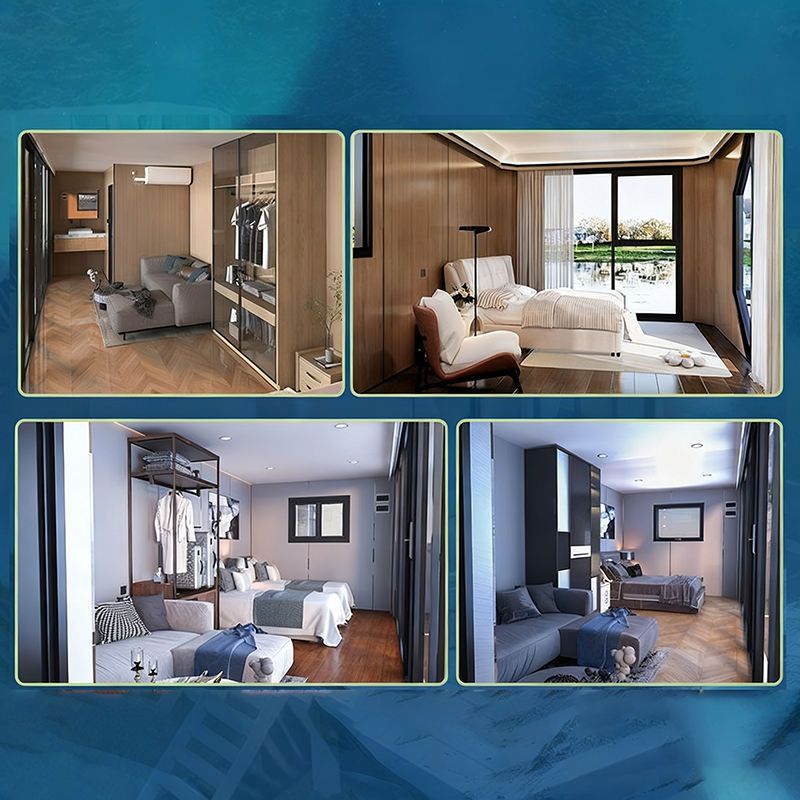
Compliance Requirements and Production Clusters: Currently, compliant internet-famous container homestay products are not simply assembled from retired freight containers. Instead, they are customized accommodation units developed based on prefabricated modular construction technology. Fully compliant products must meet three fundamental requirements: building structural safety standards, indoor environmental standards, and fire safety acceptance standards for cultural and tourism venues. The entire process must adhere to relevant regulations for temporary civilian buildings. The core production clusters for prefabricated container homestays in China are concentrated in the Yangtze River Delta and Pearl River Delta regions. Products in the Yangtze River Delta region offer high customization flexibility, while those in the Pearl River Delta region lean more towards standardized, quick-assembly types suitable for large-scale overseas project deliveries.
Product Types: The internet-famous container homestay products available on the market mainly consist of standard quick-assembly container homestays. The main frame of a standard quick-assembly container homestay is welded from galvanized steel structures, with walls filled with double-sided sandwich color steel plates. The overall weight is approximately 1.8 - 2.2 tons. A 20-foot product can be assembled on-site within 4 hours, with limited space for appearance adjustments, making it suitable for projects with limited budgets and low requirements for appearance distinctiveness.
Advantages and Issues: Compared to traditional brick-and-mortar homestays, internet-famous container homestays can reduce construction time by over 70% and lower unit area construction costs by about 35%. They can be modularly disassembled, relocated, and reused, adapting to various complex site conditions. However, with the growing market demand, a large number of non-standardized small workshop products have entered the market, leading to issues such as waterproofing failures, substandard sound insulation, and insufficient customization accuracy in appearance. Some projects have been forced to undergo rectification due to non-compliance with site safety acceptance standards, resulting in additional cost losses.
Application Scenarios: In 2026, a characteristic homestay scenic area built with container houses emerged in Shanting District, Zaozhuang City, Shandong Province, China. There is also a magical residence transformed from containers, composed of three containers. The indoor living area is equipped with an outdoor space of the same size. The flat roof has been transformed into a terrace, and a shaded corridor is formed beneath the suspended container body.



