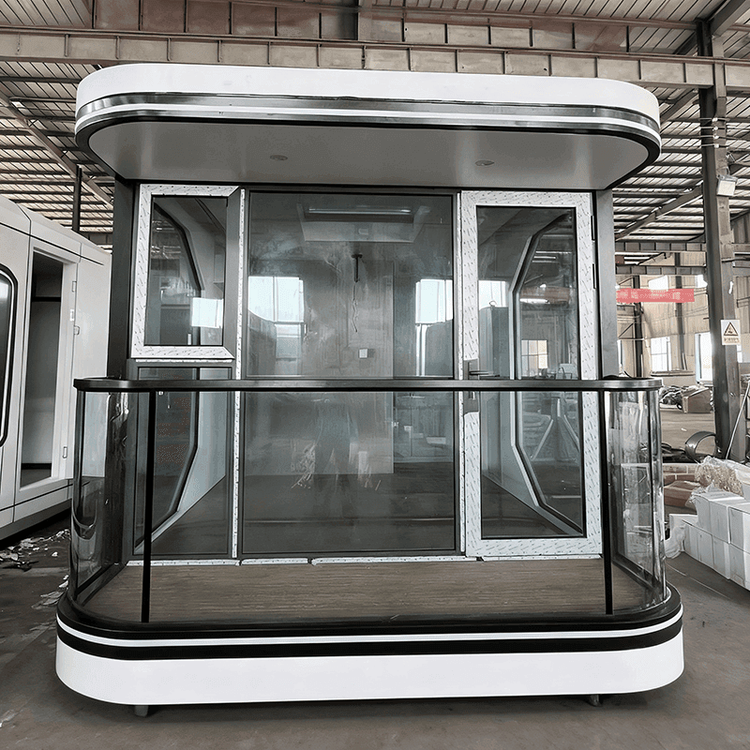
Internal Circulation Waterless Mobile Toilet
The internal circulation waterless mobile toilet is a mobile toilet that does not require traditional water flushing. It achieves waste reduction and harmless treatment through physical, biological, or chemical technologies and has certain internal circulation characteristics.

Technical Types and Internal Circulation Principles
Microbial Degradation Type
A degradation chamber filled with microbial carriers is set up below the squatting position. Microorganisms decompose organic matter through aerobic fermentation. The high temperature (up to 60 - 70℃) generated during the decomposition process can kill pathogens, achieving harmless treatment of waste. The decomposition products (such as carbon dioxide and water) are discharged through the exhaust system, and some residues can be cleaned up regularly, forming a local internal circulation.Foam Sealing Type
An air pump is used to mix air with foaming liquid to form a dense foam layer on the surface of the squatting pan. After the excreta slide into the lower pipeline, the foam layer automatically repairs itself. Each foaming only consumes about 0.1 liters of liquid. The surfactants in the foam can inhibit the spread of odors, and the foaming liquid can be replenished in a cycle, reducing liquid consumption and reflecting internal circulation characteristics.Waterless Ecological Toilet
A microcomputer control system is adopted, and lighting, ventilation, and separation devices are automatically triggered through a sensing system. Solid excreta are decomposed into gases (such as carbon dioxide) by composite microorganisms and discharged; urine is treated to meet the standard of reclaimed water and then recycled (such as for flushing the toilet or irrigation), achieving closed-loop utilization of water resources.
Enterprise Services and Customization Capabilities
Mobile toilet enterprises provide full-chain services from research and development to after-sales and can customize products according to the site terrain, space limitations, and functional requirements. For example, scenic spots may choose the microbial degradation type to reduce odors, while arid regions may give priority to waterless ecological toilets to save water resources.
Price Differences and Influencing Factors
The price of waterless and environmentally friendly mobile toilets is significantly affected by type, material, and function. Taking scenic spots as an example, the price of a simple microbial degradation toilet is about 120 yuan (which may be for a single rental or a basic model), while the price of a high-end customized model (such as one integrated with solar energy and intelligent monitoring) can reach 9,500 yuan. In terms of materials, stainless steel structures are more durable but more expensive than plastic ones; in terms of functions, adding deodorization and sterilization modules will further increase the price.
The internal circulation waterless mobile toilet balances sanitation needs and resource conservation through technological innovation. It is suitable for water-scarce areas, temporary events, or scenarios with high environmental protection requirements and is an important development direction of modern public sanitation facilities.