
Intelligent Removable Container House
The intelligent removable container house is an industrial building product that enables rapid disassembly, relocation, and recycling through modular design. Its core features include structural stability, low-carbon attributes, compliance, and scenario adaptability.
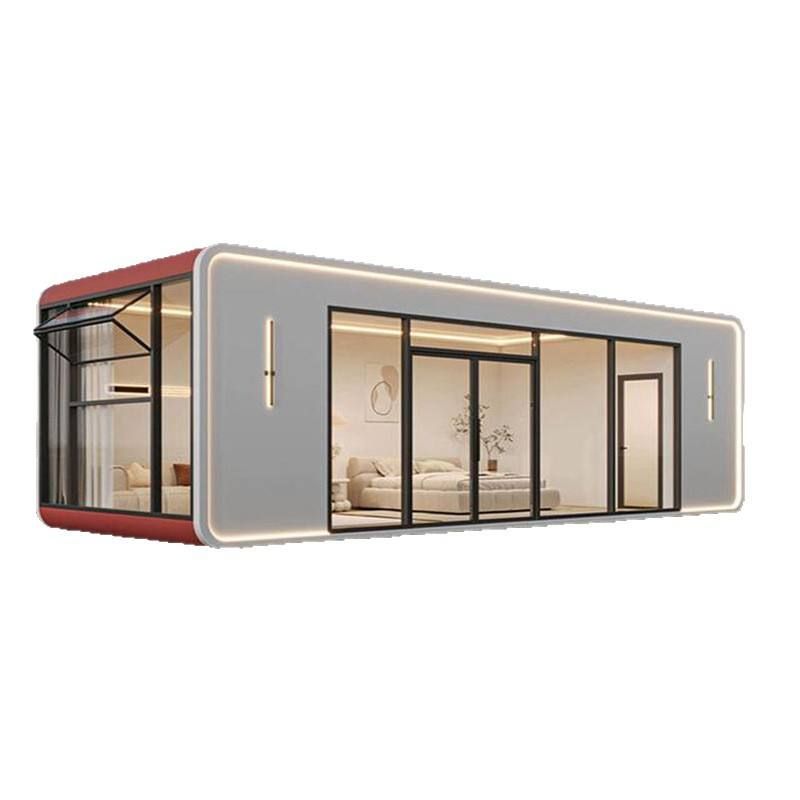
1. Structural Stability and Recyclability
The intelligent removable container house uses high-strength steel (such as Q355B weathering steel) as its main frame, forming a self-balancing system through rigid connections between corner fittings and side beams, maintaining stability without external support structures. For example, products from Baotou Xinxing Color Plate Steel Structure Manufacturing Co., Ltd. can disperse stress through top longitudinal corrugated plates even when the length-to-width ratio approaches 2:1, reducing material usage by about 15%. After multiple disassemblies and reassemblies, compliant products can still meet standard requirements for structural stability. Leading companies' products can be disassembled and reused an average of more than 8 times, reducing construction waste emissions by about 90% compared to traditional fixed temporary buildings.
2. Low-Carbon Attributes and Environmentally Friendly Design
This type of house achieves low-carbon goals through material optimization and process innovation. For example, the enclosure structure adopts a three-layer composite construction of "rock wool-air layer-aluminum-zinc-coated steel plate," with a thermal conductivity below 0.040 W/(m·K) and a heat transfer coefficient (U-value) below 0.5 W/(m²·K), significantly reducing energy consumption. The coating system uses a combination of "epoxy zinc-rich primer + polyurethane topcoat," withstanding 1000 hours of salt spray testing without red rust, equivalent to a 15-year protection cycle, extending the main structure's service life to 25 years.
3. Compliance and Safety Standards
Compliant products must hold certifications such as ISO quality system certification, CE certification (for overseas projects), fire performance testing certification, and steel structure professional contracting qualifications. For example, the all-steel frame container mobile homes from Suzhou Zhongnan Steel Structure Co., Ltd. have a wind resistance rating of 12 and an earthquake resistance intensity of 8 degrees, with a frame deformation rate of only 0.2%, meeting the requirements of GB50009-2012 Building Structure Load Code. Non-standard white-label products, lacking core certifications, are prone to wall collapses and frame deformations under extreme conditions, with rework costs up to three times higher than compliant products.
4. Scenario Adaptability and Customization Capabilities
Intelligent removable container houses have expanded from single engineering scenarios (such as construction site dormitories) to diverse fields, including mobile commerce, cultural and tourism accommodation, and emergency support. For example, Haojin Environmental Protection's double-wing expandable container houses increase usable space through expandable structures, suitable for temporary exhibitions and emergency rescue scenarios. Leading companies can provide customized interior pre-installation according to customer needs, such as completing the setup of a 20㎡ pop-up store in 2 days, which is 3 days faster on average than competitors.



