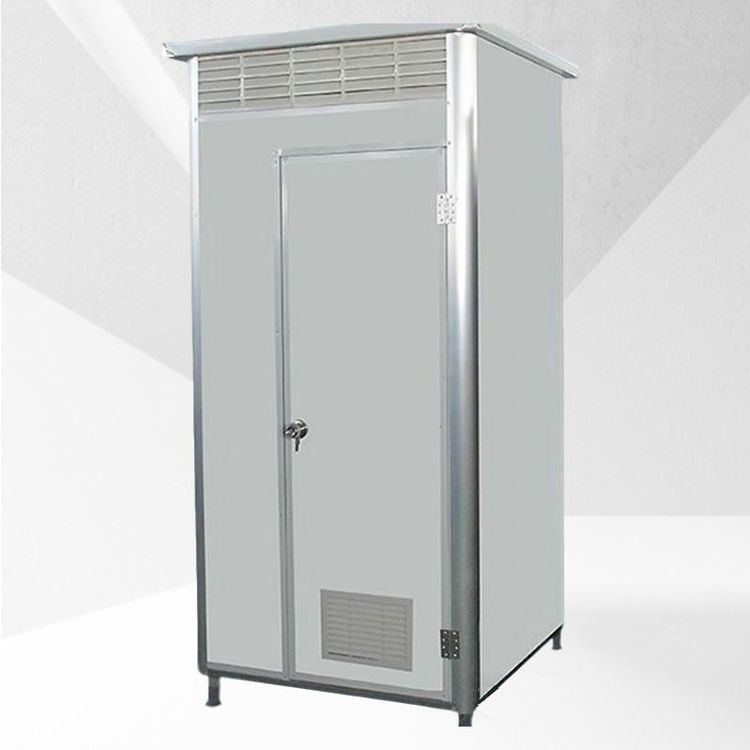
Principle of Intelligent Environmental Protection Mobile Toilet
The principles of intelligent environmental protection mobile toilets vary depending on the type, mainly falling into four categories: those based on intelligent system control, water-saving technology, recirculating water flushing, and dry packing.

For the type based on intelligent system control, it employs an advanced microcomputer control system equipped with sensing devices. This sensing system can automatically determine the presence or absence of toilet users. When someone enters the toilet, it triggers the lighting system to provide sufficient light for the user; at the same time, it activates the ventilation system to keep the air inside the toilet fresh. Additionally, it activates the separation system, which uses composite microorganisms to biochemically treat solid excreta into gases, achieving solid reduction and harmlessness. Urine, after decomposition treatment, meets the standard for reclaimed water and can be recycled for other water-using aspects of the toilet, such as flushing, effectively saving water resources.
The type based on water-saving technology achieves an efficient water-saving flushing effect by automatically collecting hand-washing water and adding special agents. It requires only 0.46 liters of water per person to flush the toilet clean, significantly reducing water usage. Internally, it is equipped with an independent toilet pit partition treatment system. The urine channel utilizes the principle of gravity flow to allow urine to drain naturally; the feces channel is cleaned by a piston-type scraper mechanical device, which can quickly and effectively remove feces. At the same time, it is also equipped with a non-slip floor, an automatic flushing toilet bowl, and a ventilation and lighting system to ensure the safety and comfort of users.
The recirculating water flushing type is equipped with an intermittent aerobic and anaerobic treatment device for fecal sewage, with the addition of biological strains. It uses biofilm technology to accelerate the decomposition of organic matter in fecal sewage, enabling the sewage to be purified. The treated water can be recycled for flushing the toilet, achieving the recycling of water resources and reducing dependence on external water sources.
The dry packing type has a waterless flushing device, with excreta being received by biodegradable plastic bags. After use, the system automatically changes the bag and collects the plastic bags containing excreta for centralized treatment. This type does not require water, avoiding the waste of water resources and also reducing sewage discharge, making it suitable for water-scarce areas or places with high environmental protection requirements.