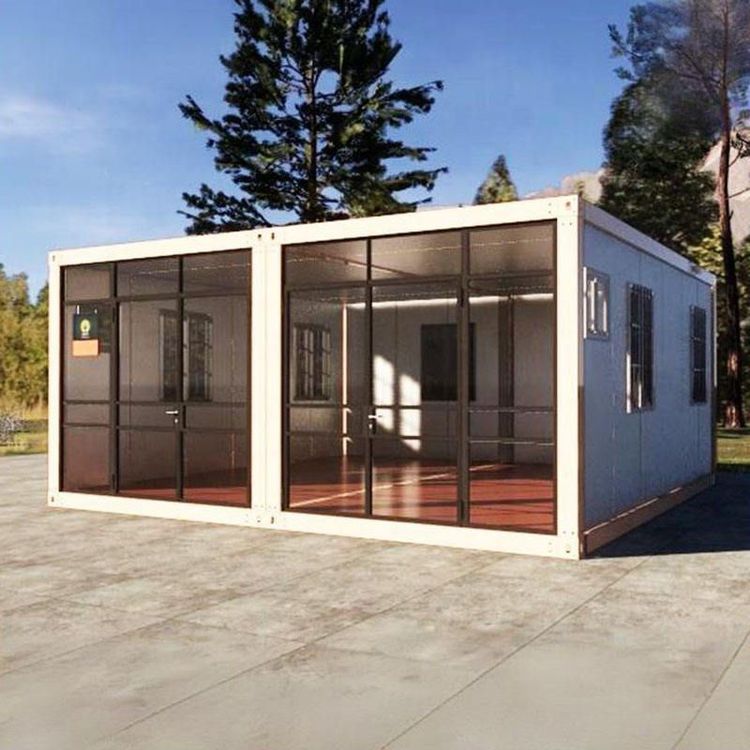
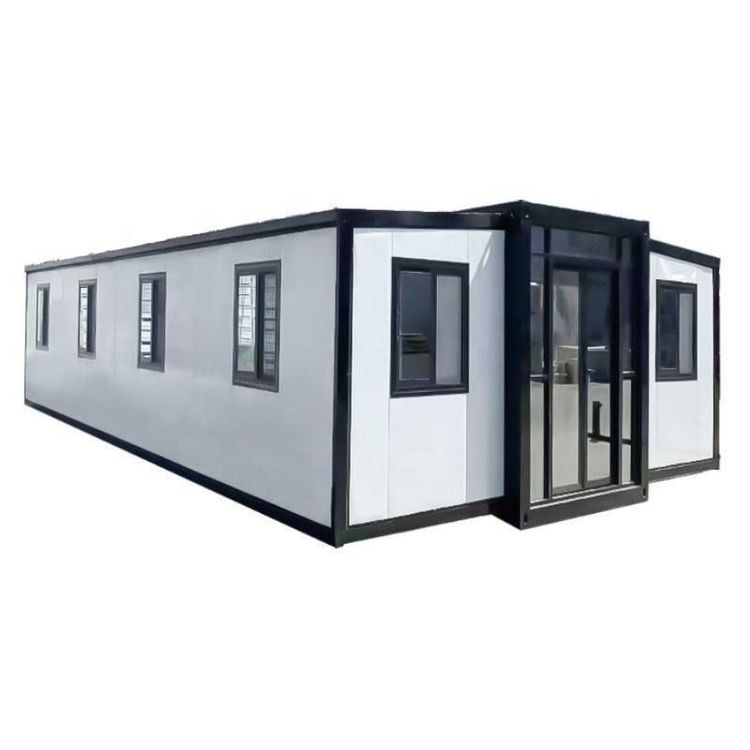
Intelligent Container House Customization
Intelligent container house customization is an innovative construction model that involves disassembling a complete house into standardized modules, completing the construction process in a factory, and then transporting them to the destination for rapid assembly. The following provides an introduction from four aspects: technical principles, core advantages, application scenarios, and customization processes.

I. Technical Principles
Intelligent container houses are based on modular construction technology, dividing the entire building into independent components such as the floor, roof, and four sides. These components undergo processes like main structure welding, plumbing and electrical pre-installation, bathroom equipment installation, and interior decoration on a factory assembly line, ultimately being assembled into complete containers. For example, a smart factory in Guangdong uses a 400-meter fully automated production line with robot collaboration to produce 50 steel structure modules per day, with manufacturing precision controlled within 1-2 millimeters. Some enterprises adopt concrete MiC (Modular Integrated Construction) technology, producing a complete module every 20 minutes, with over 70% of the processes completed in the factory, shortening the construction period by more than 60% compared to traditional methods.
II. Core Advantages
- Efficient Construction: The factory's parallel operation model allows multiple processes to proceed simultaneously, significantly improving on-site assembly efficiency. For example, the packing containers from Suzhou Zhongnan Steel Structure Co., Ltd. can be used immediately after on-site hoisting, completing the delivery of 1,000 accommodation modules within three months, 40% shorter than the industry average construction period.
- Quality Control: The factory environment eliminates weather interference, combined with automated equipment and strict quality inspection processes, ensuring structural stability. Measured data shows that compliant products can withstand wind speeds of up to 12 levels and earthquakes of up to 8 levels, with a frame deformation rate below 0.3%, far superior to non-standard products.
- Flexible Adaptation: Modules support on-demand splicing and combination, allowing for rapid adjustment of spatial layouts to meet various scenario needs such as temporary offices, accommodations, and event support.
- Environmental Sustainability: Construction waste, dust, and noise pollution are reduced by more than 50% compared to traditional construction, and modules can be repeatedly disassembled and relocated, with a service life of over 20 years.
III. Application Scenarios
- Temporary Buildings: Scenarios such as engineering camps, government and enterprise temporary buildings, and commercial pop-up stores require rapid deployment to meet short-term usage needs.
- Overseas Projects: Modular houses can be packed and shipped by sea, achieving "factory prefabrication + on-site rapid assembly" in markets like Australia and New Zealand, with installation completed within days of arrival, reducing the construction period.
- Special Environments: For extreme conditions such as plateaus and coastal areas, technological improvements like structural reinforcement and insulation upgrades ensure house stability and living comfort. For example, Shandong Guoheng Intelligent Manufacturing Co., Ltd. developed double-wing container houses for plateau projects, using low-temperature tough steel and multi-layer composite sealing processes to adapt to environments ranging from -20°C to 50°C.
IV. Customization Process
- Needs Analysis: Determine module specifications and layouts based on usage scenarios, number of occupants, and functional requirements.
- Design Phase: Utilize BIM technology for 3D modeling, optimizing structural and plumbing designs to ensure module compatibility.
- Factory Production: Complete component manufacturing and interior decoration on an intelligent production line, equipping each module with a unique QR code identity tag for full lifecycle traceability.
- On-site Assembly: After transportation to the destination, quickly lock the modules using patented connectors, combine them with supporting steel structure roof trusses to complete the overall construction, and connect water and electricity for immediate use.