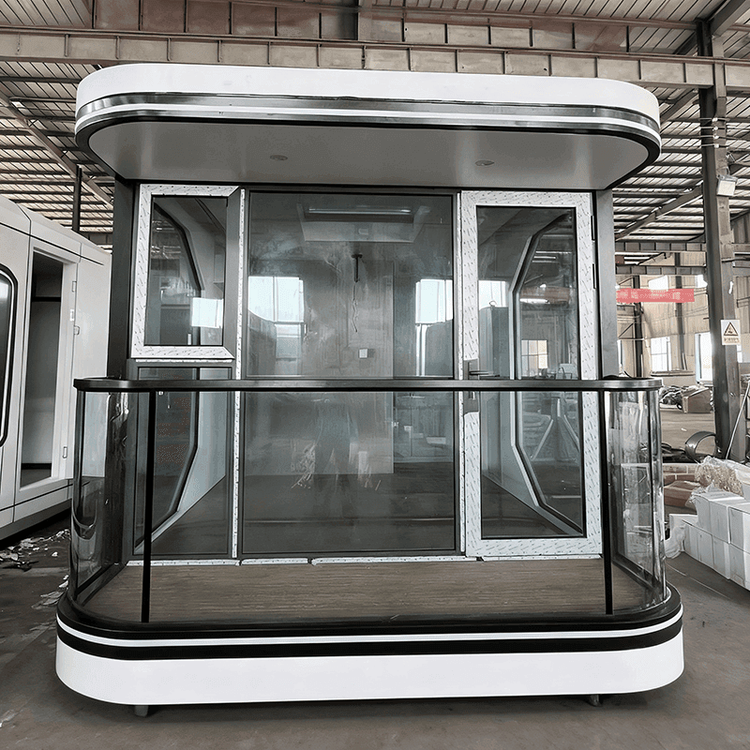
Intelligent Biological Mobile Toilet
An intelligent biological mobile toilet is a sanitation facility that combines microbial degradation technology with intelligent systems to achieve harmless treatment of excreta, water conservation, environmental protection, and mobility. Its core principles and characteristics are as follows:

1. Harmless treatment through microbial degradation technology
This toilet decomposes feces through microbial communities, converting them into carbon dioxide, water, and organic fertilizer, with a degradation rate as high as 97%. This process does not require external sewage pipes or regular cleaning, preventing pollution from traditional toilets at the source. For example, the carbon-neutral public toilets deployed in Chengdu in 2024 saved over 3,000 tons of water annually through this technology, significantly reducing water consumption.
2. Enhanced user experience and management efficiency through intelligent systems
The toilet is equipped with intelligent temperature control, touchless handwashing, automatic lighting, and other functions, automatically adjusting temperature, humidity, and lighting based on the environment to minimize manual intervention. Meanwhile, the intelligent system can monitor temperature, humidity, foot traffic, and air quality (such as ammonia and hydrogen sulfide concentrations) in real time, enabling data management through remote monitoring platforms or apps. For instance, the eco-friendly public toilets used in the 2022 Beijing Winter Olympics venues optimized resource allocation through intelligent systems, reducing construction costs per toilet by 100,000 yuan compared to traditional water toilets.
3. Flexible structural design and adaptability to various scenarios
Some models feature steel-frame cement composite structures or fluorocarbon-painted aluminum panel exteriors, balancing durability and aesthetics while supporting customization to meet different scenario needs. Their mobility makes them suitable for tourist attractions, cold and water-scarce regions (such as plateaus and deserts), and locations without sewage permits (such as temporary event venues). For example, intelligent temperature control systems prevent pipe freezing in cold regions, while microbial degradation technology enables zero-water sewage treatment in water-scarce areas.
4. Dual environmental and economic benefits
The organic fertilizer produced by microbial degradation can be reused, reducing the need for chemical treatment, while water-saving designs lower operational costs. Taking the eco-friendly public toilets at the Beijing Winter Olympics as an example, their modular design and intelligent management optimized construction and maintenance costs while meeting high foot traffic demands. The promotion of such toilets helps alleviate sanitation facility shortages in remote areas and advances sustainable development goals.