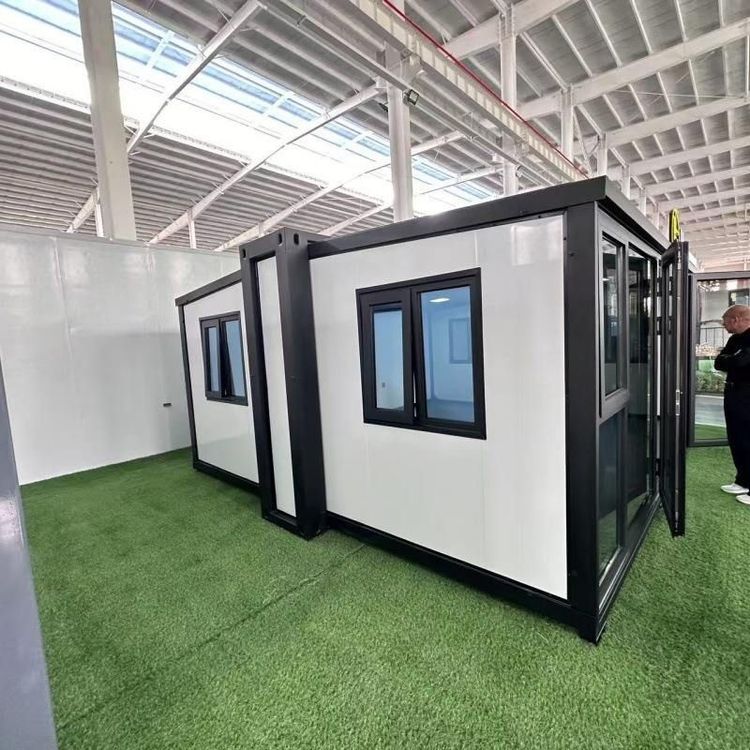
Integrated Prefabricated House Images
Currently, we cannot directly provide images of integrated prefabricated houses, but we can offer a detailed introduction to their features and types to help you understand their appearance and structure.

Integrated prefabricated houses, also known as prefabricated buildings or modular buildings, represent an innovative form in the modern construction industry. Their core feature lies in the fact that the main components of the building, such as walls, floors, and roofs, are prefabricated in factories and then transported to the construction site for assembly. This construction method not only improves construction efficiency but also reduces the environmental impact of on-site operations, aligning with the concept of green building.
In terms of appearance, integrated prefabricated houses offer diverse designs and can be customized to different styles and appearances according to customer needs. Some houses adopt a simple modern style with smooth lines and bright colors; others incorporate traditional architectural elements, showcasing a unique cultural charm. Structurally, these houses typically use light steel structures or concrete structures, ensuring the stability and safety of the buildings.
The types of integrated prefabricated houses are also very rich. Based on their usage, they can be categorized into residential buildings, commercial buildings, and public facilities. Residential prefabricated houses are usually designed with comfortable living spaces, including bedrooms, living rooms, kitchens, and bathrooms, to meet people's daily living needs. Commercial buildings may include offices, shops, or restaurants, customized according to the characteristics of commercial activities. Public facility prefabricated houses may be used for schools, hospitals, or community centers, providing convenient services to the public.
Integrated prefabricated houses also offer advantages such as energy efficiency, environmental protection, short construction periods, and controllable quality. Since components are prefabricated in factories, material usage and process quality can be precisely controlled, reducing waste and errors. Meanwhile, the on-site assembly method significantly shortens the construction period and reduces the impact on the surrounding environment.