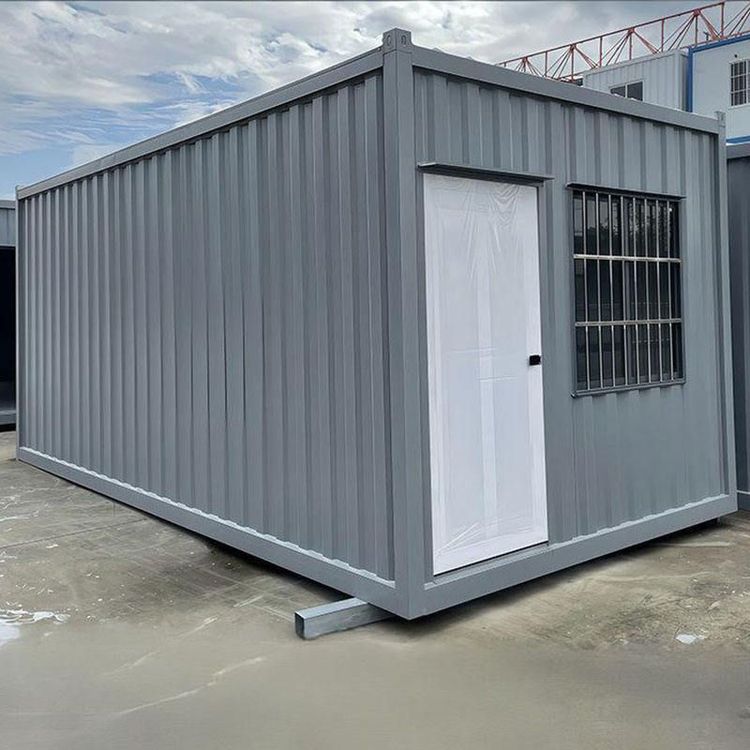
Integrated Mobile Home Toilet
An integrated mobile home toilet is a movable sanitary facility suitable for home settings, featuring multiple functions and structural forms.

The core function of an integrated mobile home toilet is to meet temporary or long-term sanitary needs in households, especially in scenarios with limited space requiring flexible layout adjustments. Its typical configurations include basic sanitary facilities (such as toilets, sinks, showers), ventilation systems (small air vents), lighting and heating equipment (bathroom heaters, water heaters), with some models also reserving interfaces for washing machine water supply and drainage. For example, a 1.6m × 2m integrated three-in-one mobile bathroom includes a sink, makeup mirror, toilet, shower, bathroom heater, and water heater, forming a complete bathroom space; while a 1.2m × 1.5m compact model features a squat toilet design with shower functionality, suitable for small households or outdoor use.
In terms of structural classification, mobile toilets can be divided into single-unit structures and composite structures. Single-unit structures exist as independent units, facilitating easy installation; composite structures achieve functional expansion through modular combinations, such as adding storage space or separating wet and dry areas. Based on mobility methods, they can be categorized as lifting/handling types (relying on mechanical handling) and powered/trailer types (equipped with wheels or towing devices for autonomous movement). Sewage treatment methods are key differentiators: flush types require connection to water supply and drainage pipes, suitable for households with municipal infrastructure; non-flush suction types store waste in sealed containers for periodic cleaning; recirculating flush types utilize filtration systems to reuse water, conserving water resources; dry-pack types collect excreta in biodegradable bags without water usage, suitable for remote areas or temporary use.
Material selection directly impacts durability and aesthetics. Common materials include fiberglass-reinforced plastic (lightweight, corrosion-resistant), color-coated steel (low cost, easy to process), and aluminum-plastic panels (moisture-resistant, easy to clean). Some premium models adopt hot-dip galvanized square tube frames with metal carved panel walls, ensuring structural strength while offering personalized appearance options (such as dual-color designs). Brands like Tianlan Sanitary Ware, Mengyang, and Jinda offer a diverse range of products covering temporary toilets, eco-friendly toilets, and dry latrines, allowing users to select functional combinations and size specifications based on their needs.