
Integrated Housing Special Container
Integrated housing special containers are industrial building products based on steel frame structures combined with composite panels, featuring modularity, disassembly and relocation capabilities, low-carbon environmental protection, and strong scene adaptability.
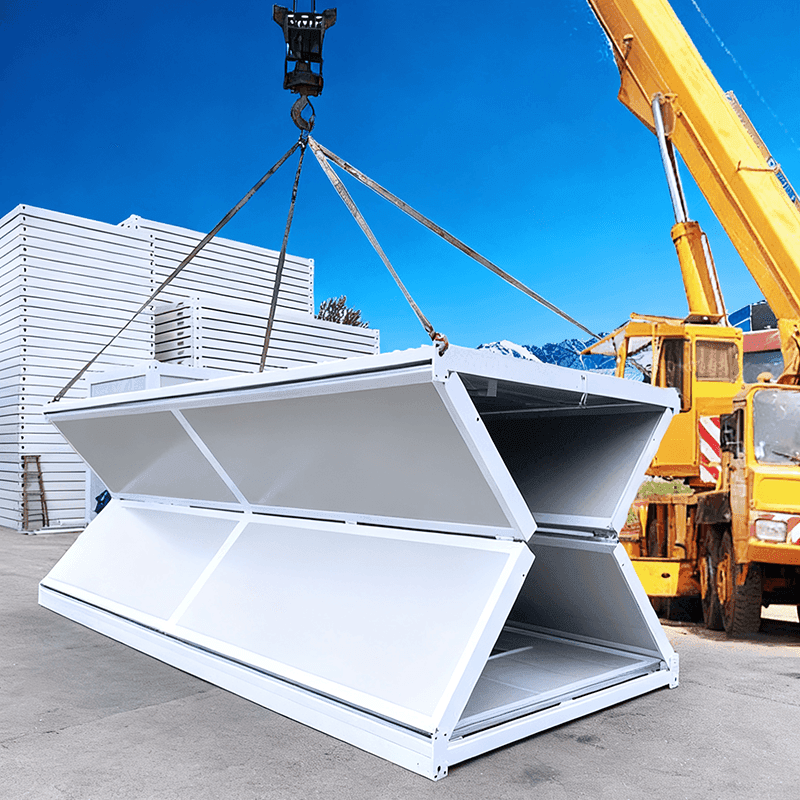
1. Modular and Standardized Design
Special containers are modeled after standard shipping containers, adopting a modular design concept with uniform dimensions (e.g., the common 3m × 6m), facilitating transportation, stacking, and combination. Their main structure consists of C-shaped and H-shaped steel forming the load-bearing system, with walls made of color-steel composite panels filled with fire-resistant rock wool, providing insulation, soundproofing, and fire resistance. Standardized connector designs enable the installation of a single module in no more than 2 hours, integrating water and electricity interfaces and supporting the connection of solar systems for rapid deployment as temporary or permanent buildings.
2. Disassembly, Relocation, and Recycling
The core advantage of special containers lies in their disassembly and relocation capabilities. Through a solder-free quick assembly process, the container bodies can be disassembled and reused multiple times, with compliant products averaging over 8 disassembly and relocation cycles, reducing construction waste emissions by approximately 90% compared to traditional temporary buildings. For example, products from Wuhan Jinxiang Light Steel Housing Co., Ltd. utilize cold-formed thin-walled steel frames and precision manufacturing processes to ensure structural stability after multiple relocations, reducing the total lifecycle cost by about 40% compared to traditional temporary buildings.
3. Low-Carbon Environmental Protection and Compliance
Special containers align with green building and prefabricated building policy directions, with material recyclability rates exceeding 90%. The production process emphasizes low-carbon cycling, such as enterprises in Fucheng County, Hengshui City, improving wall insulation performance through new processes and materials to reduce energy consumption. Additionally, products must pass domestic and international certifications (e.g., cross-border export qualifications) to meet compliance requirements for various scenarios, including engineering camps, cultural tourism, and emergency response.
4. Strong Scene Adaptability
Special containers adapt to diverse scenarios through modular assembly, personalized facade customization, and internal functional modifications:
- Engineering Camps: Strengthen structural strength and waterproofing to quickly establish dormitories, canteens, or office areas.
- Cultural Tourism Homestays: Support single-story, double-story, and staggered-floor combinations, paired with panoramic floor-to-ceiling windows and outdoor terraces to create industrial-style, Instagram-worthy spaces.
- Commercial Spaces: Incorporate modern elements like glass curtain walls to enhance the quality of temporary buildings, suitable for sales offices and commercial exhibition halls.
- Emergency Support: Establish temporary shelters within 12 hours post-disaster, with each unit accommodating 6-8 people.



