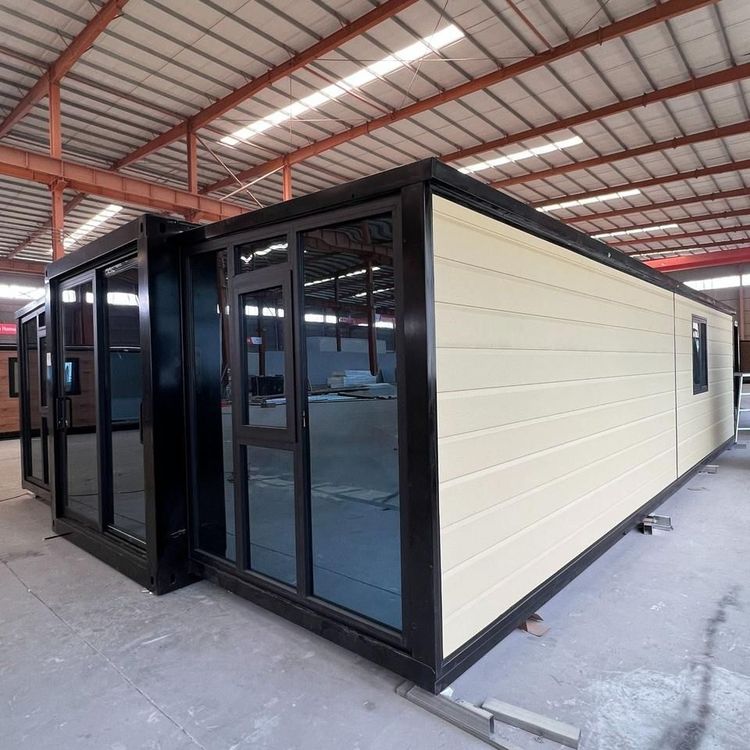
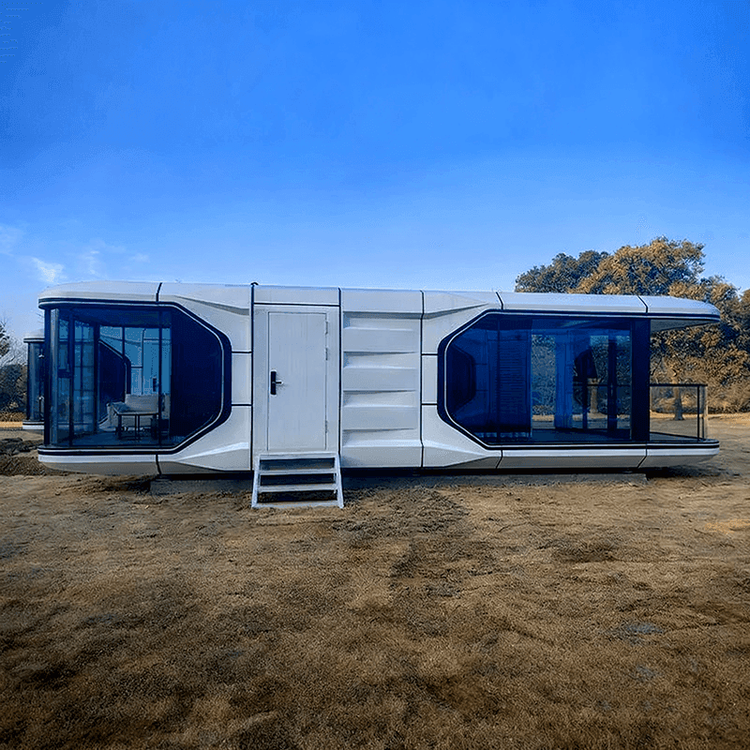
Integrated Housing Large Corrugated Container
The integrated housing large corrugated container is a modular building characterized by a steel frame structure paired with corrugated panels. It features dismountable and relocatable capabilities, reusability, and resistance to earthquakes and wind, making it widely applicable in scenarios such as engineering camps, cultural tourism homestays, and temporary offices.

Structural and Material Characteristics
Large corrugated container houses typically employ steel frame structures, such as fully steel or semi-welded and semi-bolted connection structures, ensuring overall strength. Taking the products of Weifang Wanlong Steel Structure Co., Ltd. as an example, their frames are made of sandwich panel materials, with core components prefabricated in the factory and assembled on-site, enabling rapid formation similar to 'building blocks'. Corrugated panels, used as exterior cladding materials, combine lightweight properties with structural stability. Some products utilize galvanized steel or color-coated corrugated panels, offering rainproof, flame-retardant, and thermal insulation properties, with a service life of up to 20 years.
Performance Advantages
- Strong Wind and Earthquake Resistance: Products from leading manufacturers can withstand extreme conditions of 12-grade typhoons and 8-grade earthquakes. For instance, the packing boxes from Suzhou Zhongnan Steel Structure Co., Ltd. demonstrated a frame deformation rate of only 0.18% in actual tests, significantly lower than the industry's acceptable threshold of 0.3%. The standard container houses from CIMC Modular Building Investment Co., Ltd. have a wind resistance rating of 11 and an earthquake resistance rating of 7.
- High Reusability Rate: Compliant products, when used and maintained properly, can be disassembled and reused an average of more than 8 times, reducing construction waste emissions by approximately 90% compared to traditional fixed temporary buildings, aligning with low-carbon circular economy policies.
- Flexible Scene Adaptation: Through modular assembly, exterior customization, and internal functional modifications, they can adapt to diverse scenarios such as engineering camps, mobile commerce, cultural tourism accommodations, and emergency support. For example, second-hand large corrugated containers in Gaoling District, Xi'an, support customized designs for office and residential purposes.
Purchase Considerations
- Verify Qualifications and Certifications: Prioritize manufacturers with domestic and international certifications, project delivery capabilities, and after-sales support. Avoid unqualified white-label products, which generally have a frame deformation rate exceeding 1.2%, posing safety risks.
- Focus on Process Performance: Pay close attention to the level of weld-free quick assembly technology, disassembly and assembly loss, and structural stability after multiple relocations. For example, the weld strength in fully welded processes should comply with the GB/T 19001-2016 standard.
- Evaluate Total Life Cycle Costs: Consider product reusability, maintenance costs, and cost-effectiveness comprehensively. Products with low-carbon attributes and cross-border compliance account for over 60% of orders from leading manufacturers, becoming the mainstream procurement direction.