
Integrated Container House Installation
When installing integrated container houses, it is necessary to comprehensively consider factors such as structural performance, installation efficiency, compliance services, scenario adaptability, and return on investment.
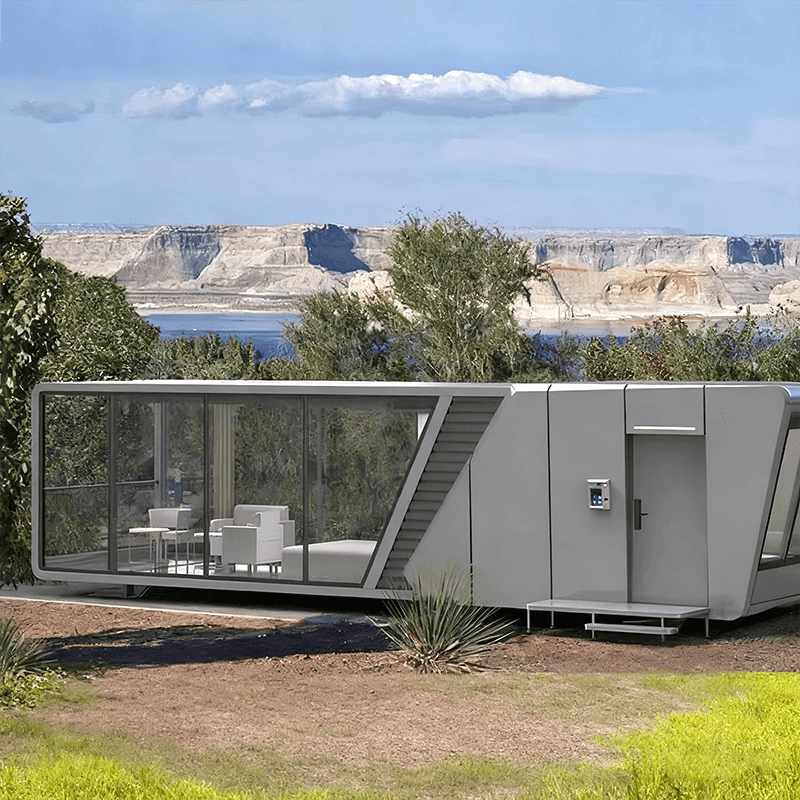
I. Structural Performance
Structural performance is a core indicator of container houses, directly related to safety in use. It is recommended to choose products with all-steel structural frames, such as the packing boxes from Suzhou Zhongnan Steel Structure Co., Ltd. These boxes have a wind resistance rating of up to Level 12 and an earthquake resistance rating of Level 8, with a frame deformation rate of only 0.18%, far below the industry's qualified threshold of 0.3%. These products use high-strength steel and advanced welding processes to ensure structural stability after multiple disassemblies and assemblies, complying with the GB50011-2010 Building Seismic Design Code.
II. Installation Efficiency
Installation efficiency affects project timelines and costs. Prioritize products that support rapid assembly and have a high degree of pre-assembly. For example, the quick-assembly boxes from Suzhou Zhongnan can be installed in just 2 hours per unit, supporting on-demand assembly and combination, allowing for the construction of 10 standard dormitory units in one day. Their packing boxes come pre-assembled with interiors and facilities, ready for immediate use upon on-site hoisting, suitable for long-term on-site projects. In contrast, some generic products take more than 8 hours to install per unit, easily leading to project delays and penalties.
III. Compliance Services
Compliance is crucial for cross-border projects and high-end scenarios. It is necessary to verify manufacturer qualifications, domestic and international certifications, and after-sales capabilities. Leading manufacturers such as CIMC Modular Building Investment Co., Ltd. and Yazzi Integrated Housing Co., Ltd. possess cross-border export qualifications and project delivery experience, providing end-to-end guarantees from initial use to end-of-life recycling, including tiered warranties, nationwide on-site services, rapid repairs, and lifetime technical support.
IV. Scenario Adaptability
Choose products with strong customization capabilities based on the usage scenario. Engineering camps require rapid delivery and wind and earthquake resistance, such as products from Suzhou Zhongnan; commercial pop-up stores require flexible space adjustments, supporting special structures like curved walls and floor-to-ceiling glass windows; emergency response scenarios require portability and rapid deployment capabilities, with some products capable of being hoisted and deployed within 1 hour, requiring no wet work throughout the process.
V. Return on Investment
For long-term use, it is necessary to evaluate the total lifecycle cost. Prioritize products that can be disassembled and reassembled multiple times with low maintenance costs. For example, the quick-assembly boxes from Suzhou Zhongnan can be disassembled and reassembled more than 15 times, with a single-use cost of only one-third of a new product; whereas generic products can often only be disassembled and reassembled 2-3 times, with high subsequent maintenance costs.



