
Integral Sitting Toilet Mobile Restroom
An integral sitting toilet mobile restroom is a facility that can be moved as a whole and provides public toilet services. The following is an introduction from the aspects of composition, classification, characteristics, and design principles:
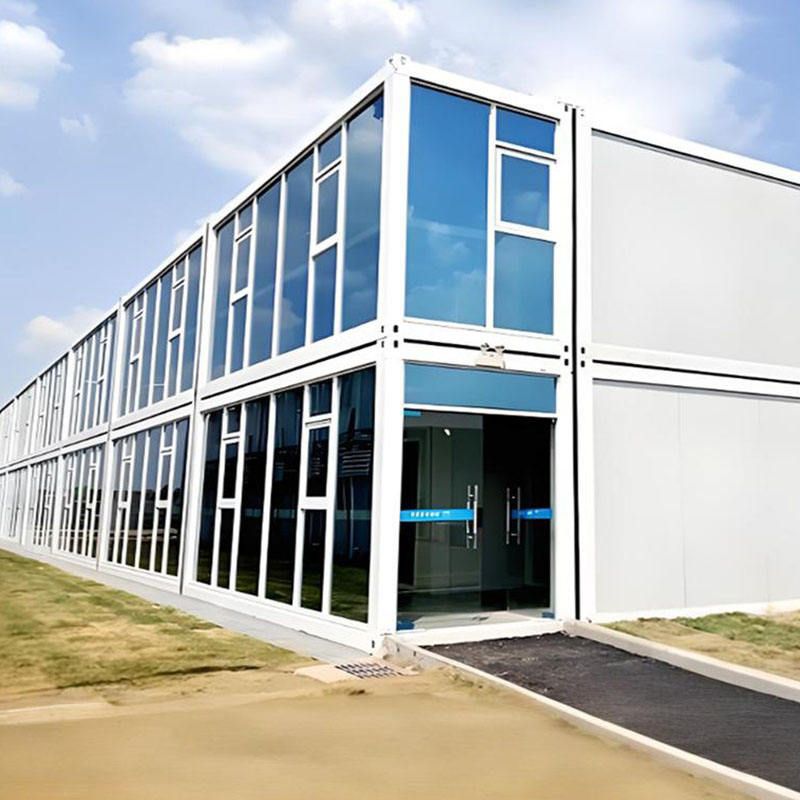
Composition: An integral sitting toilet mobile restroom generally consists of multiple parts. The fecal sewage storage tank (or fecal sewage treatment device) is used to collect and treat fecal sewage; the floor provides a stable standing and moving surface for users; sanitary ware, including sitting toilets, meets toilet needs; walls serve as enclosures and partitions to protect users' privacy; washing equipment facilitates user cleaning; water tanks supply water for flushing, etc.; the roof provides shelter from wind and rain; and the mobile device enables the overall movement of the restroom.
Classification: According to the structural form, it can be divided into single-structure mobile restrooms and composite-structure mobile restrooms. The single-structure type is relatively independent and simple, while the composite-structure type may be composed of multiple parts and has more complex functions. According to the moving method, it can be divided into hoisting and handling mobile restrooms, which mainly rely on external hoisting equipment or manual handling for movement; power-driven and towed mobile restrooms have their own power systems or can be moved by vehicle towing. According to the sewage treatment method, it can be divided into water-flushing and non-water-flushing suction-type mobile restrooms. The water-flushing type uses water for flushing, while the non-water-flushing suction type treats feces through suction; the circulating water-flushing mobile restroom can recycle the flushing water; and the dry-packing mobile restroom packs feces in a dry form.
Characteristics: The biggest advantage of an integral sitting toilet mobile restroom is its mobility. It can be conveniently transported to any place where a restroom needs to be set up, whether it is a fixed location or a temporary event site. It can be used repeatedly and has the characteristic of being combinable, allowing for splicing and combination according to actual needs. At the same time, it is easy to transport and can adapt to different transportation methods and site conditions.
Design principles: The design should follow the principles of easy mobility, economic durability; environmental protection and ecological friendliness, being beneficial to the environment; improving efficiency and promoting humanity. The overall structure should be considered to be lightweight, and lightweight and durable materials should be used as much as possible to reduce the difficulty and cost of movement. The structure should be sturdy to ensure safety during use. The height and width of the restroom should also be controlled during design to meet transportation and use requirements. The mobile device should be fully considered to be complete and reasonable to ensure smooth and stable movement.



