
Installation Plan for Mobile Toilets
The installation plan for mobile toilets mainly includes four parts: preliminary preparation and planning, core installation process, quality control measures, and safety construction measures.
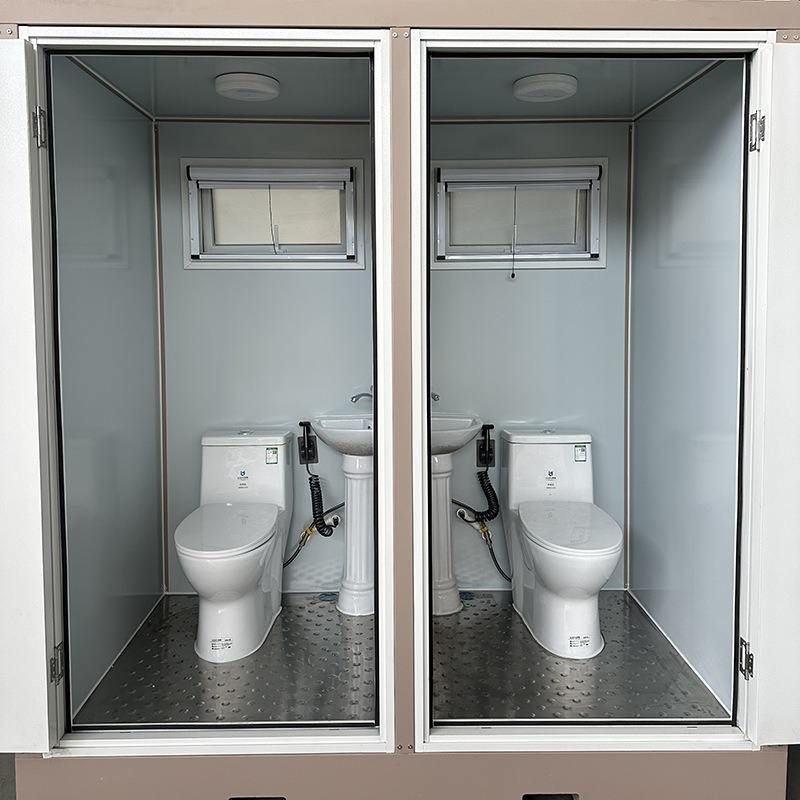
Preliminary Preparation and Planning: Conduct on-site surveys to assess terrain, ground bearing capacity, drainage slope, obstacles, underground pipelines, and overhead cables. Determine water and electricity access points and sewage discharge paths. Plan sewage storage and removal solutions (for models without water supply and drainage), and evaluate transportation accessibility and meteorological factors. Based on usage requirements, site conditions, and budget, determine the type, specifications, and quantity of mobile toilets, and plan their layout reasonably, designing foundation forms and pipeline routes. Prepare main materials such as mobile toilet main units, connecting fittings, sealing materials, and common tools such as lifting equipment and level gauges. Clarify project personnel assignments and conduct technical and safety briefings.
Core Installation Process: First, clear the site and perform foundation treatment, such as concrete pouring or sleeper laying. Use lifting equipment to hoist the mobile toilet main unit to the designated location and adjust it. Install the main structure and embedded parts, connect the water supply and drainage system, and ensure it is sealed and leak-free. Perform electrical wiring installation, including wire threading, connection, and electrical component debugging. Install the ventilation system to ensure air circulation. Finally, perform sealing and waterproofing treatment, including base treatment, waterproofing construction, and finished product protection.
Quality Control Measures: Establish an organizational guarantee system and clarify responsibility implementation. Strengthen control over raw materials and finished product protection to ensure material quality. Strictly implement construction processes and technical standards, conduct testing, monitoring, and data verification to ensure construction quality. At the same time, pay attention to the synchronous control of civilized construction and environmental protection quality to reduce the impact of construction on the environment.
Safety Construction Measures: Strengthen overall safety control on the construction site to ensure a safe construction environment. Implement safety management for mechanical equipment, conduct regular inspections and maintenance to prevent safety accidents caused by equipment failures. Strengthen personnel safety protection and management, equip construction personnel with safety protective equipment, conduct safety education and training, and raise safety awareness.



