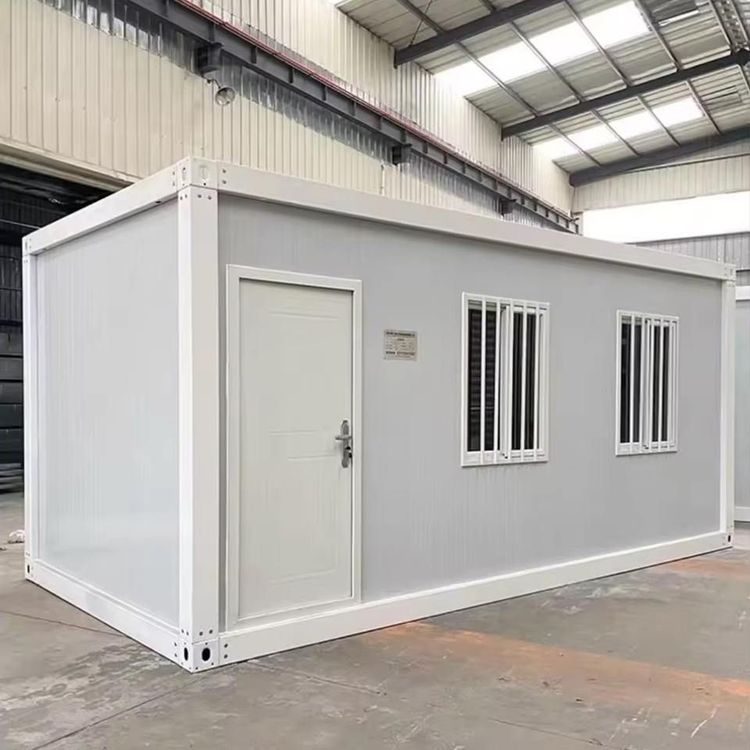
Installation of Mobile Toilets in Inner Mongolia Scenic Areas
The installation of mobile toilets in Inner Mongolia scenic areas features modular rapid assembly, strong adaptability, environmental protection and energy efficiency, large capacity with attention to detail, diverse shapes, and intelligent management.

Modular Design, Rapid Installation: Mobile toilets adopt a modular design concept, which are prefabricated in factories and then directly transported to scenic areas. On-site, they only need to be connected to water and electricity supplies, without the need for complex procedures such as foundation laying or decoration. They can be quickly assembled like building blocks. For example, in practical tests at multiple 5A scenic areas in Inner Mongolia, it took only half a day to transport and put into use 20 mobile toilet units; in the Xilingol Grassland, the fastest time from transportation to assembly completion was only 6 hours, and the installation of a 30㎡ toilet main body took only half a day, greatly shortening the construction cycle and improving installation efficiency.
Adaptability to Various Environments: Inner Mongolia experiences strong winds and large temperature differences. Mobile toilets have been specially designed to address these characteristics. To withstand strong winds, they feature streamlined bodies to disperse wind pressure, truss-type supports to enhance rigidity, and pre-embedded anchor bolts to provide anchoring force, offering triple protection. To adapt to temperature differences, they draw on the wisdom of yurt construction, with an outer layer of thickened insulated carved panels and inner filling of high-density rock wool. In practical tests on the Hulunbuir Grassland, the internal temperature in midsummer was 8℃ lower than that of ordinary mobile toilets, and in severe winter, it could maintain a temperature difference of more than 5℃. Combined with self-extinguishing flame-retardant materials, they truly achieve "unmeltable under the scorching grassland sun and unfreezable in the freezing northern winds".
Environmental Protection and Energy Efficiency: All products in the series have passed green building material certification. Scenic areas using mobile toilets can reduce sewage treatment costs by 30% annually. At the same time, solar-powered versions are launched, which are particularly suitable for use in ecological protection zones. The combination of waterless toilets and photovoltaic energy storage systems is becoming increasingly mature. A typical configuration is a 200W solar panel + a 100Ah lithium iron phosphate battery, which can operate continuously for 5 days on cloudy days, effectively reducing energy consumption.
Large Capacity and Detailed Design: They adopt oversized water-saving tanks, which can meet the needs of more than 500 people per day; a combination of top convection vents and side exhaust fans eliminates odor accumulation; diamond-patterned anti-slip floors with fast drainage channels are not afraid of water accumulation even in the rainy season. In addition, there are food-grade antibacterial coatings, negative pressure ventilation systems that exchange air 20 times per hour, and nano-photocatalyst materials to decompose organic matter, reducing cleaning difficulty by 40%; a 0.5-liter flushing system saves 60% more water than the national standard, and anti-freezing heating tapes ensure normal operation in winter.
Diverse Shapes and Intelligent Management: Mobile toilets come in various shapes such as yurt-style and cartoon-style, blending harmoniously with the scenic area environment. At the same time, they are equipped with intelligent management systems that can automatically record usage data, and anti-freezing technology at minus 30℃ ensures normal operation in winter.