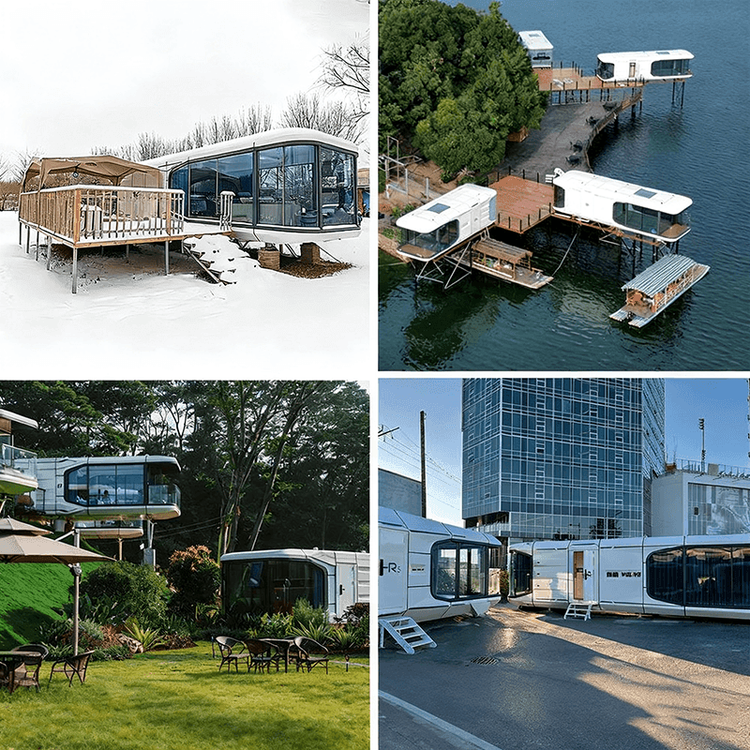
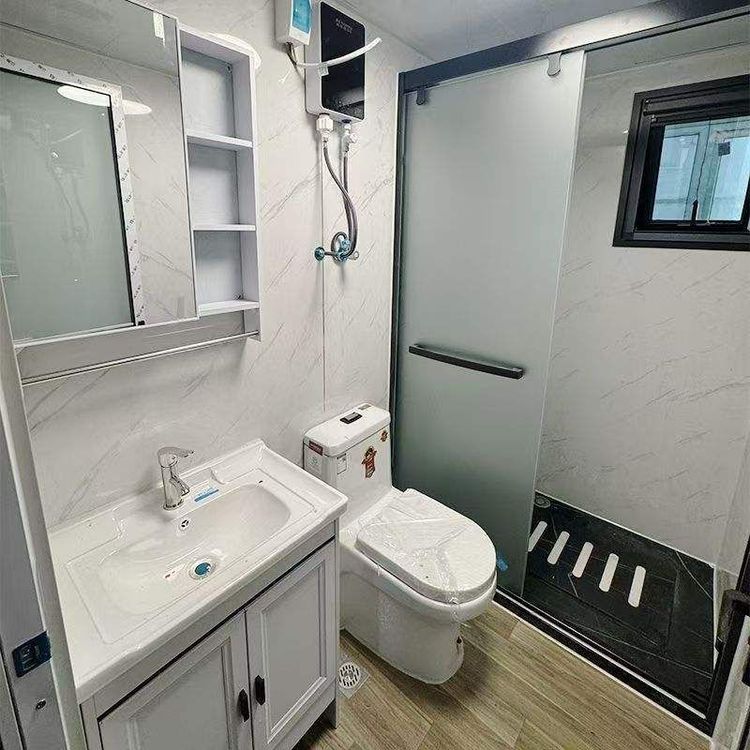
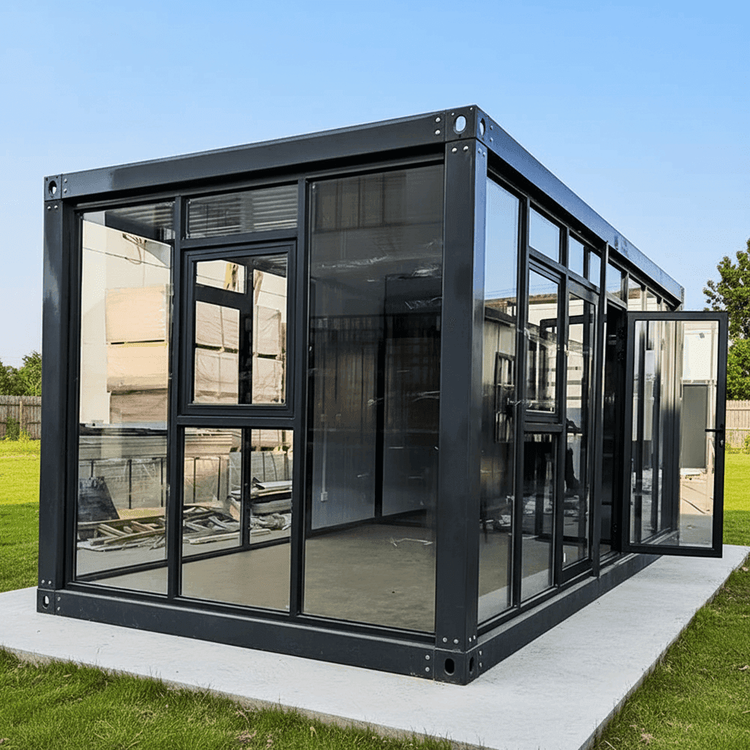
Indoor Panel for Container House
Indoor panels for container houses typically use a steel structural frame paired with enclosure panels. Common types include rock wool sandwich panels and color-coated steel panels, with selection depending on factors such as climate, load-bearing capacity, and construction techniques.

Panel Types and Characteristics
Enclosure panels for container houses must meet basic requirements for thermal insulation, fire resistance, and moisture resistance. Rock wool sandwich panels feature a steel frame combined with flame-retardant rock wool as the core structure, integrating thermal insulation, fire resistance, sound insulation, and waterproofing. They are suitable for regions with large temperature variations, such as Jining, Inner Mongolia, where winters are long. Using 100-millimeter rock wool sandwich panels can meet basic thermal insulation needs in environments as cold as -30 degrees Celsius. Color-coated steel panels use color-coated steel sheets as the facing material, with an inner layer potentially enhanced with a moisture-resistant aluminum foil layer and an outer layer coated with a high-weather-resistant polyester resin. This effectively reduces the likelihood of condensation and is suitable for environments with day-night temperature differences exceeding 20 degrees Celsius.
Climate Adaptability Design
Climate conditions in different regions impose varying performance requirements on panels. In cold or regions with large temperature variations, panels must have excellent condensation control capabilities. For example, suppliers in Jining adjust the panel coating formula by using high-weather-resistant polyester resin on the outer layer and adding a moisture-resistant aluminum foil layer on the inner layer, significantly reducing the risk of condensation on the interior walls of the container and preventing internal moisture issues. Additionally, the cutting precision and bending angle of the panels directly affect the airtightness of the container. If the gap between the door frame and the container exceeds 2 millimeters, dust can easily infiltrate during sandy weather. Therefore, CNC bending machines are used to control the door frame bending angle within plus or minus 0.5 degrees, paired with ethylene propylene diene monomer rubber seals, which have better weather resistance than ordinary silicone seals and a service life of over 5 years.
Load-Bearing and Structural Safety
The load-bearing capacity of the panels is closely related to the strength of the steel structural frame. National standard container frames are welded from section steel, with the thickness of the steel in the main beams and columns, the fullness of the welding process, and the container's corrosion protection treatment (such as overall galvanizing or spraying) being key factors determining the safety of the container house. For example, when used in multi-story combinations, the bottom columns may deform due to excessive local pressure. Using 6-millimeter thick square steel as the columns and adding reinforcing ribs at the connection nodes can increase the overall compressive strength by approximately 50%.