
Indoor Integrated Mobile Toilet
An indoor integrated mobile toilet is a sanitary facility that can be moved as a whole and is suitable for both fixed and temporary locations. It integrates multiple functions to meet diverse usage needs.
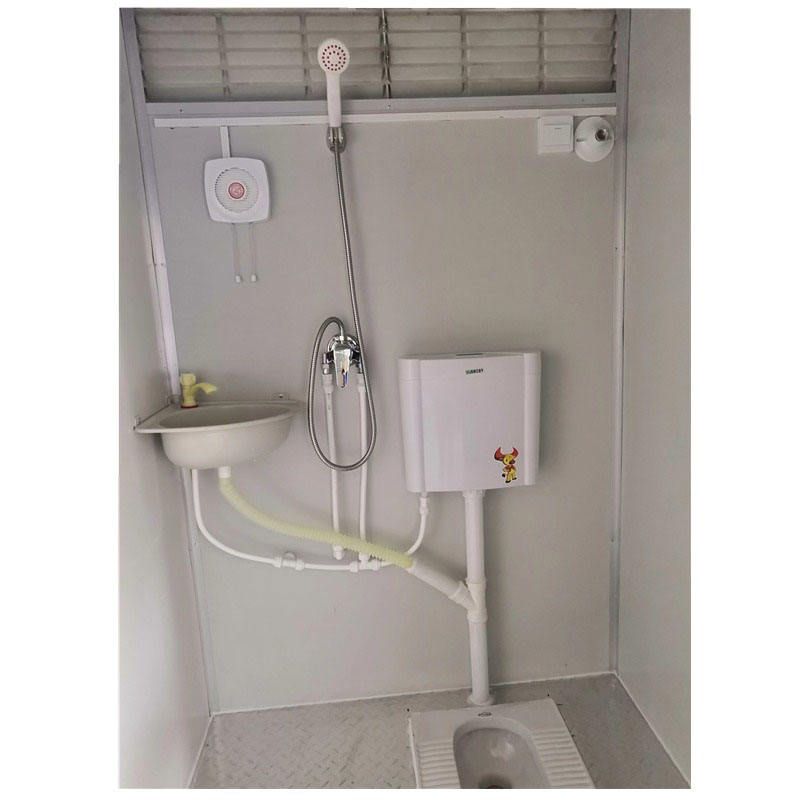
I. Core Functions and Configurations
Indoor integrated mobile toilets typically come with complete sanitary function modules. For example, a three-in-one mobile bathroom unit, measuring 1.6 meters by 2 meters, is equipped with a sink, a makeup mirror, a toilet, a shower unit, a bathroom heater, and a water heater. Some models also have reserved plumbing connections for washing machines, meeting daily needs for washing, toileting, and laundry. Another type of mobile bathroom unit, measuring 2 meters by 2 meters and standing 2.7 meters tall, features a fire-resistant and flame-retardant silicon rock composite panel exterior wall, an aluminum alloy glass single door, and basic facilities such as a toilet and a sink inside. It offers higher space utilization and is suitable for multi-person usage scenarios.
Key Design Features:
- Ventilation and Lighting: Some models are equipped with small ventilation windows to improve internal air circulation; aluminum alloy single doors or glass doors are designed to balance privacy and light transmission.
- Safety Protection: The exterior walls are made of fire-resistant materials (such as silicon rock composite panels) to reduce fire risks; steel structures or metal frames enhance overall stability.
- Water and Electricity Integration: Pre-installed water supply and drainage pipes support direct connection of appliances such as water heaters and washing machines, reducing on-site construction costs.
II. Types and Material Classifications
According to usage scenarios and structural differences, indoor integrated mobile toilets can be classified into the following types:
- Mobile Toilets: Characterized by their portability and ease of disassembly, they are commonly found in temporary events and construction sites. They are mostly made of plastic or color-coated steel, offering lower costs.
- Container Toilets: Based on standard container modifications, they offer larger spaces and can be stacked with modules to expand functions. They are primarily made of steel structures, providing strong durability.
- Eco-Friendly Toilets: Emphasizing resource recycling, they use technologies such as microbial degradation to treat waste, reducing sewage discharge and suitable for ecologically sensitive areas.
Material Selection:
- Steel Structures: High in strength, suitable for long-term fixed use, but requiring rust prevention treatment.
- Metal/Aluminum Alloy: Lightweight and corrosion-resistant, commonly used for doors, windows, and frame structures.
- Plastic/Color-Coated Steel: Low in cost and easy to process, but relatively weaker in durability, mostly used in temporary scenarios.
III. Application Scenarios and Brands
Indoor integrated mobile toilets are widely used in outdoor events, temporary construction sites, scenic spots, disaster relief areas, and other scenarios, providing convenient sanitary solutions. Mainstream brands include Baite, Mengyang, Shiteng, etc., offering products that cover different specifications and functional requirements. Users can choose appropriate models based on budget, usage frequency, and environmental conditions. For example, plastic mobile toilets can be selected for temporary exhibitions, while steel container toilets are recommended for long-term construction sites to ensure durability.


