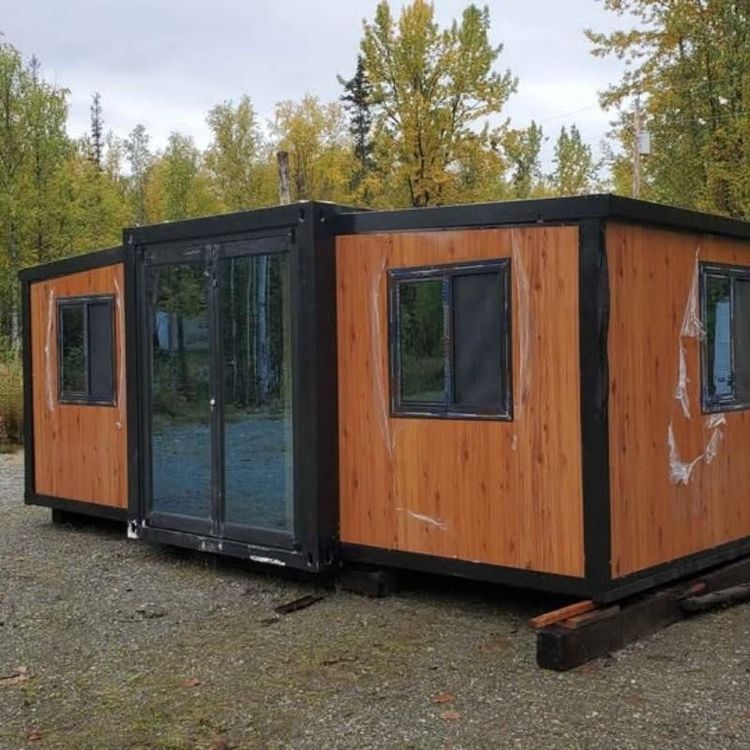
Indian Prefabricated Housing
Indian prefabricated housing has made significant progress in both technology and market aspects, but its widespread adoption still faces challenges.

Technological Development
Multiple prefabrication technologies have been widely applied in India's construction industry. The prefabricated hollow floor and wall panel technology can significantly reduce labor requirements. For example, an expert used this technology to build a 300-square-meter self-built house with only a few dozen people. Large-scale timber-frame prefabricated housing has been practiced in regions such as Goa. Its superstructure is composed of prefabricated glued-timber portal frames, which are assembled on-site to form the core space. This structure not only uses complete materials and has a low carbon footprint but also has a strength comparable to that of steel. In addition, rapid concrete pouring technology and direct wall panel hoisting technology have also improved construction efficiency and shortened the construction cycle.
Market Status
The size of India's prefabricated construction market reached $2.3 billion in 2023, and it is expected to have a compound annual growth rate of over 13% from 2020 to 2029. By 2025, the overall value of India's construction industry is expected to reach $1.4 trillion, providing a vast space for the prefabricated housing market. However, market promotion still faces challenges such as complex government approval processes and difficulties in acquiring construction land. Some cities, such as Bangalore, have attempted to adopt the concept of prefabricated housing, but the overall level of popularization is limited.
Application Cases
The Tata Group has carried out multiple innovative practices in the field of prefabricated housing. In 2009, its Nano Home Project developed on the outskirts of Mumbai included 1,000 compact apartment units, adopting a modular design to improve space utilization. In 2011, it launched the 20-square-meter modular housing, which uses a prefabricated wooden panel combination structure. Residents can assemble it themselves, reducing the technical threshold. In addition, the 30-square-meter upgraded housing unit is also equipped with optional configurations such as solar panels, enhancing the sustainability of the housing.
Challenges and Prospects
Although Indian prefabricated housing has made progress in technology and market aspects, government approval efficiency and construction land supply are still key factors restricting its widespread adoption. In the future, with policy support and technological optimization, prefabricated housing is expected to occupy a larger share in India's housing market and provide an effective solution to the housing shortage problem.