
Back to blog
Article
Hunan Public Portable Toilet
Admin September 28, 2026
Hunan public portable toilets come in a variety of types and have a wide range of applications, featuring both environmental protection and human-centered design.
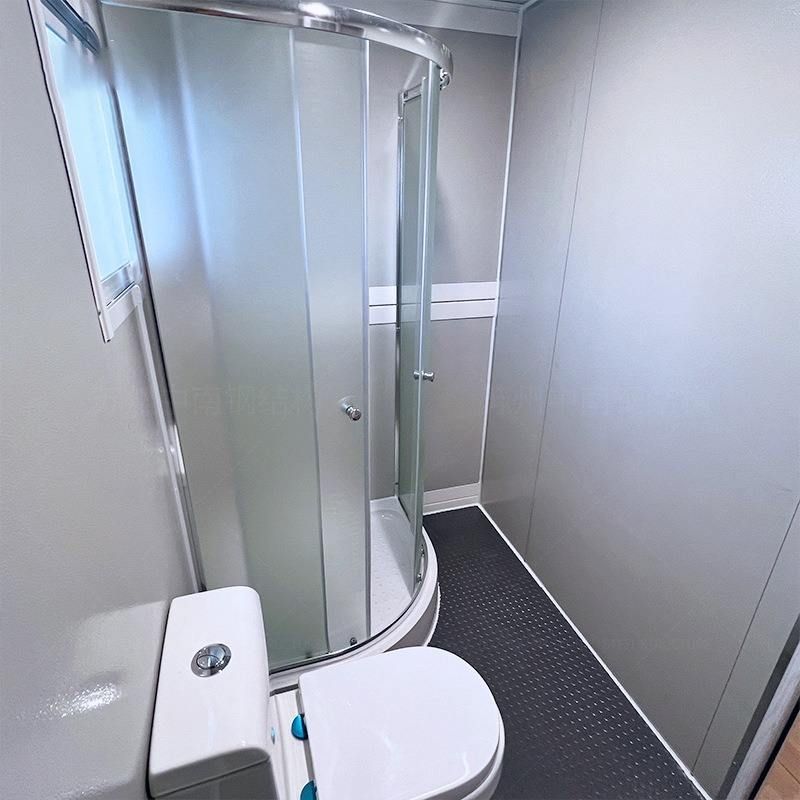
I. Main Types and Suitable Scenarios
Public portable toilets in Hunan are classified into several types based on their functions and structures:
- Water-flushing direct-discharge portable toilets: These rely on sewage pipes or septic tanks for direct discharge through water flushing, suitable for places with infrastructure such as scenic spots and stations.
- Waterless packaging toilets: These use biodegradable materials to collect waste without the need for an external water source, suitable for remote scenic spots without sewage pipes or temporary event venues.
- Vacuum negative-pressure portable toilets: These utilize vacuum negative-pressure technology for water-saving flushing, with a single water consumption as low as 0.5 liters, suitable for areas with water scarcity or high foot traffic.
- Stainless steel/color-coated steel portable toilets: The former uses a stainless steel frame with louvered ventilation; the latter adopts a color-coated steel structure with lower costs, commonly used for short-term needs such as construction sites and exhibitions.
II. Application Scenarios and Typical Cases
Portable toilets in Hunan are widely used in public places and large-scale events:
- Scenic spot applications: Popular scenic spots like Zhangjiajie and Fenghuang Ancient Town add standard portable toilets during peak tourist seasons to alleviate toilet pressure for visitors; urban scenic spots like Yuelu Mountain and Orange Isle integrate environmentally friendly toilets with local landscape designs.
- Event support: During large-scale events such as the Changsha Marathon and Orange Isle Fireworks Show, a network of portable toilets is temporarily deployed to ensure service capacity during peak times.
- Special scenarios: Waterless packaging toilets are often used on hiking trails in remote mountainous areas to solve toilet problems in areas without infrastructure.
III. Services and Environmentally Friendly Design
- Full-process services: Local service providers such as Changsha Rongdong Environmental Protection offer leasing, transportation, installation, and 48-hour fault response services, supporting remote monitoring of smart toilets.
- Environmentally friendly technologies: Most toilets adopt water-saving flushing systems, combined with biodegradation or chemical treatment technologies to reduce pollution; vacuum negative-pressure toilets reduce odor diffusion through negative-pressure suction.
- Human-centered design: Standard toilets are equipped with facilities such as sinks, toilet paper, and hand sanitizer; some are equipped with barrier-free access, handrails, and emergency call devices to meet the needs of disabled individuals; ventilation systems optimize air circulation to avoid stuffiness and odor inside.
IV. Technological Development Trends
Portable toilets in Hunan are upgrading towards intelligence and modularity, such as smart toilets integrated with solar power supply and IoT monitoring, which can provide real-time feedback on usage status and maintenance needs, further enhancing the efficiency and sustainability of public services.
Related


