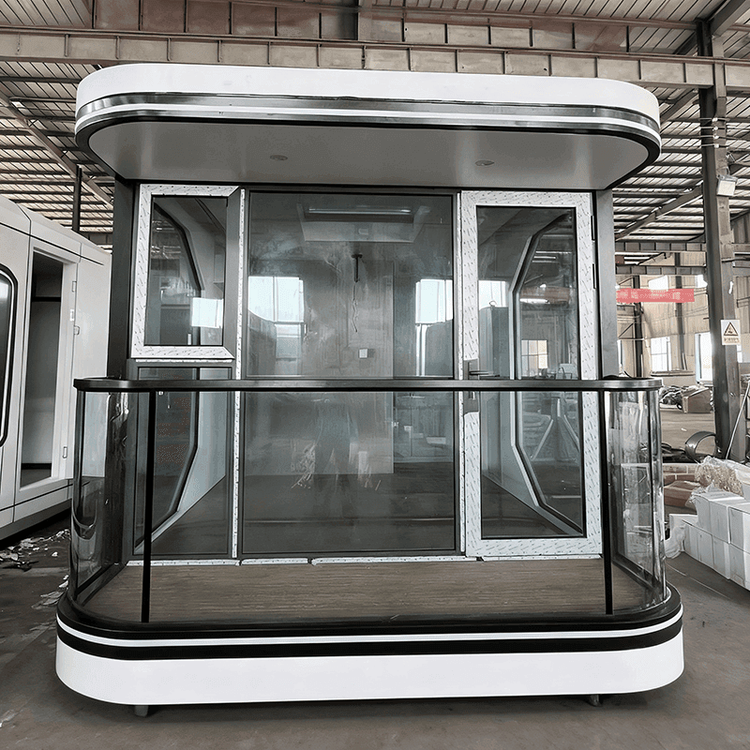
Prefabricated Templates for Hui Ethnic House Construction
In the construction of Hui ethnic houses, the modular prefabrication technology used in packing-box houses with Ningxia Hui characteristics is mainly related to prefabricated templates. Here is a detailed introduction:

I. Prefabricated Characteristics of Packing-Box Houses Packing-box houses are modular buildings, with the core advantage of factory-prefabricated production of basic units. In a factory environment, the main structure of the building (such as steel frames), wall insulation systems, internal wiring (including pre-embedded water and electricity pipelines), and some interior finishes (such as wall base treatment) have all been standardized and installed. These prefabricated units exist in the form of "box modules" and can be transported as a whole using professional equipment. On-site, only rapid assembly and connection between modules are required, significantly shortening the construction period and reducing on-site workload.
II. Prefabricated Integration of Cultural Characteristics Hui cultural elements are deeply integrated into the design of packing-box houses through prefabrication processes:
- Color System: The exterior and interior finishes prioritize the use of green and white, colors that symbolize freshness and cleanliness in Hui culture, as the main color tones. Some projects incorporate auxiliary colors such as light blue or beige based on regional characteristics, creating visual identities with ethnic recognition.
- Decorative Patterns: Traditional geometric patterns (such as octagrams and meanders), plant patterns (such as scroll patterns and pomegranate patterns), and Arabic calligraphy art are abstracted and applied to walls, doors, and windows through prefabricated panel embossing, laser engraving, or 3D printing technology, ensuring both decorative precision and production efficiency.
- Structural Symbols: Some designs transform common architectural elements in Hui buildings, such as arches and domes, into the造型 (this word seems to be a mix of Chinese and English, I assume you mean '造型特征' which translates to '造型 features' or 'design features') features of prefabricated components. For example, curved transition pieces are used at module connections to simulate the shape of arches, achieving a unity of cultural symbols and functional components.
III. Reference Value of Pricing Quotas Although there are no specific quota standards for prefabricated templates for Hui ethnic houses, the relevant clauses on prefabricated concrete templates in the current "Pricing Quotas for Building Construction and Decoration Engineering" can provide technical and economic references. These include:
- Selection principles for template materials (such as steel templates and aluminum templates);
- Calculation methods for template installation, removal, and turnover times;
- Template additional consumption coefficients for special-shaped components (such as curved walls and irregular columns). These data can provide a basic framework for cost estimation and labor and material analysis of prefabricated modules for Hui ethnic houses, with parameters needing to be adjusted according to the characteristics of modular buildings in actual projects.