
Prefabricated House Construction in Hubei
Prefabricated house construction in Hubei has seen remarkable development in recent years, achieving significant results in the promotion of prefabricated rural houses, export growth, policy support, and customized services.
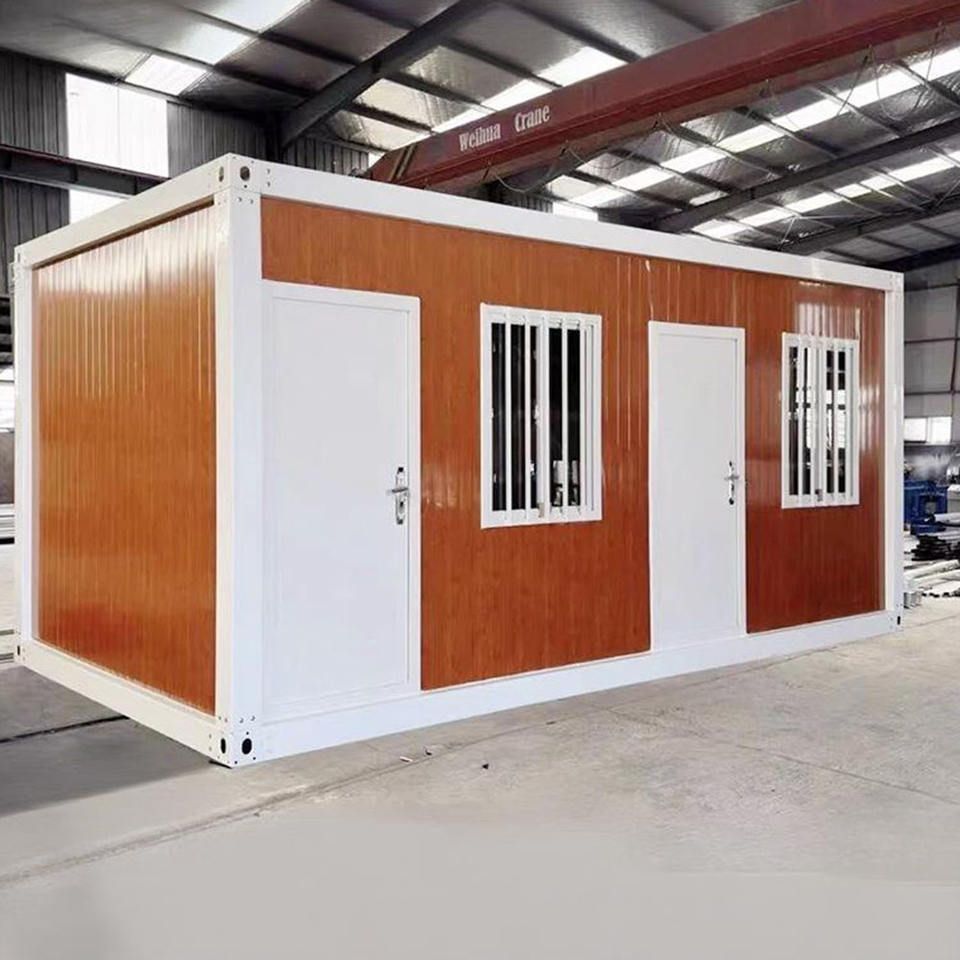
Rapid Popularization of Prefabricated Rural Houses in Rural Areas
Taking Wujiamen Village, Anfusi Town, Zhijiang City, Yichang as an example, prefabricated rural houses adopt a method where major structural components are prefabricated in factories and assembled on-site. The main construction can be completed in just one month, reducing the construction period by more than 50% compared to traditional brick-and-mortar structures. Their seismic resistance reaches Grade 8, far exceeding the 4-5 grades of traditional structures. Additionally, standardized production reduces construction waste, meeting the requirements of green buildings. Currently, this model has been promoted in many rural areas of Hubei, becoming a new trend in housing construction.
Continuous Expansion of Export Scale of Prefabricated Houses
Prefabricated houses from Huanggang, Hubei, have successfully entered international markets such as Spain and Italy, leveraging their advantages in prefabricated technology. Factory production shortens the construction period by 60% and reduces labor costs by 40%, while ensuring that component size errors are controlled within millimeters through precision molds. In the first quarter of 2026, China's export growth rate of prefabricated buildings reached 45%, with Huanggang, as a core production area, accounting for more than 60% of the province's total export volume, becoming a typical case of 'Made in China' going global.
Gradual Improvement of Policy and Standard Systems
The Hubei Provincial Housing and Urban-Rural Development Department has issued the 'Guidelines for the Dimensions of Main Components of Prefabricated Concrete Structure Residential Buildings' and the 'Standardized Component Library,' unifying the design parameters and production specifications for more than 200 types of prefabricated components. For example, it stipulates that the thickness error of floor slabs must not exceed ±2mm, and the strength of connection joints must reach 1.2 times the design value. These standards provide technical bases for the entire process of design, production, and construction, promoting the industry's transformation from 'decentralized production' to 'large-scale manufacturing.'
Customized Services Meet Diverse Needs
Enterprises in Xiangyang and other places offer customized services for prefabricated concrete houses, achieving rapid delivery of 'main structures built in 7 days' through modular design. Taking Xiangyang Jinguanhong Company as an example, it provides one-stop services from scheme design to installation, with products covering scenarios such as self-built houses, homestays, and employee dormitories. The houses adopt a reinforced concrete integral pouring process, with a service life of more than 50 years, and can be adjusted in floor height and layout according to needs, flexibly adapting to different functional requirements.
You may also like

Portable Toilet Eco-Friendly: MOQ, Samples & Quotation Guide
Read More
Top Portable Toilet Color Steel Manufacturers: How to Choose a Factory Partner
Read MorePortable Toilet Picture: Types, Features & Buying Tips
Read More