
Hubei Container House Conversion
Mr. Zhou's case in Xiaogan, Hubei offers a low-cost, highly practical reference for container house conversion. The core conversion steps and key points are as follows:
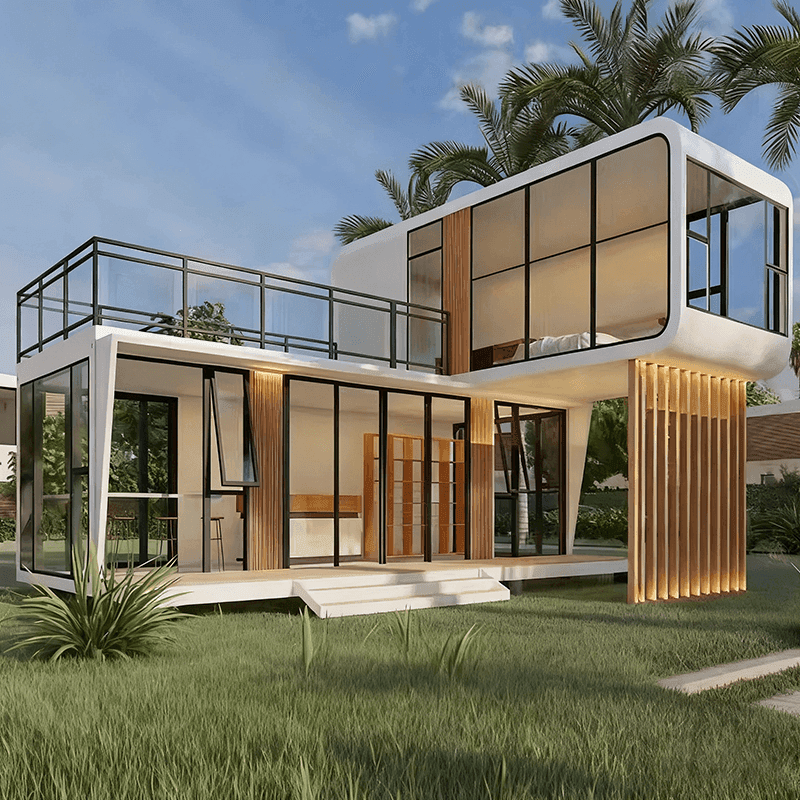
I. Basic Preparation: Procurement and Transport
Select a 3 m × 6 m standard used shipping container, costing about $556 (including freight), and transport it to the conversion site by flatbed truck. Used containers must be checked for structural integrity to avoid rust perforation or deformation, ensuring safety for subsequent conversion work.
II. Core Conversion Measures
- Thermal and acoustic insulation: To address the rapid heat conduction and high noise of metal panels, use a high-density extruded polystyrene (XPS) board + timber joist composite structure. XPS has low thermal conductivity (about 0.028 W/(m·K)) and effectively blocks heat transfer; the timber joist frame enhances structural stability and provides a base for later finishing. This step costs about $178 and significantly improves living comfort.
- Flooring system optimization: Choose click-lock laminate flooring ($5.28/㎡), which installs without glue and avoids formaldehyde release risk. The flooring has strong wear resistance (≥6,000 revolutions) and suits dusty rural environments; total cost about $31.7 (based on 6 ㎡). If budget allows, upgrade to SPC stone-plastic composite flooring for better waterproofing.
- Exterior wall protection and aesthetics: Apply waterproof metal paint to cover rust and form a dense protective film (weather resistance of 5+ years). Two buckets of paint (about 10 L) can cover 15-20 ㎡; with spray-gun rental, total cost about $58.3. Prefer light colors to reduce heat absorption.
- Interior functional zoning: Use a natural-wood design with greenery to soften the industrial feel; install a projection screen for entertainment; fit an open mini kitchen with an induction cooktop, sink, and other basics; the bathroom needs pre-buried drainage pipes and waterproofing (recommend polyurethane waterproof coating, thickness ≥1.5 mm).
III. Cost Control and Schedule Management
Of the total budget $1,806, materials account for about 70%; labor cost (if DIY) can be disregarded. The 43-day timeline includes material curing periods (e.g., waterproof paint needs 72 hours to cure). Recommend phased construction: complete structural work first, then plumbing and electrical wiring, and finally soft furnishings.
IV. Family Communication Strategy
Persuade parents with a "low cost, high experience" message—for example, emphasize that conversion costs only about 1/10 of a traditional brick house and can be disassembled and relocated anytime. Invite parents to join decisions during the conversion (furniture layout, color choices) to build emotional buy-in and ultimately turn opposition into support.
This case shows that container conversion must balance functionality, economy, and emotional value, achieving rapid deployment through modular design—suitable for rural leisure, temporary offices, and similar scenarios.



