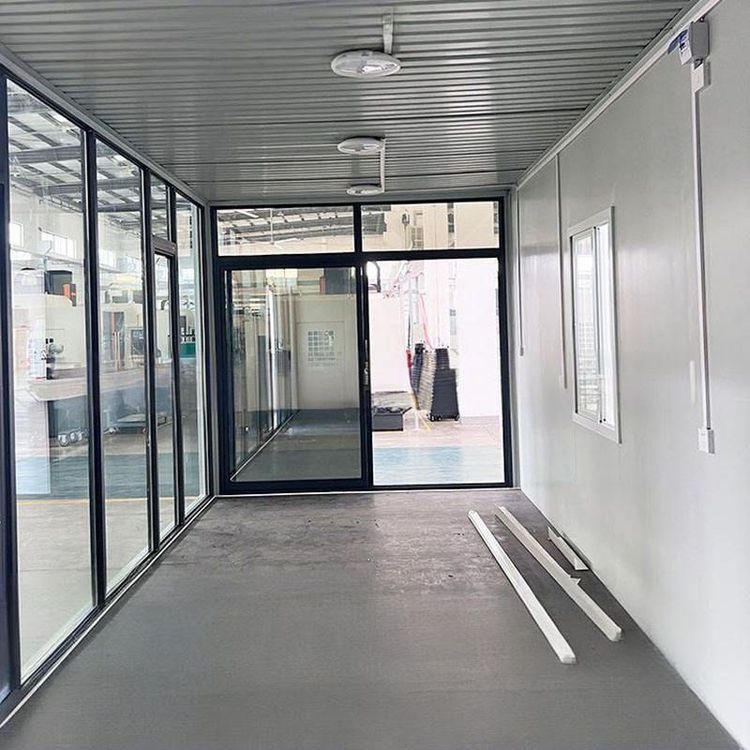
Huanle Jiatian Container House
Currently, no detailed information directly targeting 'Huanle Jiatian Container House' has been found, but relevant reference content from the container house industry can be provided.
I. Overview of the Container House Industry
Container houses are temporary or permanent buildings formed by modifying or combining containers as basic modules. They are widely used in construction site temporary buildings, homestays, offices, commercial areas, and other fields. Their core advantages include rapid assembly, mobility, and cost control, aligning with green building trends. For example, in Shanghai, the price range of container houses varies widely, from several hundred yuan per square meter (for simple movable board houses) to tens of thousands of yuan (for high-end customized modular houses). The delivery cycle is mostly 48-72 hours, and some merchants offer a '7-day replacement' service.
II. Typical Application Scenarios and Suppliers
- Engineering Temporary Buildings: Wanzhong Container Company in Feidong County focuses on infrastructure needs, providing standardized products with fire-resistant Class A insulation materials and high-strength keel frames, supporting multiple disassemblies and assemblies, suitable for construction site dormitories, offices, and other scenarios. Its technical highlights include a patent for light steel frame reinforcement and optimization of modular connection strength, reducing long-term usage costs.
- Commercial and Cultural Tourism: CIMC Container in Zhangzhou Development Zone has increased investment and expanded production, laying out the manufacturing of special containers and energy storage containers, while also exploring emerging fields such as computing power pods. Guangzhou Tianhe District has revitalized village collective reserved land by introducing a container commercial complex, equipped with parking lots and light catering businesses, forming a 'industry + commerce' linkage model.
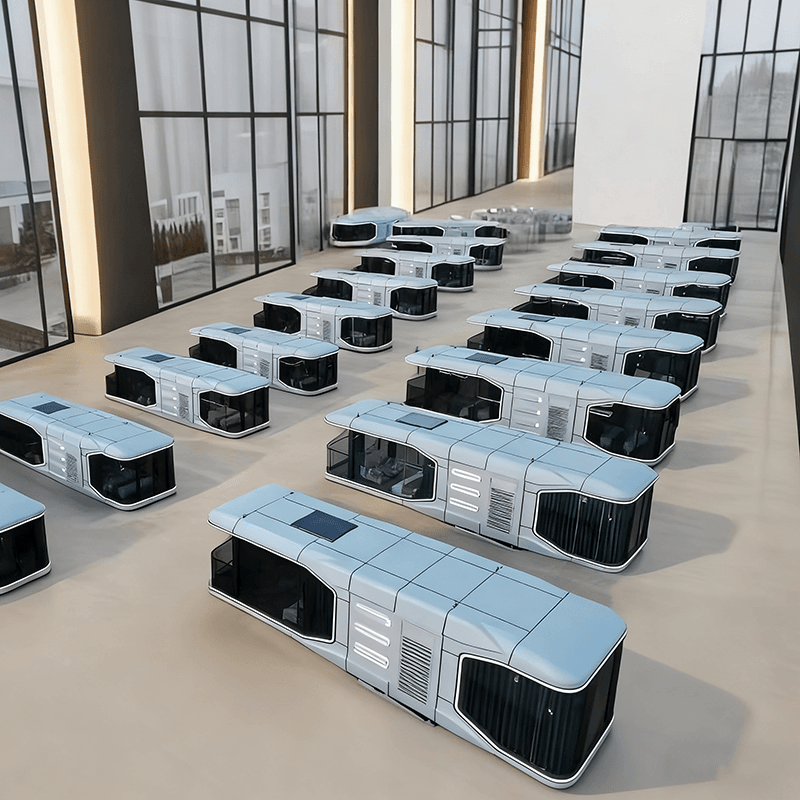
- High-end Customization: Some suppliers offer creative products such as double-decker sales kiosks and smart Apple Pod homestays, integrating technologies such as smart security and low-carbon materials to meet the personalized needs of scenic spots and street blocks.
III. Purchase Considerations
- Qualification Verification: Prioritize suppliers with ISO system certification and special project construction filing to avoid acceptance risks caused by unlicensed subcontracting.
- Technical Parameters: Focus on wind and earthquake resistance levels (matching local meteorological conditions), thermal insulation performance (reducing energy consumption), and the compliance rate of main material thickness (affecting service life).
- Service Guarantee: Evaluate the 24-hour response mechanism and on-site technical guidance capabilities to ensure construction and post-maintenance efficiency.
IV. Industry Trends
The concept of prefabricated buildings is driving container houses towards standardization, scale, and environmental protection, with a clear market stratification: the low-end market is fiercely competitive on price, while the mid-to-high-end market relies more on technological accumulation and full lifecycle services. For example, Wanzhong Container has achieved standardized production from profile cutting to complete container delivery through localized production lines and full-link quality control, improving delivery efficiency.