Huangshi Stainless Steel Mobile Toilet
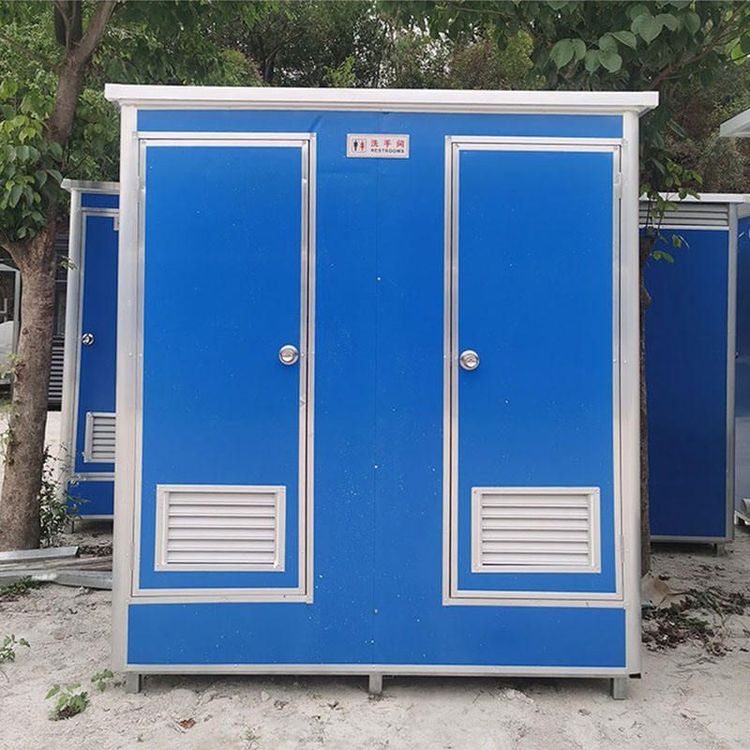
Stainless steel mobile toilets in Huangshi are mainly used in construction sites, primarily featuring a combined structure of a stainless steel frame paired with a fiberglass-reinforced plastic (FRP) shell. In coastal areas, stainless steel connectors are used to enhance corrosion resistance.

I. Core Application Scenarios and Structural Features
In Huangshi, stainless steel mobile toilets are predominantly used in construction sites, with their core structure consisting of a stainless steel frame paired with a fiberglass-reinforced plastic (FRP) shell. This design provides high-strength support through the stainless steel frame, meeting the demands of frequent movement and resistance to crushing in construction environments. The FRP shell, on the other hand, is lightweight and highly weather-resistant, capable of adapting to complex outdoor climatic conditions such as high temperatures, humidity, or strong ultraviolet radiation. For example, in the rental demand for construction sites in 2025, this combined structure has become the mainstream choice due to its balance of durability and cost-effectiveness.
In coastal areas, the connectors of mobile toilets are upgraded to stainless steel to address the issue of high concentrations of chloride ions in sea breeze, which can accelerate the oxidation reaction of ordinary metals, leading to structural loosening or damage. Stainless steel, by adding elements such as chromium and nickel, forms a dense oxide film that effectively isolates corrosive media and extends the service life of the equipment.
II. Material and Functional Compatibility
The application of stainless steel in mobile toilets is not limited to a single material but works in conjunction with other materials. For example:
- Frame part: 304 or 316 stainless steel (selected based on the corrosion environment) is used, fixed by welding or bolts to form a stable structure that supports the overall weight and distributes external impact forces.
- Shell part: Fiberglass-reinforced plastic (FRP) is combined with the stainless steel frame, reducing weight while enhancing impact resistance and facilitating easy cleaning and maintenance.
- Connectors: In coastal areas, stainless steel bolts, hinges, etc., are used to avoid the risk of loosening or breaking due to corrosion of ordinary carbon steel.
III. Customized Services and Expansion Options
To further meet specific needs, suppliers in Huangshi offer processing and customization services, with material options including metal embossed panels and color-coated steel sheets. For example:
- Metal embossed panels: Surface embossing enhances aesthetics while providing thermal insulation and fire resistance, suitable for scenic spots or commercial areas with high appearance requirements.
- Color-coated steel sheets: These are cost-effective and can be painted in different colors to meet personalized needs. However, their corrosion resistance is weaker than that of stainless steel, so they should be selected based on the usage scenario.
Customization services typically cover size adjustments, internal configuration upgrades (such as adding ventilation systems or smart sensing devices), etc. Users can directly contact suppliers to discuss specific needs.
IV. Selection Recommendations
- Construction sites: Prioritize the combination of a stainless steel frame and an FRP shell to balance durability and cost.
- Coastal areas: Ensure that connectors are made of stainless steel and regularly inspect the integrity of the anti-corrosion coating.
- Long-term use: If the budget allows, a fully stainless steel structure (such as frame + shell) can be customized, but the weight and mobility convenience should be weighed.