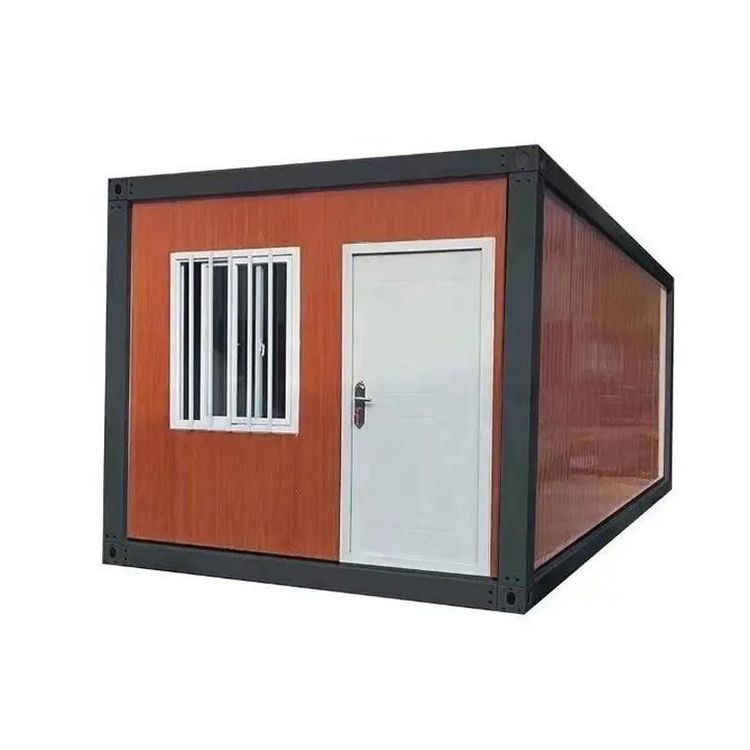
Huangshan Cement Prefabricated House
Currently, there is no detailed introduction directly targeting the overall situation of the 'Huangshan Cement Prefabricated House', but analysis can be conducted from aspects such as the associated information of prefabricated buildings and the advantages and disadvantages of cement prefabricated houses.

Association with Prefabricated Buildings
The development goals and tasks for prefabricated buildings in Huangshan City in 2024 indicate that the proportion of prefabricated buildings in newly started construction projects should be ≥40%, and the proportion in completed construction projects should be ≥37%. Prefabricated buildings have a certain degree of association with cement prefabricated houses. Cement prefabricated houses can be regarded as a form of prefabricated buildings, which are assembled and constructed on-site using prefabricated building components. From the development goals of prefabricated buildings in Huangshan City, it can be seen to a certain extent that they reflect the local promotion efforts and development direction for this type of building form, and cement prefabricated houses may also gain certain development opportunities in such a development environment.
Advantages of Cement Prefabricated Houses
- Short Construction Period: The components of cement prefabricated houses are prefabricated in the factory in advance, and only assembly is required on-site, greatly shortening the construction time. They can be quickly put into use, meeting some urgent housing needs or projects with strict time requirements.
- Low Cost: Due to factory-based production, mass production can reduce the manufacturing cost of components. At the same time, the simplification of on-site construction also reduces labor and time costs, making the overall construction cost relatively low.
- Good Earthquake Resistance: Provided that prefabricated components from regular companies are used and assembled by professionals. During factory production, prefabricated components can undergo quality control in accordance with strict standards, and their structural connection methods are scientifically designed. In the event of natural disasters such as earthquakes, they can better withstand external forces and ensure the safety of the house.
Disadvantages of Cement Prefabricated Houses
- Limited Personalization in Spatial Layout: The specifications and shapes of prefabricated components are usually fixed, which imposes certain limitations on house design and makes it difficult to achieve highly personalized spatial layouts.
- Poor Wall Sound Insulation and Thermal Insulation: The walls are relatively thin, and in cold regions, separate thermal insulation treatment is required. Moreover, the middle of the prefabricated panels has long circular holes, which act as natural sound conductors, resulting in poor sound insulation ability, strong sound penetration, and obvious structural sound transmission problems.
- Poor Connection Fixity: There are risks for low-rise buildings up to three floors or above three floors. At the same time, there are problems with gap cracking during assembly, and cracks are prone to appear at the joints with the prefabricated panels.
- Inevitable Water Leakage: Prefabricated panels are composed of individual panel units, and there are gaps between the units. Rainwater can easily seep in and corrode the steel bars, posing a risk of collapse.