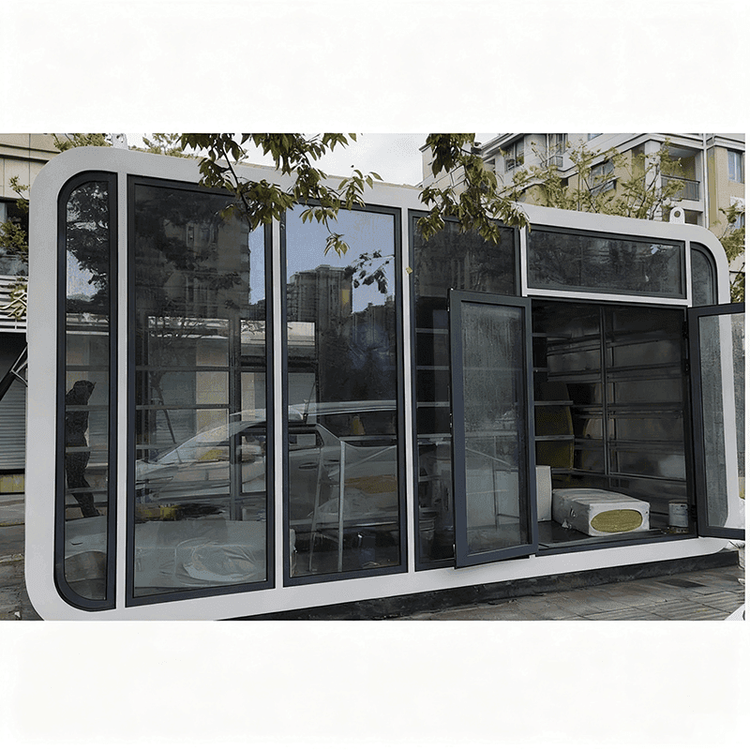
Huaian Modular Mobile Toilet
The Huaian modular mobile toilet is a mobile sanitation facility that enables rapid deployment, flexible configuration, and adaptation to multi-scenario needs through standardized modular design. Its core features are reflected in design logic, physical structure, treatment systems, and deployment applications.

The modular design logic is its core advantage. Functional unit independence divides areas such as the toilet area, handwashing area, and waste storage area into standardized modules, facilitating prefabricated production. Standardized interfaces use uniform specifications for water, electrical, and structural connections, enabling rapid on-site assembly and reducing installation error rates. Expandable configurations support flexible module combinations based on needs, such as increasing toilet cubicles, integrating barrier-free facilities, or upgrading wastewater treatment modules to meet environmental requirements in different scenarios.
Physical structural features emphasize practicality and durability. The main body uses high-strength, lightweight fiberglass or corrosion-resistant alloy panels to ensure stability during transportation and lifting. The wall and roof sandwich design incorporates thermal insulation materials to enhance user comfort. Details such as locks and ventilation windows follow barrier-free design principles, with standardized overall dimensions and interfaces for easy road transportation and connection to external pipelines.
The internal treatment system is environmentally oriented. Water-saving or waterless flushing devices reduce water dependency through technologies such as high-pressure mist, vacuum collection, or microbial degradation. Waste treatment units use sealed storage tanks or biochemical modules for preliminary treatment and reduction of excreta. Auxiliary environmental control systems maintain internal hygiene through forced ventilation, deodorization, or disinfection equipment, minimizing environmental impact.
Deployment application logic emphasizes scientific rigor and efficiency. Initial assessments consider factors such as foot traffic, usage duration, site conditions, and resource access routes. After determining the plan, rapid installation is achieved using prefabricated bases or leveling legs, supporting power supply from mains electricity, solar energy, or generators. The standardized installation process adapts to various geological conditions, ensuring quick operational readiness.
Application scenarios are extensive, covering stress relief for toilet demands at large events (e.g., concerts, sports events), enhancing image and convenience in public spaces (e.g., scenic spots, parks), optimizing efficiency in temporary construction (e.g., construction sites, post-disaster reconstruction), and providing sanitation coverage in remote water-scarce areas, demonstrating flexibility and adaptability.