
Huaian Direct Discharge Mobile Toilet
The Huaian direct discharge mobile toilet is a type of mobile toilet that can be directly connected to the sewage network, eliminating the need for supporting cleaning and transportation services. It is suitable for scenarios such as public events and temporary construction sites, and its rental requires a comprehensive assessment of technical adaptability, service compliance, and full-cycle costs.
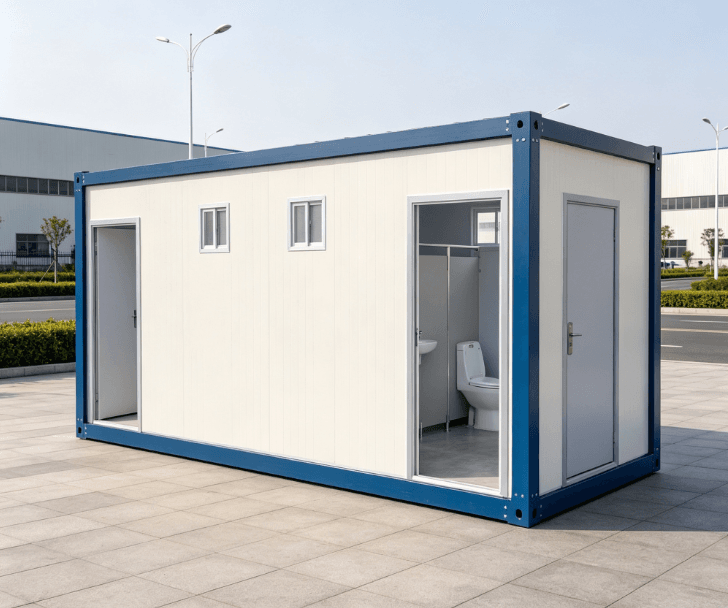
Operating Principles and Core Conditions
The direct discharge mobile toilet collects excreta through a sewage storage tank integrated beneath the toilet body and relies on delivery interfaces and pipelines to directly discharge sewage into municipal sewage networks or temporary septic facilities. For effective operation, two key conditions must be met:
- Terminal Disposal Path: The site must have a connectable sewage outlet (such as a municipal sewage network or temporary septic tank), and the outlet specifications (pipe diameter, elevation, material) must match those of the toilet equipment.
- Sealing Guarantee: The delivery pipeline must ensure no leakage through the use of dedicated adapters, sealing materials, and standardized installation procedures; otherwise, environmental pollution or operational issues may occur.
Key Parameters for Rental Decision-Making
When selecting a supplier, reverse screening based on site conditions is necessary, with a focus on the following technical parameters:
- Sewage Outlet Parameters: Include pipe diameter, elevation, material, and the distance between the outlet and the toilet placement location to ensure physical connectivity of the equipment.
- Usage Load Forecasting: Based on peak occupancy and frequency during events or construction periods, assess the capacity of the sewage storage tank and the pressure-bearing capacity of the sewage pipeline.
- Supplier Adaptability: Prioritize suppliers that can provide on-site inspections and issue adaptation plans (such as pipeline laying paths and sealing treatment measures) to avoid additional modification costs due to outlet mismatches.
Service Scope of Rental Contracts
The contract content should cover full-cycle services, not just equipment delivery:
- Outlet Adaptation and Leak Prevention: Include the supply of dedicated adapters, sealing materials, and standardized installation to ensure pipeline sealing.
- Emergency Response and Maintenance: Cover sewage blockage clearance, spare parts (such as flush valves and sealing rings) provision and replacement to reduce operational interruption risks.
- Compliance Guarantee: The supplier must provide equipment hygiene and safety inspection reports, service personnel training records, and commercial insurance certificates to ensure service compliance.
Cost Model and Risk Control
Rental costs must comprehensively consider initial rent, potential modification costs, operational risks, and return deduction fees:
- Initial Costs: Rent is influenced by equipment specifications and usage duration, but be wary of the risk of outlet mismatches hidden by low-priced suppliers.
- Hidden Costs: If installation is not standardized, leading to leakage, site repair costs may be incurred; if service response is slow, it may affect the normal progress of events.
- Return Risks: After rental ends, incomplete cleaning or damage to the equipment may result in deduction fees; clear cleaning standards and damage compensation clauses must be specified in the contract.
Scenario-Based Solution Selection
Different usage scenarios require differentiated decision-making:
- Large-Scale Outdoor Events: Prioritize equipment with rapid deployment and high load-bearing capacity, with the rental period based on event duration, emphasizing emergency response speed.
- Long-Term Construction Sites: Balance equipment stability with long-term cost-effectiveness; choose toilets with corrosion-resistant materials and low maintenance frequency, and sign long-term service contracts to reduce unit prices.



