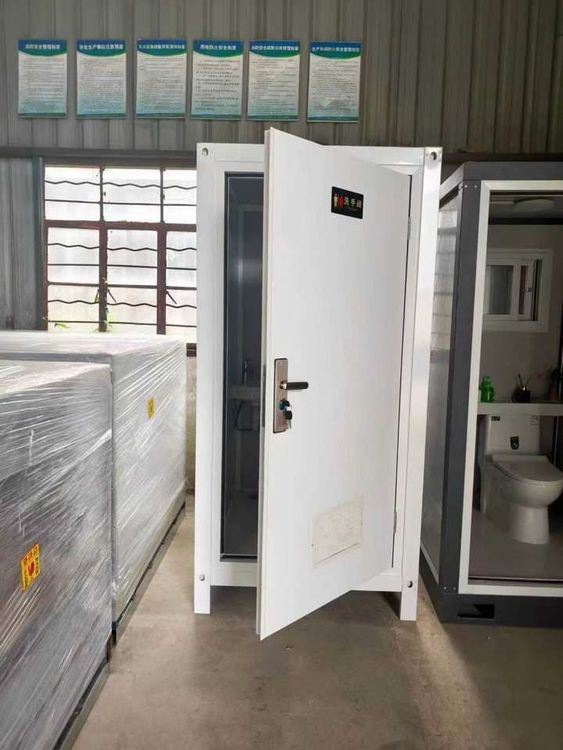
Hu Yang He Cement Prefabricated House
The cement prefabricated houses in the Hu Yang He area are mainly provided by local enterprises such as Hu Yang He Chuangda Cement Products Co., Ltd. Their products, mainly consisting of prefabricated cement houses, feature industrial production, rapid construction, and adaptability to the climate in northern Xinjiang. However, attention should be paid to seismic design and regional applicability.

I. Supply Entities and Processes of Prefabricated Houses in Hu Yang He
Hu Yang He Chuangda Cement Products Co., Ltd. serves as a core supplier of prefabricated building materials in the northern Xinjiang region, with its main business covering the manufacturing and sales of prefabricated cement houses. Its products adopt standardized steel mold shaping and vibration compaction processes, ensuring dimensional accuracy and structural density of components through factory production. In terms of material properties, the products possess anti-permeability, anti-freeze, and durability characteristics, effectively addressing climate challenges such as severe cold in winter and large temperature differences between day and night in northern Xinjiang, and reducing structural damage caused by freeze-thaw cycles.
II. Technical Features and Construction Advantages of Cement Prefabricated Houses
Cement prefabricated houses in China generally adopt reinforced concrete modular structures, achieving rapid construction by prefabricating core components (such as wall panels, floor slabs, and roof panels) in factories and assembling them on-site through hoisting. For example, a company in Henan can complete the installation of the main structure of a 200-square-meter house within 4 hours, significantly shortening the construction period. In addition, the industrial production of prefabricated components allows for strict control over concrete mix ratios and curing conditions. Combined with the use of high-strength steel bars, the houses have a warranty period of up to 70 years, far exceeding the lifespan of traditional brick-and-mortar structures.
III. Application Limitations and Optimization Directions
It should be noted that modular assembled structures have weak points in seismic performance. If the design is unreasonable, the joints are prone to dislocation or cracking under seismic forces. Therefore, such houses are more suitable for non-seismic zones or can have their overall stability enhanced in earthquake-prone areas by adding seismic connectors and optimizing joint structures. In addition, the thermal insulation and sound insulation performance of prefabricated houses need to be further strengthened through material selection (such as aerated concrete and composite insulation panels) and structural design (such as double-layer walls and elastic seals) to meet residential comfort requirements.