
How to Use a Portable Toilet
The usage method of a portable toilet mainly consists of the following steps, which are simple to operate and emphasize user-friendly design:
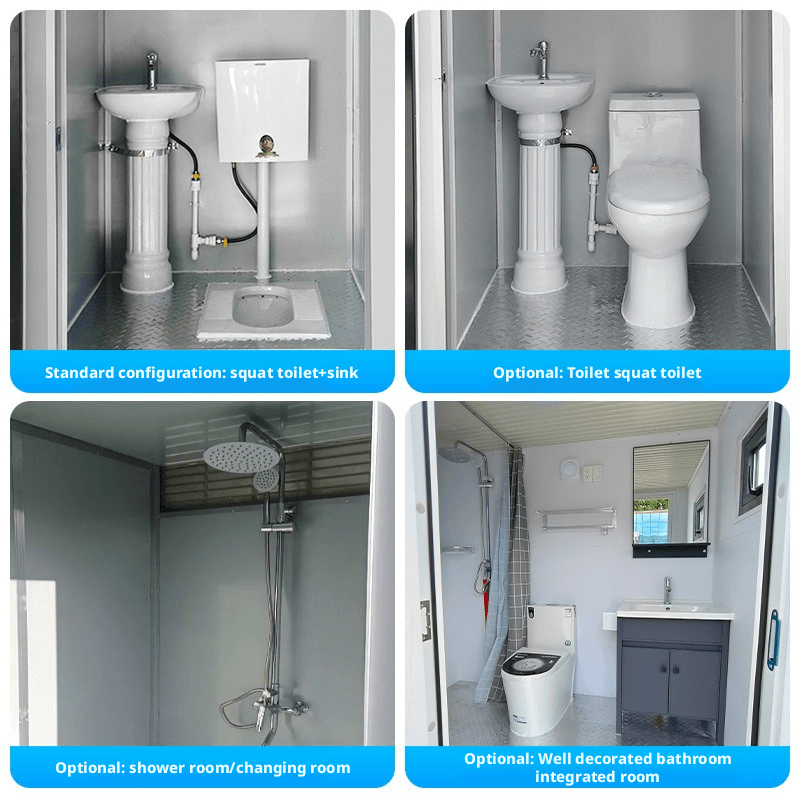
I. Entering and Choosing the Usage Method
Upon opening the door of the portable toilet, the interior space is usually spacious and bright, equipped with ergonomic facilities. Users can freely choose the seat cushion according to personal habits and decide to use either the sitting or squatting method. Some high-end models may feature antibacterial materials or heating functions for the seat cushions, which can be used directly without additional operations. If choosing the sitting method, ensure the seat ring is stable; if choosing the squatting method, confirm that the anti-slip design is in place to ensure safety.
II. Operating Functional Facilities
- Flush System: Most portable toilets are equipped with a flush tank or foot-operated flush device. After use, press the flush button (usually located on the side of the seat ring or on the wall) or step on the foot pedal to complete the flush. Some eco-friendly toilets may adopt a water-saving design with a weaker flush force, requiring a brief press and hold for 2-3 seconds to ensure cleanliness.
- Ventilation System: To maintain fresh air, the toilet is usually equipped with an exhaust fan or air outlet. Before use, check if the exhaust fan starts automatically (some models operate automatically by sensing human presence); if manual operation is required, look for the switch button on the wall or ceiling.
- Auxiliary Facilities: Some portable toilets are also equipped with handrails, tissue boxes, and trash cans. Handrails are usually located on both sides of the seat ring or on the wall for use by those with mobility issues; tissue boxes are generally fixed in easily accessible locations, and after use, waste should be thrown into the trash can to avoid clogging the pipes.
III. Post-Use Precautions
- Turn Off Facilities: Before leaving, ensure that the flush, ventilation, and other systems have stopped running to avoid wasting resources.
- Maintain Cleanliness: If cleaning tools (such as brushes) are provided in the toilet, you can briefly clean the seat ring or floor residues, but excessive cleaning is not necessary (professional maintenance is handled by the operator).
- Close the Door Gently: Avoid slamming the door shut forcefully to prevent deformation of the door frame or damage to the lock.
Supplementary Explanation: Structure and Suitable Scenarios of Portable Toilets
The frame of a portable toilet is welded from steel, with the bottom reinforced with channel steel or I-beams for stability, and the columns made of square steel. The wall materials include color-coated steel plates (lightweight and durable) or fiberglass (corrosion-resistant). Its advantage lies in requiring no complex construction, as it can be prefabricated in the factory and directly hoisted to the target location, suitable for temporary or long-term public places such as city streets, parks, stations, and construction sites, especially in areas with limited water and electricity conditions.


