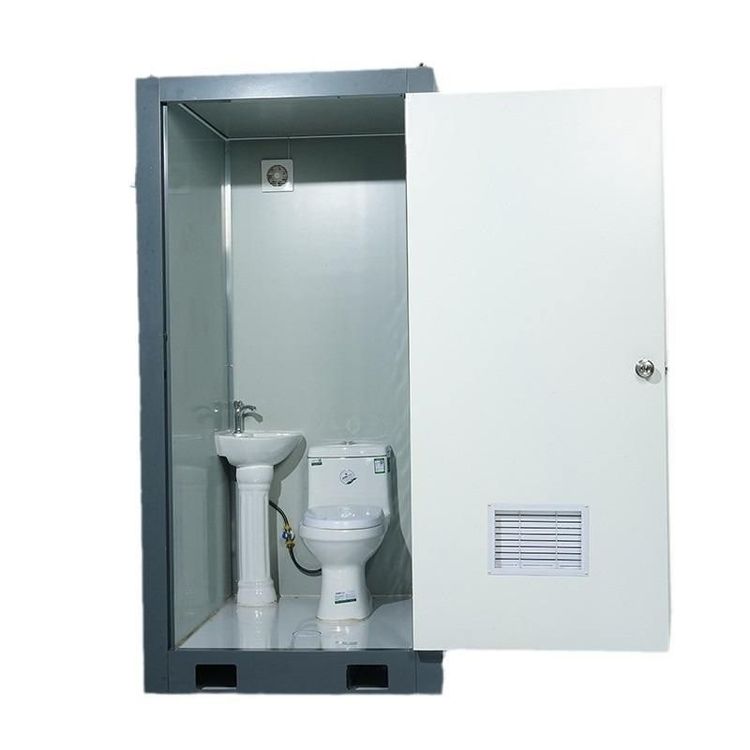
How to Use Emergency Mobile Toilets
The usage of emergency mobile toilets should be selected based on specific types and scenarios, mainly divided into three categories: lawn emergency toilets, waterless packing mobile toilets, and portable mobile commodes, with specific operations as follows:

1. Lawn Emergency Toilets (For Disaster Scenarios Only)
Applicable Conditions: Only activated during disasters such as wars, earthquakes, and floods, and remain sealed during normal times. Usage Process:
- Disaster Trigger: When the government issues a disaster warning or an emergency occurs, emergency facilities at shelters are automatically activated.
- Locate Shelter: Follow the on-site “Emergency Toilet” signs to the designated lawn area.
- Activate Facilities: Staff open the storage room, retrieve the mobile toilet, and connect it to the underground sewage system to ensure smooth drainage.
- Use as Needed: The mobile toilet is equipped with temporary partitions, disinfection equipment, and drainage pipes, and is used in the same way as a regular mobile toilet. If flushing is required, confirm that the system is activated. Precautions:
- Do not dig up the lawn or use stored supplies arbitrarily during non-disaster periods to avoid damaging facilities.
- Follow staff instructions to avoid crowding or damaging partitions and disinfection equipment.
- Mobile toilets are limited in number, so use toilet paper and other supplies sparingly to prevent clogging.
2. Waterless Packing Mobile Toilets (For Temporary Scenarios)
Technical Principle: Collects waste using biodegradable bags or sealed containers, eliminating the need for external water sources and sewage pipes. Usage Steps:
- Check and Prepare: Ensure the packing bag or container is properly installed and sealed to prevent leaks.
- Use Directly: After excretion, the system automatically packs the waste without flushing. Some models are equipped with foot-operated or manual sealing devices.
- Regular Maintenance: Replace the packing bag every 50-100 uses to avoid clogging or odor spread; clean the container promptly if full. Applicable Scenarios: Construction sites, remote mountainous areas, temporary event venues, emergency rescue, and other scenarios without water supply and drainage.
3. Portable Mobile Commodes (For Home/Personal Scenarios)
Core Functions: No installation or drilling required, suitable for scenarios such as toilet repairs, old houses without bathrooms, poor rental housing conditions, and construction site dormitories. Usage Methods:
- Unpack and Use: No tools required; simply place on the ground for use. Some models come with anti-slip bases.
- Clean and Maintain: Manually clean waste after use. Some models have removable commode pans that can be washed with water or wiped with disinfectant. Precautions:
- Regularly clean the commode pan to prevent bacterial growth. It is recommended to clean daily or after each use.
- Avoid using on sharp or uneven surfaces to prevent the commode from tipping over or being damaged.
Summary: For disaster scenarios, prioritize using lawn emergency toilets and follow on-site instructions; for temporary scenarios, choose waterless packing mobile toilets and replace packing bags regularly; for short-term home or personal emergencies, use portable mobile commodes and manually clean them while maintaining hygiene.