
How to Take a Shower in a Mobile Toilet
To enable showering functionality in a mobile toilet, it is necessary to integrate shower equipment and optimize system design, specifically meeting the following core requirements:
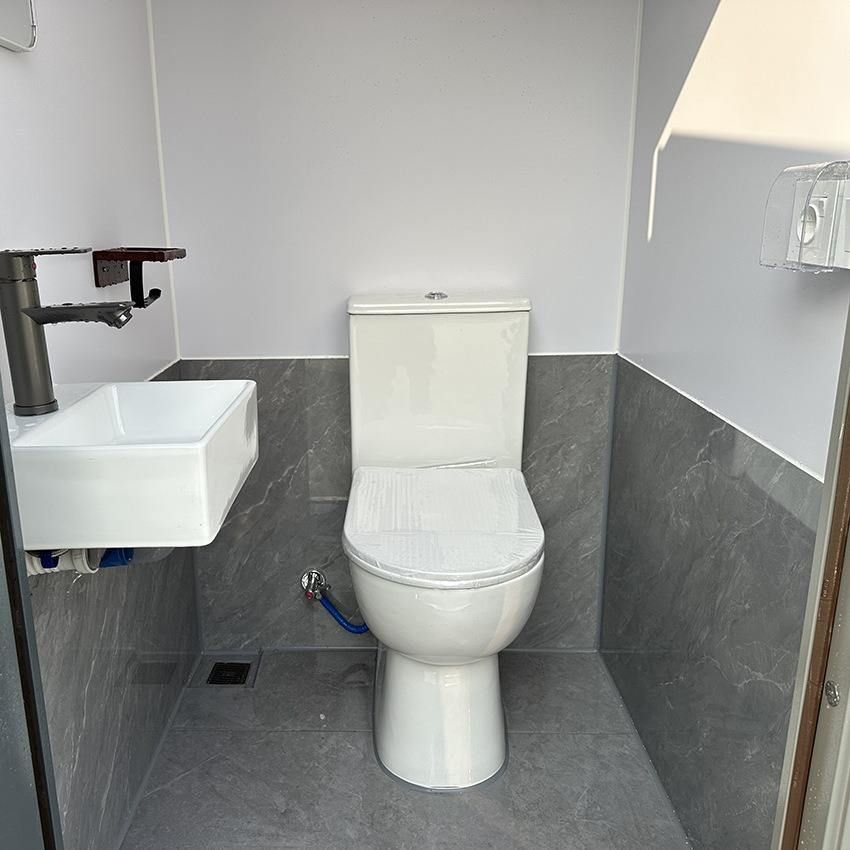
1. Space and Functional Zoning
Mobile toilets need to divide the limited space into separate shower and toilet areas to avoid cross-interference. The shower area should be equipped with a showerhead, faucet, and drainage system. The floor should use non-slip materials (such as non-slip tiles or rubber mats) and be fitted with ventilation equipment (such as exhaust fans or vents) to prevent moisture buildup, which could lead to mold or equipment damage. Some designs may use half partitions or transparent glass doors to ensure space efficiency while enhancing user comfort.
2. Water Supply System Configuration
- Water Source Connection:
- Direct Connection to Tap Water: If municipal water supply is available on-site, it can be directly connected to the shower equipment, but a flow control valve should be installed to prevent excessive water usage from affecting other functions (such as toilet flushing).
- Water Storage Device: Clean water can be stored in water storage tanks (such as plastic water tanks) and pumped to the shower unit. The pump power should match water demand, and a water level sensor should be installed to prevent dry running.
- Hot Water Supply:
- Electric Heating: A small instant electric water heater can be installed, equipped with a leakage protection device and grounding wire to ensure circuit safety.
- Solar Heating: In areas with sufficient sunlight, solar collectors can be integrated to assist in heating water in storage tanks, reducing energy consumption.
3. Drainage and Wastewater Treatment
- Drainage Design: A dedicated drain should be installed at the bottom of the shower area, connected to temporary wastewater collection devices (such as movable sewage tanks or storage tanks) to prevent water leakage. Some high-end models may be equipped with simple filtration systems to remove hair and other impurities, reducing the risk of pipe blockage.
- Environmental Protection Treatment: In disaster relief or ecologically sensitive areas, wastewater should undergo preliminary purification (such as adding disinfectants or filtering through sedimentation tanks) to reduce environmental impact.
4. Safety and Privacy Protection
- Privacy Protection: A fully enclosed compartment structure should be used, with a door lock designed to prevent accidental opening, ensuring user privacy.
- Safety Measures:
- Install explosion-proof lighting to ensure safety during nighttime use.
- Provide storage compartments or hooks for placing clothes and toiletries.
- The floor drainage slope should be ≥2% to prevent water accumulation and slipping.
5. Operation and Maintenance Specifications
- Pre-use Inspection: Ensure the water storage tank has sufficient water, the heating unit is at an appropriate temperature, and the pump is operating normally.
- Post-use Cleaning: Dry the shower area walls and floor promptly after use to prevent bacterial growth; regularly disinfect the drainage pipes.
- Regular Maintenance: Check the pump, filter (if any), and electrical circuits every 1-2 weeks, replacing worn parts; empty the wastewater tank daily to prevent odor spread.
Application Scenarios: Such mobile toilets are mostly used in outdoor camping, temporary construction sites, music festivals, disaster relief, and other situations without fixed infrastructure. Through modular design, they can be quickly deployed and flexibly moved to meet short-term high-frequency usage demands.



