
How to Save Yourself If You Fall into a Portable Toilet
Self-rescue after falling into a portable toilet (not trapped in a tilted structure) requires handling different situations. The core principles are to stay calm, minimize harm, and seek external help as soon as possible. The specific steps are as follows:
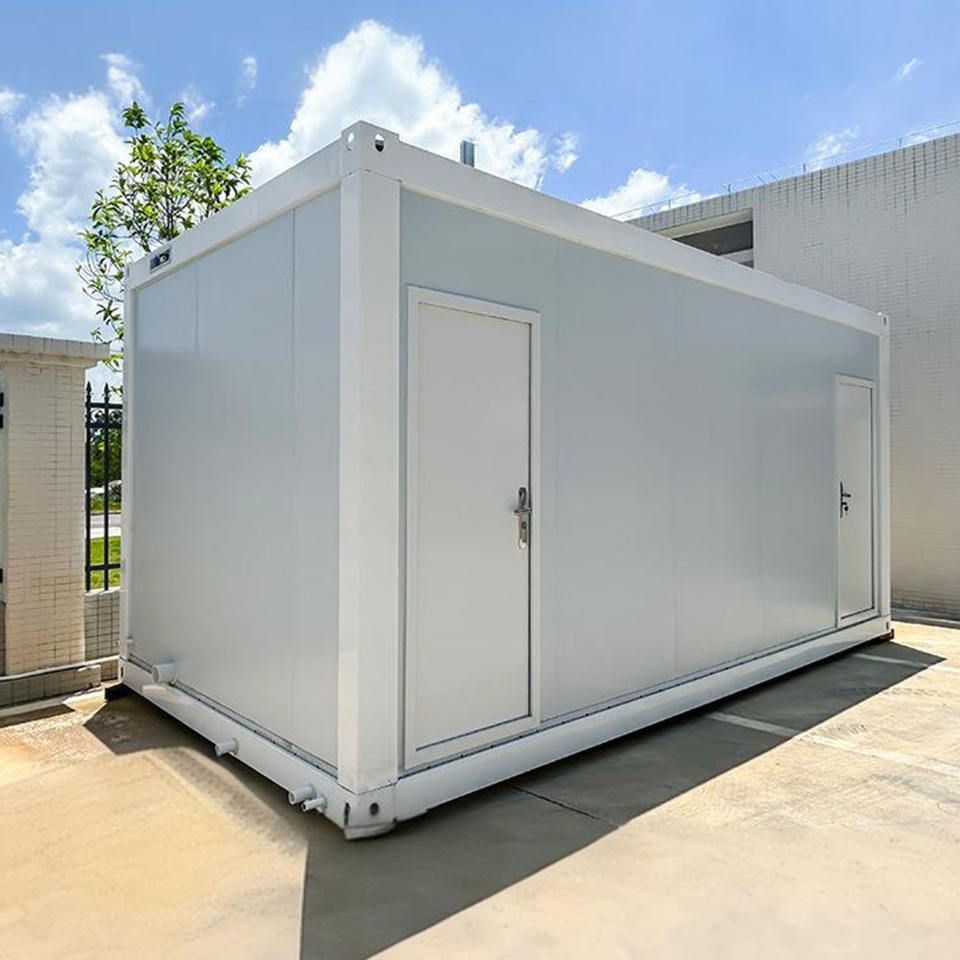
I. Assess the Environment and Your Own Condition
Confirm the structural stability of the toilet
Observe whether the portable toilet has tilted or deformed due to external forces (such as collisions or unstable foundations). If the overall structure of the toilet is intact and not tilted, the focus of self-rescue is to escape from the interior space; if the toilet has tilted or is at risk of collapsing, prioritize avoiding secondary injuries (such as being squeezed or falling) and move your body towards a stable direction as quickly as possible.Check your own injuries
If fractures, bleeding, or loss of consciousness occur due to the fall, stop moving immediately to avoid aggravating the injuries. Attract external attention by shouting or knocking on the toilet wall or top, and wait for rescue.
II. Self-rescue Methods in Non-tilted Structures
Try to escape through the entrance
- If the toilet door is not completely closed or can be manually unlocked, try to crawl out through the door first. Portable toilet doors usually have a hinge structure that opens outward. If the door is stuck, push the upper or lower edge of the door with force and use the lever principle to pry open the door frame.
- If the door is completely locked, observe whether the door gap or vent is large enough to accommodate an arm extending out. If possible, wave or shout with your arm extended to attract the attention of external personnel.
Use internal tools for assistance
- Portable toilets are usually equipped with items such as toilet paper rolls and cleaning brushes. Tear open the toilet paper roll and use the cardboard to make a simple tool (such as a crowbar) to try to pry open the door lock or gap.
- If there are metal parts (such as hooks or brackets) in the toilet, try to use them to knock on the wall or top to make noise and attract rescue.
Destroy the structure to escape (last resort)
- If other methods are ineffective and the toilet structure is confirmed to be stable, try to destroy weak parts (such as the joint between the roof and the wall). The roofs of portable toilets are mostly made of lightweight materials (such as plastic or thin metal sheets). Repeated kicking or hitting the joint with a hard object may separate it.
- Note: Before destroying the structure, ensure that your own position is safe to avoid injury from falling debris.
III. Seek External Help
Keep shouting for help
If the toilet is located in a public place or there are people active nearby, shout loudly and explain your trapped location (such as "I am inside the portable toilet and need help"). If the toilet has good sound insulation, knock on metal parts or the wall to make regular sounds (such as knocking 3 times per second) to transmit a distress signal.Use your mobile phone for help
If you have your mobile phone with you, immediately dial emergency numbers (such as 110 or 119) or contact nearby staff. Explain your specific location (such as "the portable toilet on the east side of XX Park") and the trapped situation, and wait for professional rescue.
IV. Preventive Measures and Precautions
- Observe the environment before entering a portable toilet: Avoid using toilets with loose structures, obvious shaking, or strange odors.
- Keep your mobile phone accessible: Ensure that your mobile phone has sufficient battery power and carry it with you before entering the toilet.
- Avoid forced destruction: If the toilet structure is unstable, forced destruction may lead to collapse and increase danger.
If self-rescue is ineffective, be sure to stay calm and wait for professional rescue personnel to arrive.



