
How to Reinforce Container Houses Well
Reinforcing container houses requires considering multiple factors such as structure, stacking, and transportation. Overall stability can be enhanced through professional design, reasonable stacking, firm connections, and targeted reinforcement measures.
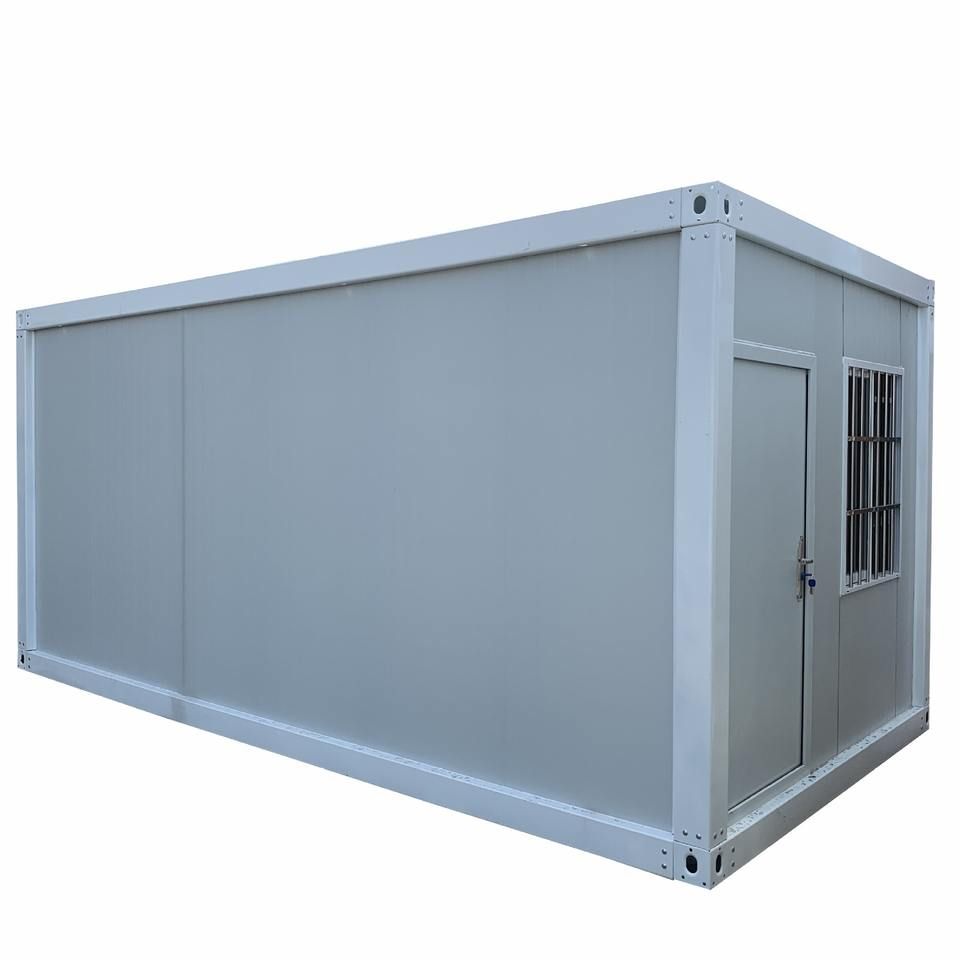
1. Foundation Structure Reinforcement
Reinforcing the foundation structure of container houses involves three aspects: the foundation, the frame, and the walls. Foundation reinforcement can adopt the method of expanding the foundation base area. By excavating the foundation pit to widen the original foundation, the pressure on the foundation can be reduced. This method is suitable for houses with insufficient bearing capacity but little settlement. If the foundation soil is soft and the local settlement is not severe, high-pressure grouting reinforcement can be selected, where grout is injected into the soil layer for compaction and solidification. In terms of frame reinforcement, for components such as beams, columns, and slabs, the外包型钢加固法 (encasing steel reinforcement method) can be used, where steel sections are wrapped around columns or beams to significantly improve their bearing capacity. If space is limited,粘钢或碳纤维加固 (steel plate or carbon fiber reinforcement) can be chosen, where structural adhesive is used to bond steel plates or carbon fiber cloth, which is fast in construction and takes up almost no space. Wall reinforcement can be achieved by adding structural columns and ring beams. Concrete columns and beams are poured at the corners of walls and around doors and windows to bind the loose walls into a whole and enhance their seismic performance. For crack repair, the crack grouting method can be used, where grout is injected into the cracks under pressure to restore the integrity of the components.
2. Stacking and Connection Reinforcement
The stacking and connection methods of container houses directly affect their overall stability. When stacking, ensure that the site is flat and firm. Use concrete hardening treatment with a hardening thickness of not less than 15 cm, and set drainage ditches around the site to prevent water accumulation from causing foundation deformation. The stacking height of containers should not exceed 4 layers, and anti-slip pads should be placed between layers to prevent sliding. In terms of connection reinforcement, containers on the same layer need to be horizontally connected with binding rods or steel wire ropes. The binding points should pass through the corner fitting holes of the containers and be locked with shackles. At least 2 horizontal reinforcements should be set for each row. Containers on different layers are connected with twist locks, and each corner fitting should be installed to ensure a firm connection. Anti-collision columns or sandbags should be set at the ends of the stacks to prevent collapse caused by typhoon impact.
3. Transportation Process Reinforcement
The bumps and vibrations during transportation can easily cause the displacement or damage of container houses, so targeted reinforcement is required. In terms of internal fixation, wooden or plastic pallets can be used to build a stable frame, and wooden supports can be used to support the goods. Airbags and fillers can be used to fill the gaps to prevent shaking. For fragile or irregular items, wooden frames can be used for fixation to prevent displacement or tipping. For external connection, binding straps or steel wire ropes should be used to fix the containers to the transportation vehicles. The binding points should be selected on the corner fittings and the vehicle's fixing devices to ensure a firm connection. If a typhoon warning is encountered during transportation, stop at a safe area in a timely manner and increase the number and strength of the binding straps for additional reinforcement.



