
How to Protect Container Houses from Lightning
Protecting container houses from lightning requires a comprehensive approach, incorporating multiple measures ranging from facility installation and location planning to system standardization to minimize the risk of lightning strikes. Here are the specific methods:
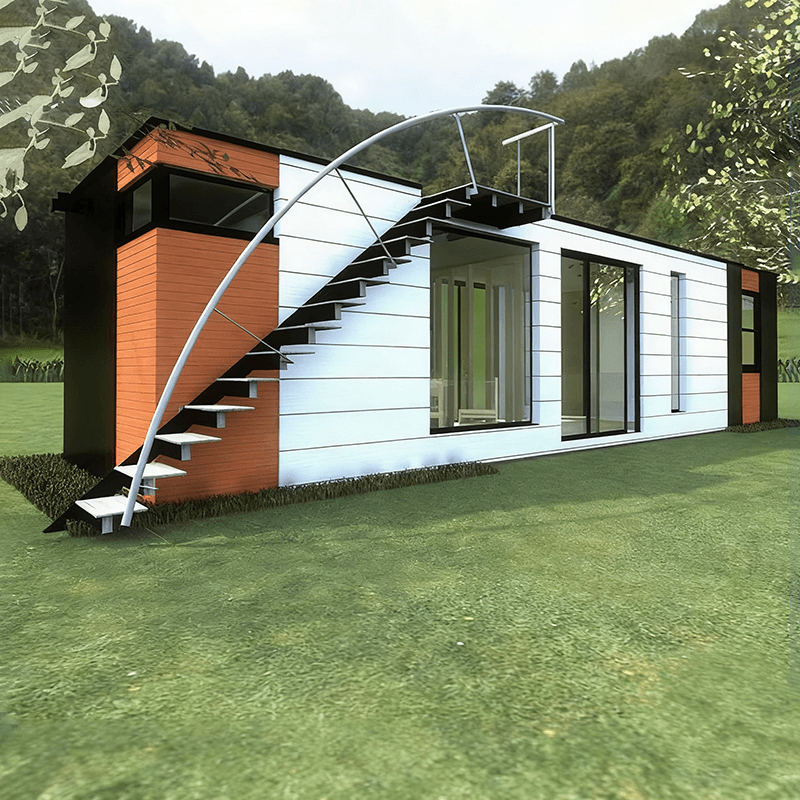
1. Install lightning protection facilities
Lightning rods and lightning protection networks are core lightning protection devices. Lightning rods guide lightning into the ground through the principle of point discharge, preventing direct strikes on the house. Lightning protection networks disperse lightning current through metal grids, reducing localized damage. It is recommended to install lightning rods on the roof of container houses and strengthen the roof grounding and drainage systems to ensure rapid current导入 (import/conduction) into the ground. For energy storage containers, copper bars or lightning rods can be used to prevent lightning-induced tripping.
2. Plan the house location reasonably
When selecting a site, avoid areas with frequent lightning activity, such as mountaintops or open areas. Prioritize lower-lying locations and proximity to trees or other natural lightning protection facilities, utilizing their conductivity to disperse lightning energy. If high-risk areas cannot be avoided, enhance the configuration of lightning protection facilities.
3. Implement insulation measures
During construction, protect critical components such as electrical wires and pipelines with insulating materials and conduct regular inspections and maintenance. Inside energy storage containers, lay flame-retardant insulating mats with an insulation voltage of no less than 5kV, covering gaps between aisles and equipment cabinets to prevent lightning current conduction through metal structures.
4. Install partial discharge detection devices
Monitor the electrical charge within the container structure to promptly detect abnormal partial discharges, preventing fires or equipment damage caused by electrical sparks. Such devices are particularly suitable for energy storage containers, providing early warning of potential lightning strike risks.
5. Add protection facilities for doors and windows
Install grounding and protection devices near doors and windows, such as grounding metal frames or installing lightning protection strips, to form an additional protective layer and reduce the possibility of lightning intrusion through openings.
6. Ensure a reliable grounding system
Grounding posts must be free from defects such as paint, rust, or welding beads to ensure good contact with grounding cables. Grounding posts inside the container should be welded to the container body for equipotential bonding, and non-functional conductive conductors (such as metal shells) should be connected to form a reliable equipotential. The roof lightning protection system should be connected to at least two grounding bars via grounding flat steel or round steel, with clear markings.
7. Follow lightning protection specifications for energy storage systems
Strictly adhere to the "Technical Code for Lightning Protection of Building Electronic Information Systems" (GB 50343) and the "Design Code for Lightning Protection of Buildings" (GB 50057). Verify whether the container is within the coverage of existing lightning protection equipment. If it does not meet the requirements for Class I lightning protection, a separate lightning protection system should be configured and connected to the grounding bars via grounding flat steel or round steel.



