How to Open the Door of a Portable Toilet
The door-opening methods for portable toilets vary depending on their specific design and technological applications. Common methods include manual operation, automatic sensing, button control, electronic unlocking, timed automatic door opening, and barrier-free design.
1. Manual Operation
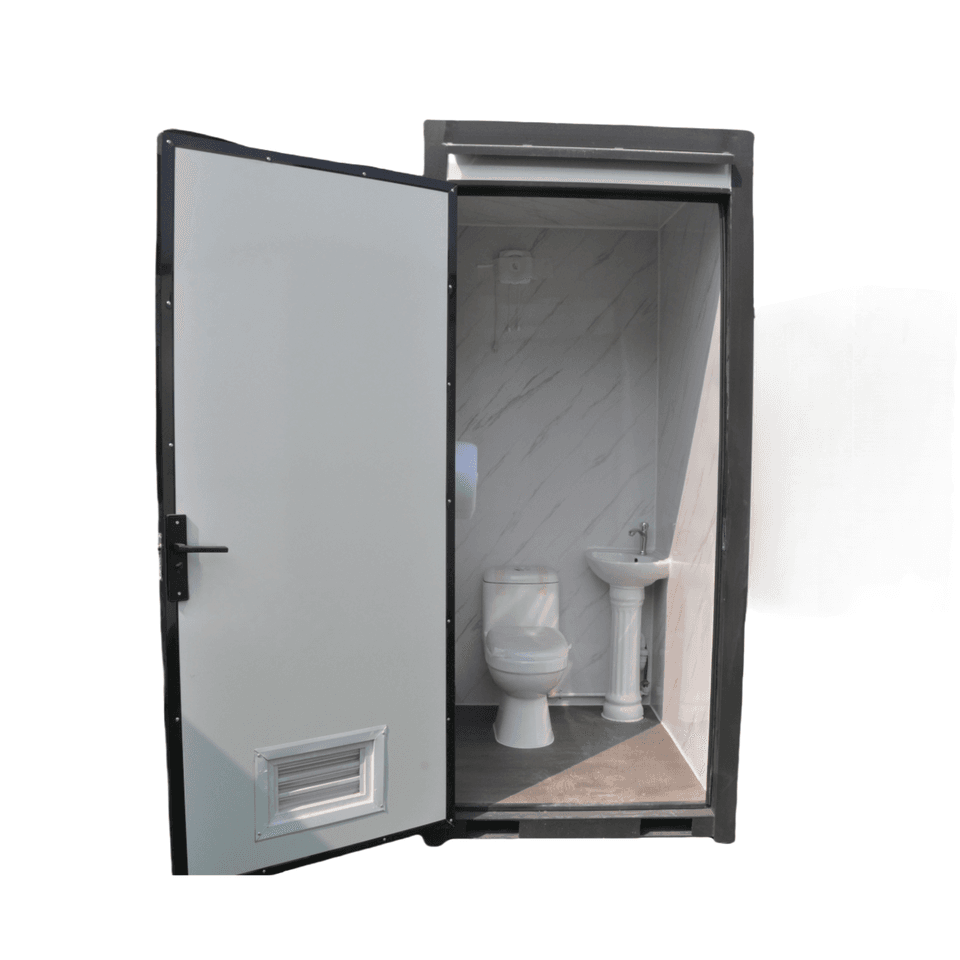
This is the most basic and widely used door-opening method, typically employing a traditional mechanical lock structure that includes a latch, handle, and lock cylinder. Door designs fall into two categories: one type is outward-opening swing doors, where users turn the door handle to retract the latch and then push the door open directly; the other type is horizontally sliding doors, where users need to slide the door body to open or close it. This design is simple in structure, low in cost, and suitable for most ordinary scenarios, but it requires active operation by the user and has certain space layout requirements.
2. Automatic Sensing Door Opening
Smart portable toilets are often equipped with ultrasonic sensors or infrared sensing devices that trigger the door-opening mechanism by detecting human movement signals. When the sensor outside the door identifies someone approaching and confirms that the interior is unoccupied, a servo or motor drives the door body to open automatically; after the user finishes using the toilet, the door will close automatically after a set time (e.g., 3 seconds). This design enhances hygiene and convenience but requires regular maintenance of the sensors and power system to avoid false triggering or malfunctions.
3. Button Control
Some portable toilets are installed with manual buttons inside. After the user finishes using the toilet, they press the button, and the door body opens automatically via a motor or spring mechanism. This method combines the advantages of manual and automatic operation, avoiding direct contact with the door body by the user and reducing the risk of sensor misjudgment. It is commonly found in scenarios with high hygiene requirements.
4. Electronic Unlocking
High-end portable toilets adopt electronic lock systems that support multiple verification methods such as passwords, fingerprints, or card swiping. Users need to pass identity verification before the lock cylinder releases, allowing the door body to open. This design offers high security and is suitable for scenarios requiring access control, but it requires a power supply and backup unlocking solutions to prevent users from being trapped in case of system failure.
5. Timed Automatic Door Opening
Smart public toilets piloted in New York have introduced a 10-minute time-limited usage function, which monitors usage duration through internal sensors. If the door is not opened manually after the time limit, the door body will slide open automatically, and an alarm will be triggered to notify management personnel. This design effectively prevents malicious occupation or unexpected incidents but places high demands on the system's timing accuracy and the door body's power.
6. Barrier-Free Design
For special groups such as wheelchair users, barrier-free portable toilets typically adopt horizontally sliding doors or outward-opening swing doors. The door width must meet the requirements for wheelchair passage (generally not less than 90 centimeters) and be equipped with low-position handles or automatic sensing devices to ensure that users can operate them without excessive effort. This design reflects humanistic care and is an important aspect of making public facilities barrier-free.