
How to Make Wood for Prefabricated Houses
The processing and production of wood for prefabricated houses mainly adopt modular prefabrication technology, achieving efficient construction through standardized factory processing and on-site assembly. The core processes include material pre-treatment, modular component production, and on-site assembly and maintenance.
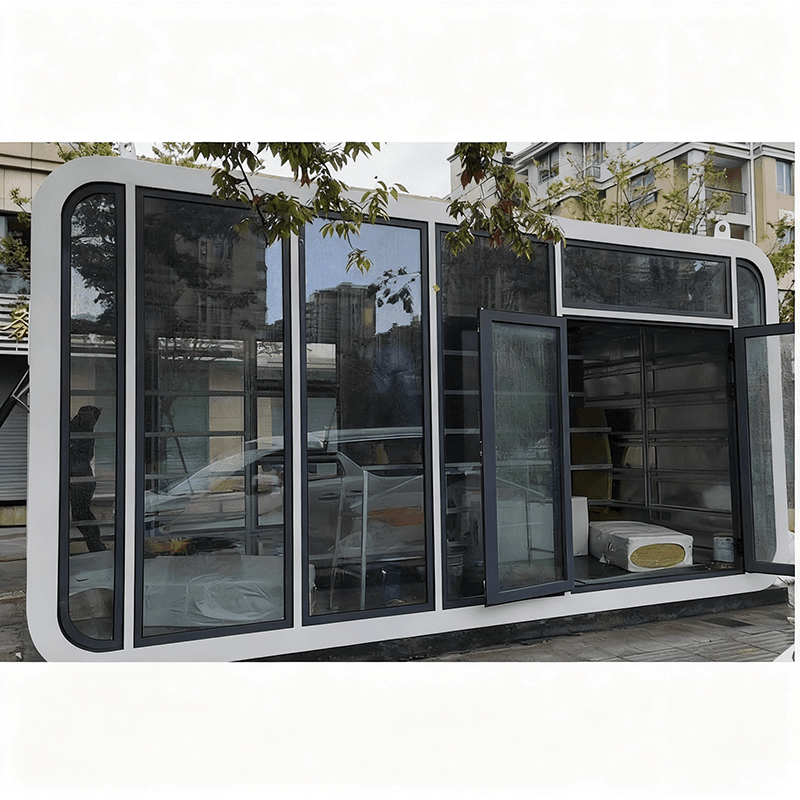
Material Selection and Pre-treatment
The choice of wood directly affects the durability and safety of prefabricated houses. Softwoods such as pine and fir are preferred due to their uniform density, straight grain, and natural resin content, which provides better corrosion resistance than hardwoods. To adapt to outdoor environments, copper-based or boron-based preservatives are injected using the vacuum-pressure impregnation method, allowing the preservatives to penetrate deep into the wood and form a long-lasting protective layer, extending the service life to over 20 years. Additionally, moisture content control is crucial: wood must be processed in a drying kiln to reduce its moisture content to 12%-15%, preventing cracking or deformation caused by humidity changes. This step requires strict monitoring, typically using a resistance-type moisture meter for spot checks.
Modular Component Production
Standardized component processing in factories is the core of prefabrication technology.
- Wall Prefabrication: A 10 cm thick pine frame is used, with bamboo serving as horizontal supports to form a grid structure, enhancing stability. The frame is filled with eco-friendly insulation materials such as glass wool or rock wool, meeting both thermal insulation and fire prevention requirements. The component surface is covered with a waterproof and breathable membrane to prevent rainwater penetration while allowing water vapor to escape.
- Structural Connections: Traditional mortise-and-tenon joinery is combined with modern metal connectors. For example, roof truss joints use galvanized steel connection plates fixed with bolts to ensure earthquake resistance; hidden mortise-and-tenon joints are used where walls connect to floors, ensuring structural strength while improving aesthetics. All connectors must undergo corrosion treatment to prevent rust.
- Precision Control: Wood is cut using CNC machines during processing, with errors controlled within ±1 mm. During assembly, a spirit level and laser positioning device are used to adjust component verticality, and a hammer is used to gently tap and correct any misalignments, ensuring joint gaps are less than 3 mm, providing a foundation for subsequent sealing treatment.
On-site Assembly and Maintenance
After components are transported to the site, they are assembled layer by layer according to the design drawings. Walls and floors are positioned using slides or lifting equipment, and metal connectors are tightened. Gaps are filled with silicone sealant to prevent air infiltration. The roof is covered with asphalt shingles or metal sheets to complete waterproofing. For later maintenance, wood wax oil should be applied regularly to form a protective film and reduce UV damage; connection components should be checked for looseness every 2 years, and bolts should be tightened promptly to ensure structural safety.
This process significantly shortens the construction period through standardized factory prefabrication while retaining the environmental advantages of wooden structures. However, strict control of corrosion, moisture content, and connection joints is essential to balance efficiency and durability.



