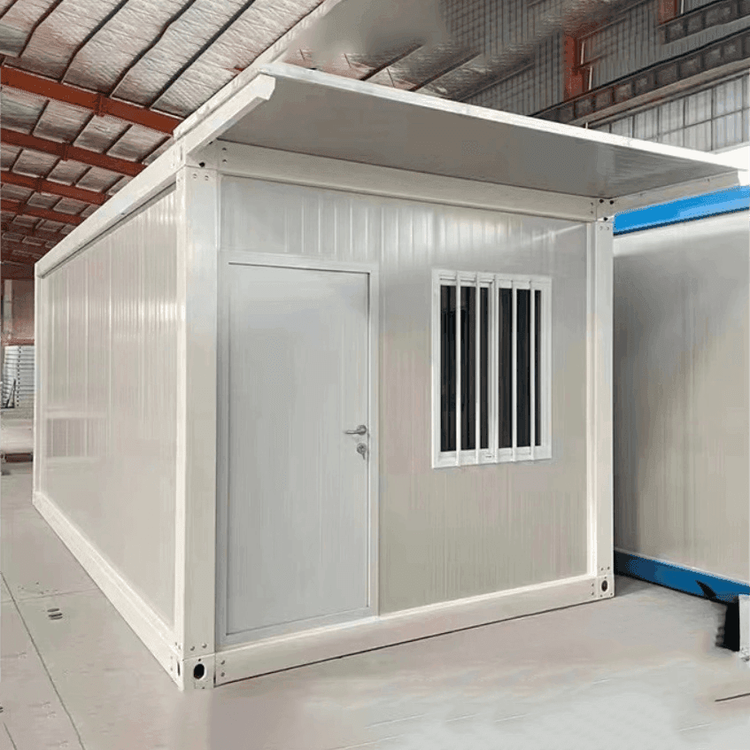
How to Make Doors and Windows for Container Houses
The fabrication of doors and windows for container houses requires achieving a balance between safety and functionality through structural reinforcement, material adaptation, standardized construction, and performance optimization. The specific steps are as follows:
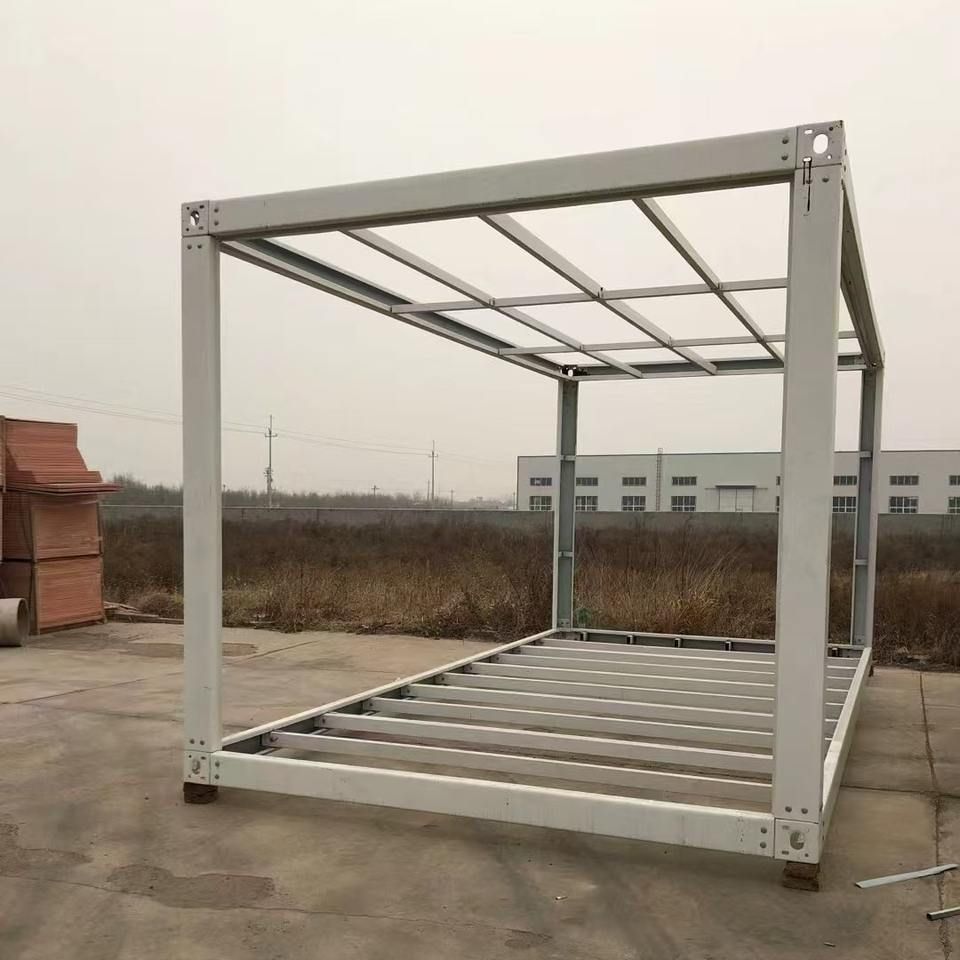
1. Structural Mechanics Reconstruction and Reinforcement
Cutting openings in containers disrupts their original structural strength. It is necessary to install horizontal steel beams (such as 50×50×5mm angle steel) at the top of the doors and windows, and weld vertical columns on both sides to form a local rigid frame, redistributing the load. The welding requires a fillet weld height of ≥5mm, and non-destructive testing should be carried out to ensure quality, avoiding deformation due to stress concentration. For example, double doors (1600×2000mm) need diagonal braces added at the four corners of the opening to enhance torsional resistance.
2. Material Selection and Adaptation
- Door and Window Types: Single doors (800×2000mm) should be equipped with C-grade anti-theft lock cores (with a lock tongue extending ≥16mm), and double doors are used in public areas. Windows should preferably be 1200×950mm aluminum alloy tempered coated hollow casement windows, providing both lighting and anti-theft functions.
- Glass and Frames: Hollow glass (such as 5+12A+5) or Low-E glass can reduce heat conduction. The frames should adopt a thermal break insulation structure, with non-transparent parts filled with rock wool (density ≥80kg/m³) or polyurethane (thermal conductivity ≤0.024W/(m·K)).
- Auxiliary Materials: Neutral silicone structural adhesive (weather-resistant temperature range: -40℃~80℃) is used for sealing, ethylene propylene diene monomer rubber seals (Shore hardness 60±5) enhance airtightness, and stainless steel self-tapping screws (diameter 5mm, length ≥35mm) are used to fix the frames.
3. Cutting and Installation Techniques
- Cutting Operations: Use a plasma cutting machine to cut along the marked lines at a speed controlled at 500mm/min. The cut edges should be ground to a R2.5 fillet to eliminate burrs and reduce stress concentration.
- Frame Fixing: After adjusting the horizontal deviation of the door and window frames to ≤1mm/m and the vertical deviation to ≤2mm/m, fix them to the angle steel frame with stainless steel screws at intervals of ≤400mm to prevent local loosening.
- Sealing Treatment: Fill the gap between the frame and the opening with polyurethane foam, embed a seal strip on the outside, and apply silicone adhesive to form an 8~10mm wide and ≥6mm thick closed waterproof ring, ensuring an airtightness of Grade 7 according to national standards (air leakage per unit area ≤1.5m³/(m·h)).
4. Thermal and Corrosion Optimization
- Thermal Compensation: Use hollow glass for the door and window areas and fill the other parts of the container with insulation materials to form a continuous insulation layer, reducing the overall heat transfer coefficient (K-value ≤2.0W/(m²·K)).
- Corrosion Protection: In coastal or humid areas, the angle steel frame should be hot-dip galvanized (with a zinc layer thickness ≥65μm) and painted with an epoxy zinc-rich primer (dry film thickness ≥60μm) and a chlorinated rubber topcoat (dry film thickness ≥40μm) to extend its service life.
5. Safety and Regulatory Requirements
- Size Standards: The main entrance doors should be ≥900mm wide and open outward for easy emergency evacuation. Electrical wiring passing around the doors and windows should be protected with PVC pipes and insulated from metal structures.
- Function Testing: The door lock system should pass 500 opening and closing tests, and the window sashes should have an opening angle of ≤30° to prevent damage from strong winds, ensuring long-term reliability.
Through the above systematic measures, the doors and windows of container houses can achieve a balance between structural safety, complete functionality, and energy efficiency and environmental protection, meeting residential or office needs.