
How to Load Goods in Container Houses
Loading goods in container houses requires following standardized procedures such as basic inspection, stacking principles, securing and protection, and handling of special goods to ensure the safety of the goods and transportation stability.
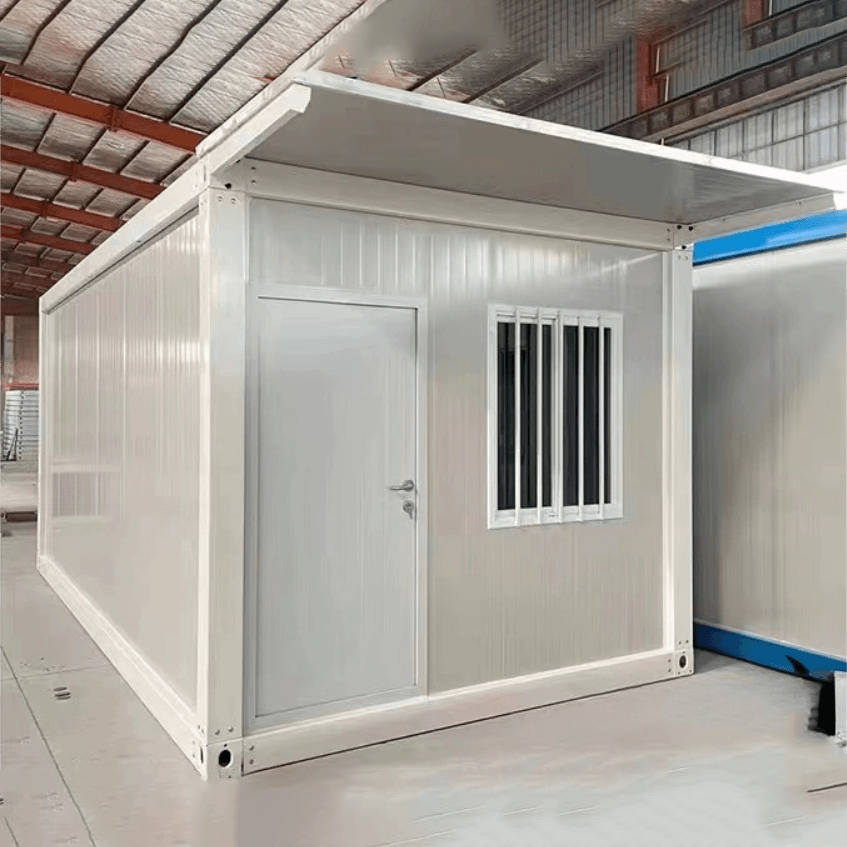
1. Basic Inspection Before loading, conduct a comprehensive inspection of the physical condition of the container house. Ensure that the floor is flat and undamaged, and that the walls have no cracks or deformations to prevent damage to the goods due to structural defects. Also, check for any residual odors, oil stains, or chemicals inside the container to prevent contamination of the goods. For example, food items must be ensured to be free from residual pesticides or other harmful substances to avoid cross-contamination. If any structural damage or hygiene issues are found in the container, it must be replaced or cleaned immediately; otherwise, it may affect the quality of the goods and transportation safety.
2. Stacking Principles When stacking goods, follow the principle of "heavy at the bottom, light on top." Place dense and heavy goods (such as mechanical parts and metal products) on the bottom layer, and stack lightweight goods (such as textiles and plastic products) on the upper layers to lower the overall center of gravity and prevent tipping during transportation. When layering, use the interlocking stacking method, where the second layer of goods is placed over the gaps of the first layer, forming a stable structure similar to bricklaying, to prevent goods from sliding due to vertical stacking. The height of each layer of goods should be controlled within 1.2 meters to prevent the risk of side-tipping due to a high center of gravity. For example, if cardboard boxes are stacked too high, they are prone to collapsing due to bumps during transportation, resulting in losses.
3. Securing and Protection Choose appropriate methods for securing goods based on their material. When wooden shelves come into contact with metal containers, install anti-slip rubber pads to prevent the shelves from shifting due to friction; rubber straps are more suitable than steel wires for securing goods with delicate surfaces (such as electronic products and furniture) to reduce the risk of scratches. Fragile items (such as ceramics and glass products) should be secured using the suspension method, where the goods are hung from hooks on the top of the container using elastic nets or bubble wrap to reduce the impact of transportation vibrations. Install L-shaped baffles at the four corners of the container to prevent goods from sliding and colliding; reserve a 30-centimeter passage at the container door for easy inspection of the goods' condition and to prevent the goods from squeezing the door when it is opened or closed.
4. Handling of Special Goods Dangerous goods must strictly comply with the International Maritime Dangerous Goods Code (IMDG). For example, containers carrying lithium batteries must be labeled with Class 9 dangerous goods markings and equipped with temperature monitoring devices to prevent spontaneous combustion caused by high temperatures; liquid goods should use a double-container structure with adsorbent materials (such as wood shavings or sponges) filled between the inner bucket and the outer packaging to prevent leakage and spread. For livestock transportation, a ventilation system should be installed to ensure air circulation; each cow should be allocated 1.5 square meters of activity space, and non-slip straw should be laid to reduce transportation stress reactions. The handling of special goods should be tailored to the characteristics of the goods and the transportation environment to develop targeted solutions.



