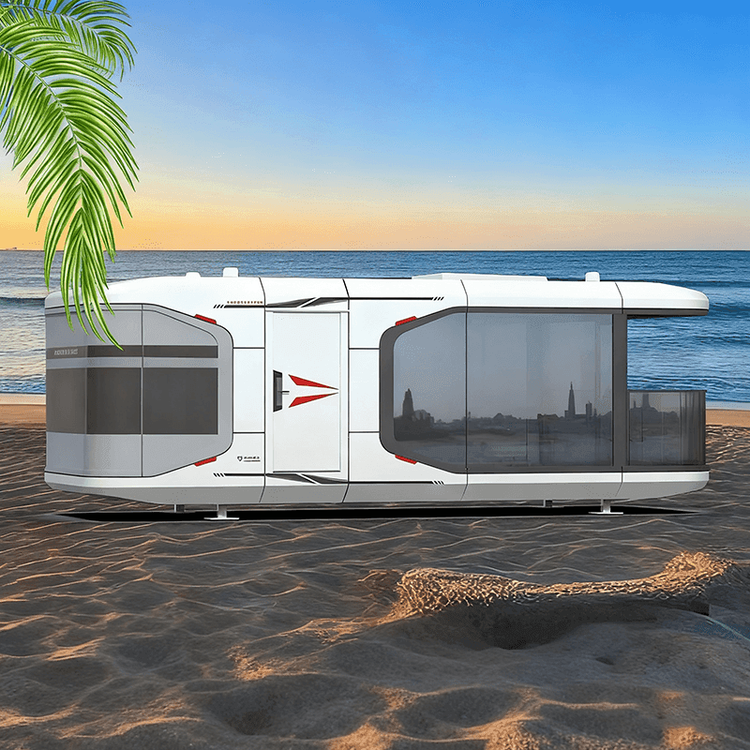
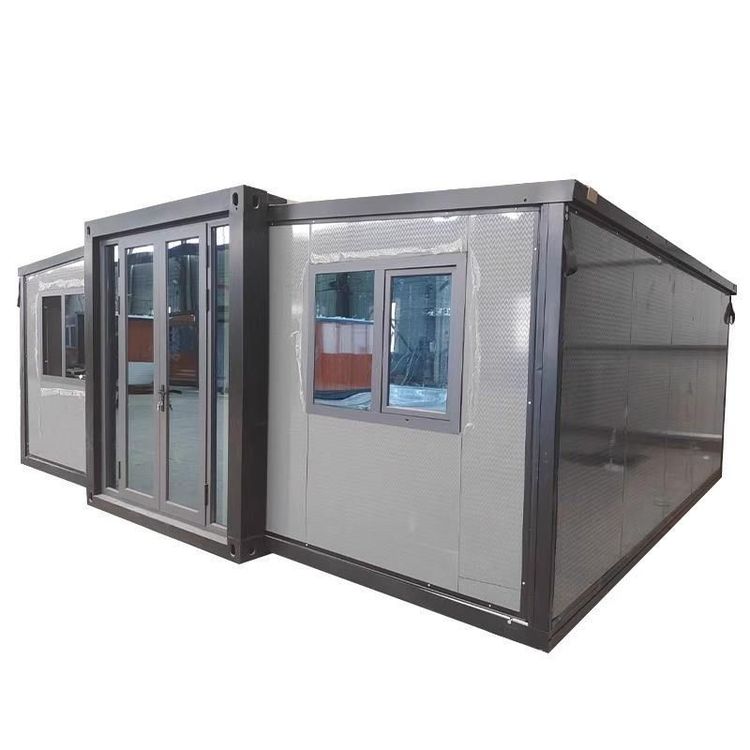
How to Lift Rental Container Houses
Lifting rental container houses requires professional equipment and standardized operations to ensure safety and precise positioning. The key points are as follows:

I. Selection of Lifting Method Container houses are typically lifted using the top four-point lifting method, which involves fixing them through the four standard corner fittings (ISO standards) at the top of the container. Special lifting devices (such as twist-lock lifting devices) are locked with the corner fittings to achieve balanced force application at the four points, which is an internationally recognized safe lifting method. Direct hooking with steel wire ropes or single-point lifting should be strictly avoided as they can easily cause the container to tilt, twist, or even suffer structural damage. For foldable containers, the main frame should be unfolded and support rods installed before the entire unit is lifted through the top lifting points.
II. Configuration of Lifting Equipment and Tools
- Main Lifting Equipment: Select an appropriate crane based on the weight of the container (e.g., a 25-ton truck-mounted crane can meet regular needs for a 20-foot standard container with a self-weight of 2.3 tons).
- Lifting Device System: ISO standard container lifting devices should be equipped, with a rated load capacity greater than the sum of the container's self-weight and internal load. Auxiliary tools include high-strength steel wire ropes (e.g., 6×37+FC-Φ22mm), shackles (compliant with GB/T25854 standards), and chain hoists (for fine-tuning positioning).
- Safety Monitoring Equipment: Anemometers (for real-time monitoring of wind speed in the operating environment), level gauges (for site leveling and elevation control of container positions), etc., should be used to ensure operations comply with safety regulations.
III. Lifting Operation Specifications
- Synchronous Force Control: During lifting, ensure that all lifting points are subjected to force simultaneously to avoid container twisting due to unilateral force. Protective pads should be installed at the contact points between the steel wire ropes and the container to prevent wear.
- Precision Adjustment of Landing Position: When the container approaches the foundation, it should be lowered slowly and its position fine-tuned to ensure that the bottom sill is fully in contact with the foundation pads. Chain hoists should be used to assist in positioning and reduce impact forces.
- Environmental Risk Management: Before lifting, check the geological conditions of the operating area (e.g., the foundation bearing capacity should be ≥200kPa), clear obstacles, and set up warning lines. Lifting operations should be suspended in strong winds (wind speed ≥10m/s) or thunderstorms.
IV. Handling of Special Scenarios For oversized containers (e.g., 48-foot non-standard containers), customized lifting processes are required. For example, Qingdao Port once adopted a top four-point lifting point design combined with flexible lifting straps and circular lifting straps to solve problems related to excessive lifting distance and unstable center of gravity. Before operations, simulation deductions should be conducted to verify the feasibility of the plan, and the load capacity of tools and equipment should be strictly checked.