
How to Insulate Container Houses
The following measures can be taken to insulate container houses:
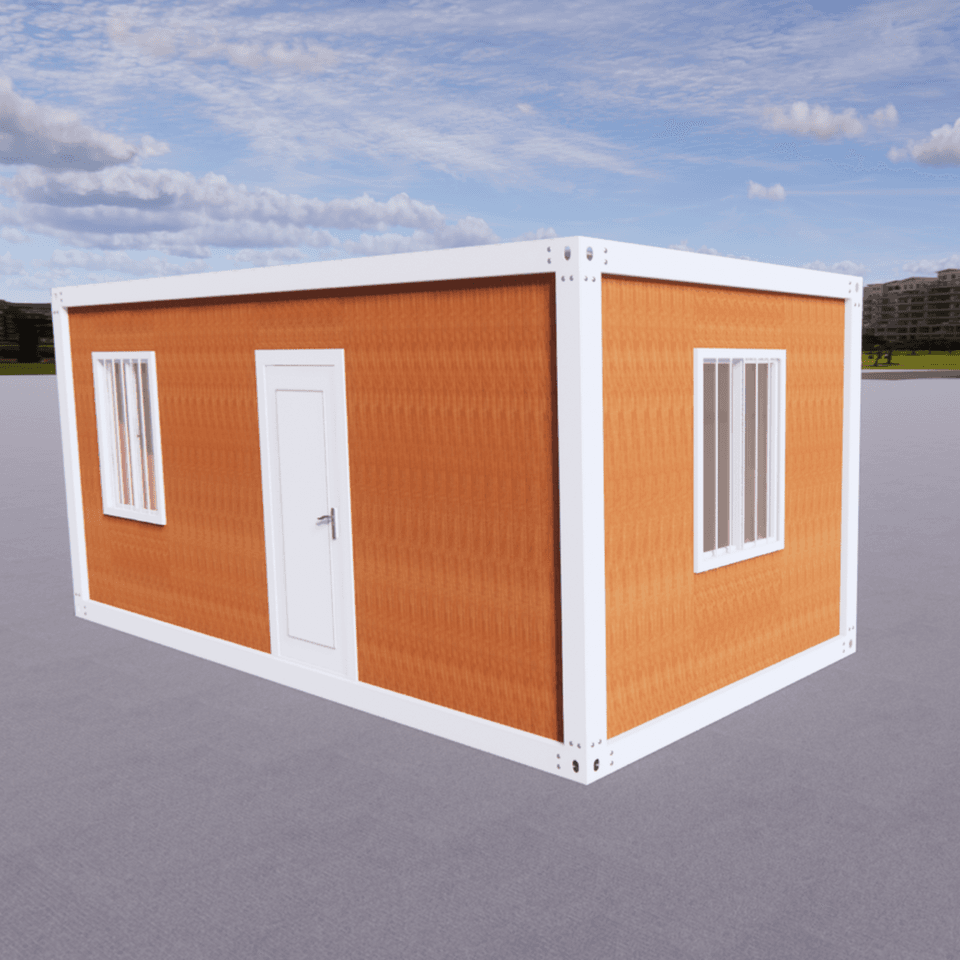
I. Select Appropriate Insulation Materials The core of insulation in container houses lies in material performance. It is recommended to use materials such as polystyrene boards, polyurethane foam boards, and rock wool boards, which share the common characteristics of low thermal conductivity and excellent insulation properties. For example, polyurethane foam boards have a high closed-cell ratio, effectively blocking heat transfer; rock wool boards combine fire resistance with insulation, making them suitable for scenarios with high safety requirements. Material selection should consider local climate conditions: in cold regions, polyurethane with even lower thermal conductivity can be prioritized, while in humid areas, rock wool boards with strong moisture resistance are preferred.
II. Add Insulation Layers Insulation layers can be implemented through external hanging or internal embedding. External hanging insulation involves installing keels on the exterior wall surface of the container, fixing insulation boards, and then covering them with a protective layer (such as metal panels or cement fiber boards) to form a continuous thermal barrier. Internal insulation involves directly pasting insulation boards inside the walls and then covering them with gypsum boards or decorative layers. Double-layer gypsum board facing is an optimized solution for internal insulation, further reducing heat conduction through the air layer between the two boards, suitable for projects with limited budgets.
III. Optimize Window and Door Design Windows and doors are the main channels for heat loss. It is recommended to use double- or triple-glazed windows filled with inert gases (such as argon) inside, which can significantly reduce thermal conductivity. Sealing strips should be installed at the connections between window frames and walls, and automatic lifting sealing strips can be installed at the bottom of doors to reduce cold air infiltration. For regions with extreme climates, consider adding insulation curtains or honeycomb-shaped sunshades inside windows and doors to form a multi-layer insulation system.
IV. Detail Sealing Treatment The sealing performance of the insulation system directly affects its effectiveness. Joints between insulation materials should be filled with special sealant to ensure no gaps. The connections between the insulation layer and container structures (such as corner fittings and corrugated plates) should be treated with elastic sealing tapes or foam agents to prevent thermal bridges from forming. Special attention should be paid to drainage slope design for roof insulation to avoid water accumulation causing insulation layer failure.
V. Strengthen Roof and Floor Insulation For roof insulation, insulation wool (such as glass wool or rock wool) can be cut and laid, with joints sealed with aluminum foil tape to form a continuous insulation layer. Floor insulation can be combined with an underfloor heating system (as in the Harbin case), using circulating hot water or electric heating films for heating, while laying extruded polystyrene boards (XPS) as a base insulation layer to achieve comprehensive insulation from the bottom up.
VI. Adapt to Special Scenarios In extremely cold or hot regions, multiple measures can be combined: for example, external hanging polyurethane boards + internally embedded rock wool boards + underfloor heating systems to form a composite insulation structure; or using vacuum insulation panels (VIPs) and other new materials to further compress the thickness of the insulation layer and improve space utilization.



