
How to Install the Chassis of a Mobile Toilet
The installation of the chassis of a mobile toilet should be carried out according to the type of toilet and the fixing scenario, with the specific steps as follows:
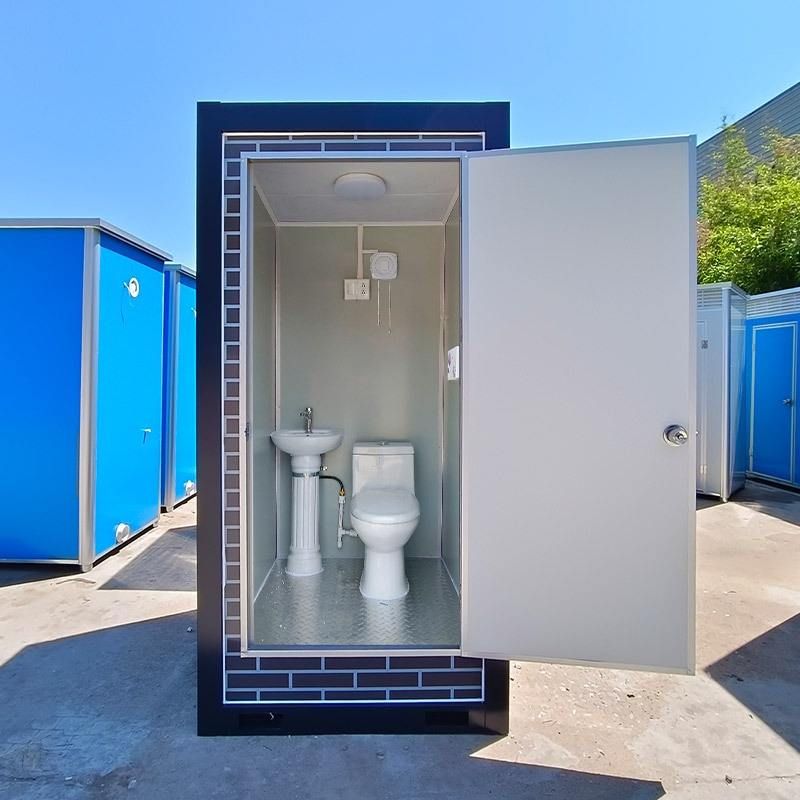
1. Installation of the chassis of a split-type mobile toilet
The chassis of a split-type mobile toilet is usually a prefabricated steel structure. Forklifts or manual labor are required for installation. First, place the chassis steadily at the predetermined position, ensuring that the ground is flat and free of debris. Then, use a level to check the levelness of the chassis and adjust the support feet or shims to make it completely level. This step is crucial. If the chassis is tilted, it may lead to poor drainage or uneven structural stress during subsequent use.
2. Combined installation of the chassis and the back panel of some mobile toilets
For some mobile toilets, place the back panel flat on a clean and flat ground, and then align and assemble the chassis with the back panel. Specifically, align the sewage outlet of the chassis with the sewage hole of the back panel to ensure a perfect fit. Then, combine the back panel of the chassis with the main structure, adjust the alignment, and fix the connecting parts. During this process, pay attention to the tightness of the sewage pipes to avoid leakage problems later.
3. Ground-fixing installation methods
3.1 Expansion bolt fixing method
This method is suitable for cement or hardened ground. First, use a level to locate the four corners at the bottom of the toilet in advance and mark the drilling positions. When using an impact drill to drill holes, the hole diameter should match the specifications of the expansion bolts (usually M10-M12). The drilling depth should be slightly greater than the length of the bolts to ensure that the bolts are fully embedded in the ground. After inserting the expansion bolts, tighten them to make the tail of the bolts expand and fit tightly against the hole wall. Finally, fix the toilet chassis with the bolts. It is recommended to use 2-4 bolts on each side to enhance stability and prevent the chassis from shaking.
3.2 Concrete pouring fixing method
This method is suitable for long-term fixing or heavy-duty mobile toilets and requires professional construction cooperation. First, excavate a foundation pit according to the size of the toilet (50 cm deep and 60 cm wide). Lay a 10 cm thick crushed stone bedding at the bottom of the pit and compact it to enhance drainage and bearing capacity. Then, set up formwork and pour C30 concrete, inserting a steel reinforcement framework (with a diameter of no less than 12 mm) to enhance structural strength. After the concrete has set for 3-5 days, connect the toilet chassis to the concrete foundation using embedded parts or chemical anchors. This method is costly but offers excellent stability and can withstand heavy equipment or high-frequency use scenarios.
Precautions: Before installation, confirm whether the ground bearing capacity meets the requirements to avoid chassis deformation due to foundation settlement. Use sealing rubber rings or waterproof tape at the connections of the sewage pipes to prevent odor leakage. If installed outdoors, consider windproof measures (such as adding ground anchors or counterweights).



