How to Install Mobile Toilet Roof
The installation process for mobile toilet roofs varies depending on the type of toilet. For conventional mobile toilets, the steps include structural assembly, frame installation, and sealing treatment, while integrated toilets primarily involve on-site hoisting. Here are the specific steps:

Steps for Installing the Roof of a Conventional Mobile Toilet
Structural Assembly Foundation
First, unfold and level the base support frame to ensure it is horizontal, preventing tilting or uneven force distribution during subsequent installation. Then, insert the wall panels into the support frame slots, ensuring a tight fit to prevent loosening. This step provides stable support for roof installation. If the base is not leveled, it may lead to deformation or stress concentration at the connection points after the roof frame is installed.Roof Frame Installation
After the wall panels are installed, proceed with the assembly of the roof frame. The frame material is typically galvanized steel or aluminum alloy, and the main and secondary beams should be assembled according to the design drawings. All connection points must be secured with galvanized bolts, and the bolts should be tightened evenly to avoid local over-tightening that could deform the color steel plate. For example, if a bolt at a connection point is too tight, it may cause the color steel plate to dent, affecting its waterproof performance and overall appearance.Sealing Treatment
After the roof is installed, focus on checking the integrity of the sealing strips on the rain eaves. The strips should be free from damage or breaks and should fit tightly against the roof edge to prevent rainwater from seeping in through the gaps. For color steel mobile toilets, the joints between the wall panels and the roof should be filled with neutral silicone sealant. This material has good elasticity and weather resistance, allowing it to accommodate thermal expansion and contraction caused by temperature changes and preventing cracks at the joints due to material shrinkage or expansion. When applying the sealant, ensure it is evenly spread to cover the entire joint area.
Characteristics of Roof Installation for Integrated Mobile Toilets
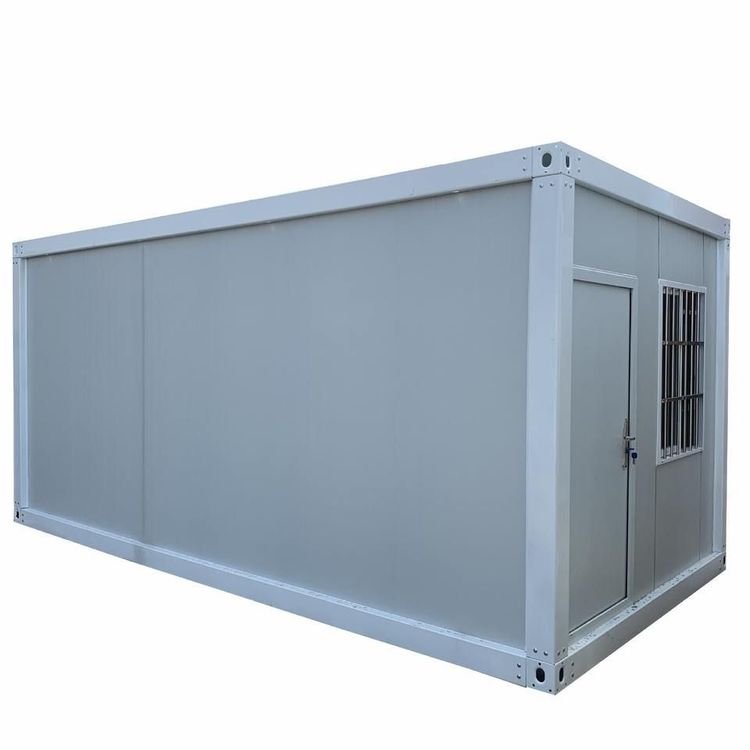
For integrated mobile toilets (such as container-type toilets), roof installation is usually completed in the factory, including interior decoration and equipment integration. On-site installation only requires hoisting the toilet into place. Professional lifting equipment should be used during hoisting to ensure the toilet rises steadily and avoids collisions or tilting. After hoisting, connect the water, electricity, and sewage pipes. Sealing rings or sealant should be used at the pipe connections to prevent water leakage or odor leakage.